


Mbabane— A stark diversity crisis has been exposed within Eswatini’s corporate sector.
Institute of People Management (IPM) 2026 convention revealed that local companies are failing to hire
differently abled individuals. The revelation came directly from IPM Eswatini President Sharon Maziya,
who disclosed that the diversity and inclusion category of the association’s annual awards was nearly
impossible to fill due to a severe lack of corporate nominations.
While diversity dominates global business strategies, Eswatini’s workforce remains critically
homogeneous. Unlike neighboring African markets 0 struggle with deep racial divisions, Eswatini’s
primary inclusion failure lies in the total exclusion of professionals with disabilities from corporate
payrolls.
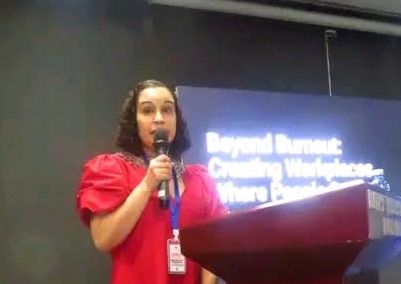
“Any organization without a single differently abled employee must ask itself why,” Maziya challenged
delegates during her opening address at the Happy Valley Hotel, noting that championing this cause has
been a five-year uphill journey for the IPM.
The corporate stagnation stands in direct defiance of a major government push. Eswatini’s Deputy Prime
Minister’s Office has been vigorously campaigning for the socio-economic inclusion of all citizens, calling
on human resources leaders to step up and align hiring practices with the national strategy.
This, Maziya said, because HR departments control recruitment and onboarding, she noted they hold
the ultimate corporate privilege, and responsibility, to reverse this historical disadvantage.
Industry experts warn that maintaining these exclusive hiring blocks places Eswatini companies at a
severe competitive disadvantage.
Meanwhile, Keynote speaker Professor Dr. Gideon C. Mwanza stressed that as automation and AI
expand, the exact same digital tools can be used to make roles highly accessible to professionals with
physical or sensory impairments.
With African talent projected to make up a massive segment of the global workforce by 2030, local
companies can no longer afford to completely disregard a highly capable pool of workers.
Ultimately, HR leaders are being urged to stop treating inclusion as an administrative checklist and start
embedding it into core business strategies alongside finance, marketing, and sales functions to build
genuinely equitable workplaces.






Discussion about this post