



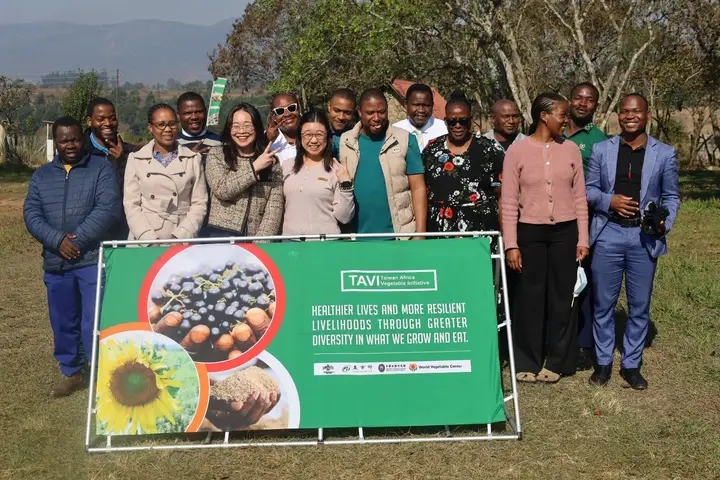
Malkerns- Taiwan has committed about E24 million this year towards the second phase of the Taiwan-Africa Vegetable Initiative (TAVI), as the programme shifts its focus from conserving indigenous vegetables to creating economic opportunities for farmers.
The funding was announced on Tuesday during the reintroduction of the project, which is implemented in partnership with the World Vegetable Center, the Ministry of Agriculture, the Ministry of Education and Training, and other stakeholders.
Speaking at the event, Taiwan’s Ambassador to Eswatini said the latest allocation builds on the government’s continued investment in one of its largest agricultural cooperation programmes in the Kingdom.
She said Taiwan invested approximately E 76.5 million in the first phase of TAVI between 2021 and 2024, followed by more than E 23 million in 2025. The programme will receive a further E 24 million this year as implementation of the second phase gathers pace.

The ambassador said while the first phase focused on conserving traditional vegetable varieties, promoting nutrition and strengthening food security, the second phase would seek to unlock the crops’ economic potential.
She said the project was working to change perceptions that indigenous vegetables were low-value crops by demonstrating their nutritional benefits and their potential to create income for farmers.
The ambassador said Taiwan believes Eswatini can build a sustainable traditional vegetable industry that benefits farmers while creating opportunities across the agricultural value chain.


He noted that Eswatini is recognized as a global hotspot for traditional vegetable diversity, making the conservation of indigenous crops important for food security, climate resilience and the preservation of valuable genetic resources.
The initiative is also supporting the development of a genebank at Malkerns Research Station, with the World Vegetable Center having deployed a country representative, Dr Fekadu Dinessa, to strengthen the programme.
Looking ahead, the ambassador said Taiwan’s long-term vision is to see Eswatini become a regional hub for innovation, technology and knowledge exchange on traditional vegetables.


Discussion about this post