



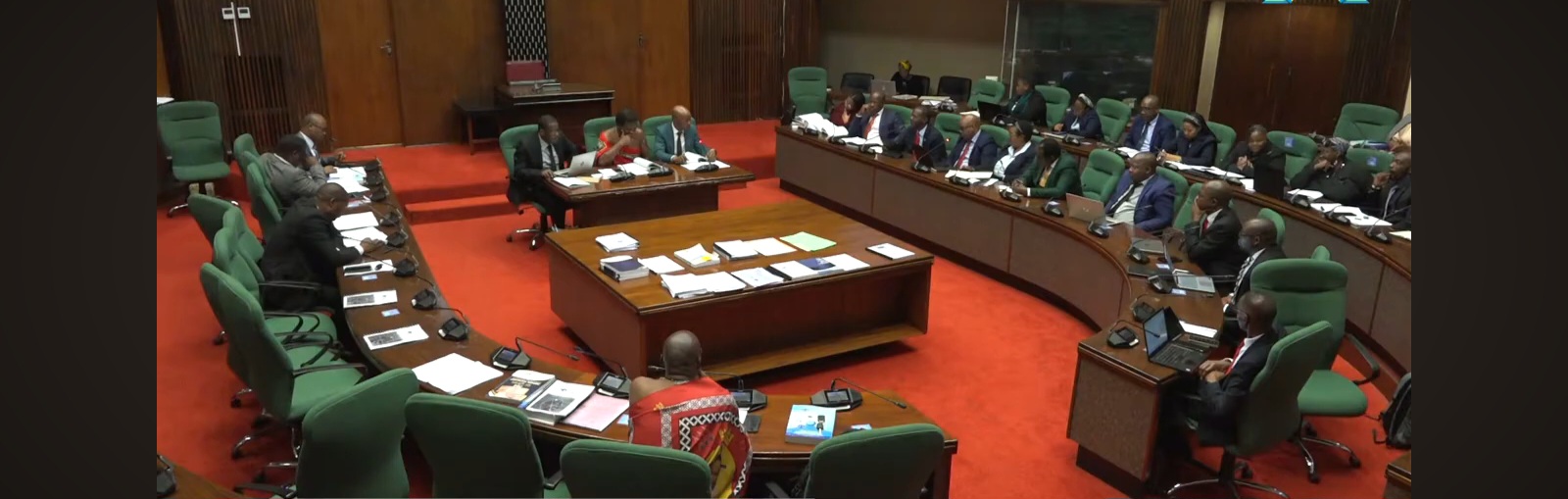
Lobamba- “Sometimes government payments do not align with the agreement and the debt remains outstanding while interest and other costs continue to increase.”
That was the explanation from Ministry of Housing and Urban Development Principal Secretary Dr. Simon Zwane as he defended the Eswatini Housing Board (ENHB) before the Public Accounts Committee (PAC), where lawmakers questioned the board over its growing overdraft and mounting debt.
Zwane told the committee that the board’s financial troubles were largely a consequence of delayed government payments under an arrangement in which the board was instructed to borrow money to build houses for civil servants.
He said the understanding was that government would repay the loans over a 15-year period through rental or housing payments. However, when those payments are delayed, the board is left servicing the loans while interest and finance charges continue to accumulate.

“The performance of the board depends on government. Sometimes government payments do not align with the agreement and as a result the board is left behind while interest and other costs continue to increase,” Zwane noted.


He explained that part of the board’s debt is owed to the Public Service Pension Fund (PSPF), adding that the ministry submits requests of about E140 million annually to Treasury to settle the obligation.
“But if government’s cash flow is not good, there are delays and we end up owing the Board, which in turn owes the PSPF,” he told the committee.
The AG Phumelela Matimelani had questioned why the Board’s overdraft costs had increased compared to previous years. In response, Housing Board officials said efforts to reduce the overdraft were bearing fruit, with the facility standing at about E467 million as at March 31, 2026.
The committee also raised concern over institutional housing debt amounting to E592.6 million, which was not reported to the Ministry of Finance and therefore not disclosed in government’s financial statements.
ENHB’s Head of Finance Linda Mkhwanazi said the receivables relate to the same institutional housing project financed through loans from the PSPF and the Eswatini National Provident Fund (ENPF).
PAC members requested the relevant contracts and supporting documents as they continue scrutinising the Board’s finances.


Discussion about this post