



Argues that the Board is being wrongly placed to take liability due to government
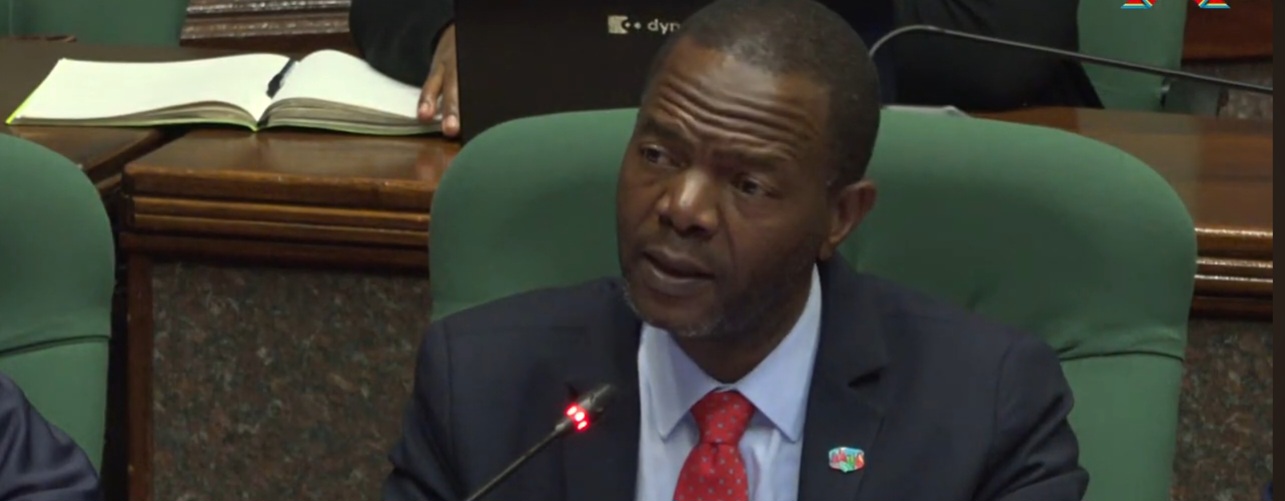
Lobamba- The Principal Secretary in the Ministry of Housing and Urban Development Dr.Simon Zwane has defended the long-standing World Bank loan carried by the Eswatini National Housing Board (ENHB), saying the debt originated from government-directed housing projects and should be viewed in its proper historical context rather than as a failure by the board.
The issue came under scrutiny after the ENHB’s financial statements showed long-outstanding loans from the Government of Eswatini amounting to about E28.7 million as at March 31, 2025. The loan balance remained unchanged from the previous financial year, with no repayments made while negotiations over the debt continue.
Appearing before the Public Accounts Committe, the PS and his team explained that the debt dates back to the late 1990s and arose from a government subsidy arrangement under which the Housing Board was instructed to implement major urban development projects.


He said one of the loans related to the upgrading of Msunduza Township in Mbabane where government tasked the board with rehabilitating the informal settlement using funds sourced through a World Bank facility.
According to the Attorney General (AG) Phumelela Matimela the loan was structured to be repaid over six years, including a three-year grace period, with repayments expected to commence in 1999. However, the repayment plan was never implemented as government entered negotiations over the loan.


Responding to the AG Zwane said the board did not borrow the money for its own operations rather government instructed it to implement the development, and the loan was part of that arrangement.
He added that the project involved the servicing of about 1,782 residential plots, of which only 723 have since been sold.
However, plot sales have generated far less revenue than anticipated because many beneficiaries paid only the initial commitment fee before defaulting on the balance.
“We observed that many people only paid the commitment fee and then stopped paying. Recovering those plots is not straightforward because many beneficiaries have already occupied them,” he said.
Zwane said this has made it difficult for the board to generate enough revenue to service the debt.
Another burning issue raised by the AG was of the loan repayment of Nkhanini Township project. He explained that the project was not an upgrading project but a new “greenfield” development initiated by government.
He said government initially intended to finance the project through its trading account but later realized it lacked the capacity to complete the development and instructed the board to take over implementation.
“The expectation was that proceeds from the sale of serviced plots would repay the money advanced through government’s trading account,” he said.
Zwane argued that the board has unfairly inherited liabilities arising from projects conceived and directed by government.
“In reality, the ministry should be carrying this responsibility because these were government projects that the board implemented on government’s instructions,” he said.
The ENHB’s audited financial statements indicate that discussions with government over the settlement or restructuring of the historical debt are still ongoing, while the liability continues to appear on the board’s books nearly three decades after it was first incurred.

Discussion about this post