



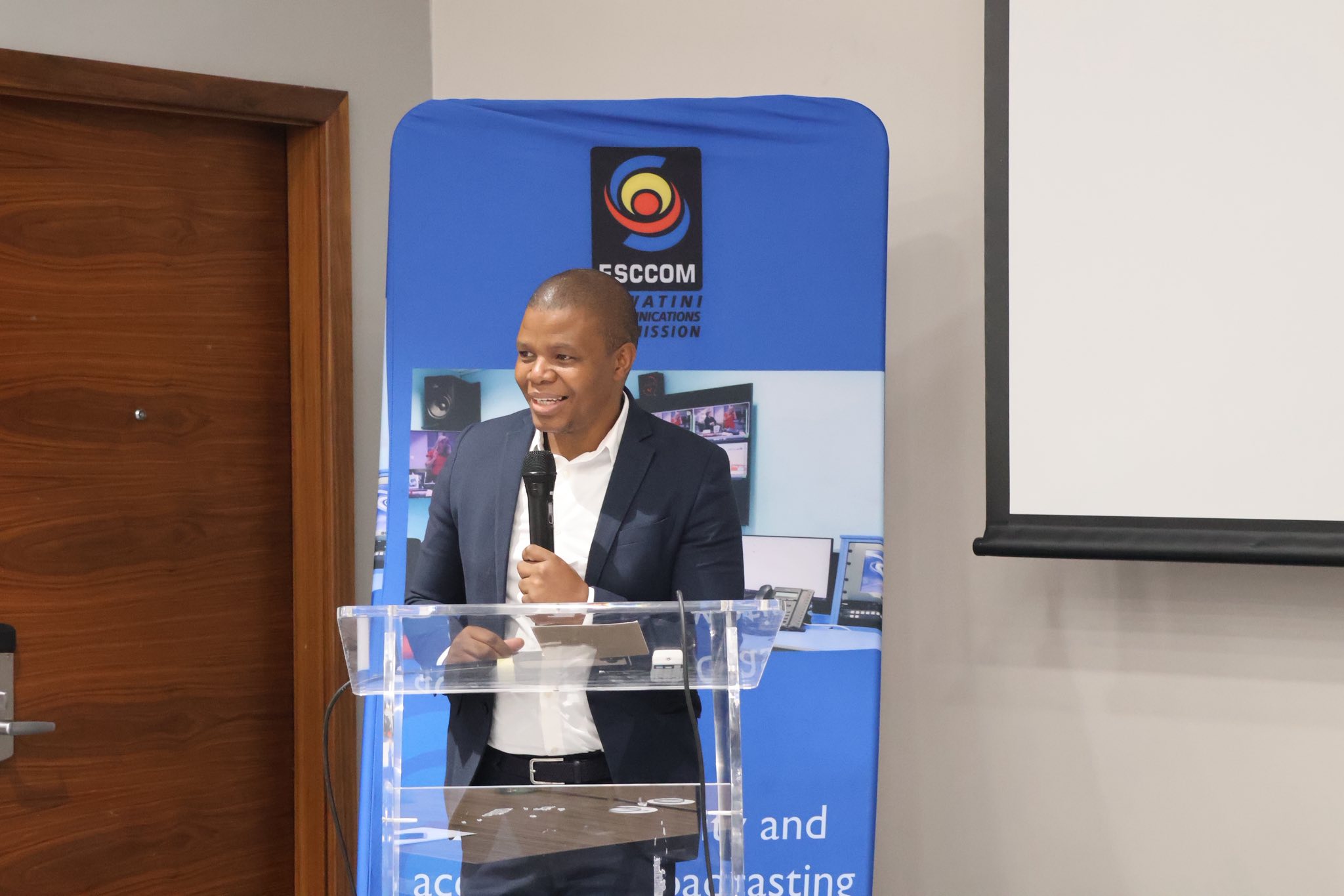
MBABANE – The Eswatini Communications Commission (ESCCOM) found itself having to explain to its stakeholders the rationale behind proposing the payment of hundreds of thousands of Emalangeni or 6 percent of the licensee’s annual turn-over as annual licence fees for owning a broadcasting business.
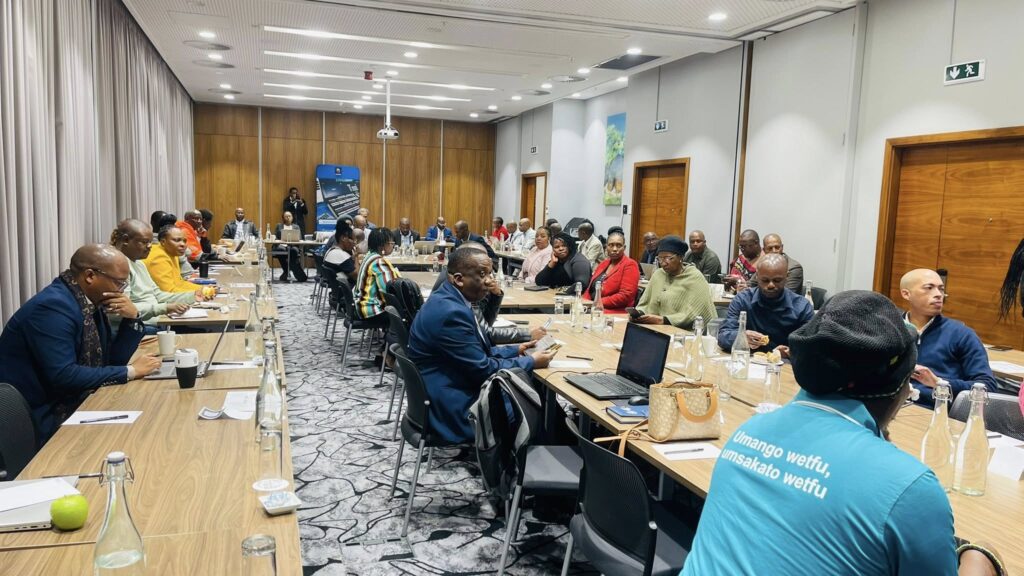
This occurred on Thursday where stakeholders had been gathered by ESCCOM at the Hilton Garden Inn for consultations on the proposed broadcasting licence pricing.
ESCCOM Director Technical Service Thulani Fakudze and Broadcasting Specialist Sibusiso Ndzabukelwako found themselves having to respond to a litany of questions and comments from stakeholders. Most comments from the floor proposed to ESCCOM to further review the ‘exorbitant’ fees.
At current form, it could cost an investor a maximum of E100 000 to own a Digital Terrestrial Television Network Service broadcasting licence, as the initial registration fee. The cheapest licence is the Temporary Television Broadcast application fee proposed at E2000 while Digital Terrestrial Free to-Air Television (DTT) licences for a public broadcaster, commercial, cable or Pay TV could cost E50 000 each.

This excludes renewal licence fees to be determined by ESCCOM, every after 10 years, as well as the maximum E500 000 flat subscription fee or a 6 percent of a licensee’s annual turnover instead. Accompanying the annual subscriptions is also a mandatory annual contribution of 2 percent to the Universal Access and Service Fund (UASF).
Annually, a commercial or public broadcaster DTT subscription could cost either 6 percent of turnover or E300 000 per year, plus the 2 percent UASF fee. Cable TV licences could cost 6 percent of turnover or E400 000 plus 2 percent UASF fee per year.
A regional community radio station could pay 6 percent or E30 000 plus 2 percent UASF while a community radio with national reach could pay 6 percent or E120 000 plus 2 percent UASF fee.
Not only do these fees talk of only television broadcasting fees. There are also those applicable to radio and online, payable to ESCCOM as the regulator.
Independent economist, Thembinkosi Dube said the fees in their current form were too high.
“We are killing Emaswati with these fees. This includes application fees. The approach should be different from those who have been in the industry than newcomers. All is not welcoming new entrants. Maybe we should look into a way of kucatfutisa,” Dube said.
“Maybe we should look into something like that. If this is from an indigenous Liswati trying to come in, it is going to kill them.”
He also said that ESCCOM should align with the private sector policy of a tax holiday to give newcomers a time to mature in the industry. Moreover, Dube said at the current form, the prices could be transferred by broadcasters to the consumer which is not consumer friendly.


Dube asked ESCCOM officials to consider doing a research paper on their proposed fees. However, officials said the initial fees were backed by 2022 statistics.
Channel Yemswati founding director, Qhawe Mamba, said that broadcasters such as theirs rely heavily on advertising revenue which he said has (advertising) been mostly going to online platforms.
“We are seeing a shift. People are now advertising online. Where are we expected to get E300 000 from? We have costs exceeding these a month. We are competing with someone who has a cell phone. Perhaps those with subversion it is a different story. Please reconsider,” he said.
Eswatini Community Radio Network Coordinator Ambrose Zwane wondered if the regulator’s requirement of allocating a 25km radius for community radios was going to be sustainable. He also said in other countries similar limitations have been seen to have taken community radio stations out of business.
Co-founder and Creative Director of Sbuko Acres, Mangaliso Dlamini, said it should be taken into consideration that there is a lot of influx of foreign adverts than find their way into the local market, ending up not contributing in the local market.
“There is a lot of influx of South African and international advertisers coming into Eswatini for free without being regulated. If maybe we regulate them, there is a lot of income that could then help the regulator caution the new entrants into the sector by costing the foreign invaders to pay for the audience they are currently enjoying in the country,” Dlamini said.
The University of Eswatini (UNESWA) Head of Department of Journalism and Mass Communications, Ncobile Dlamini-Ndzinisa, said what was good with the licence fees was that community radio stations such as UNESWA FM which are not profit driven were not pegged with the other licences.


Discussion about this post