



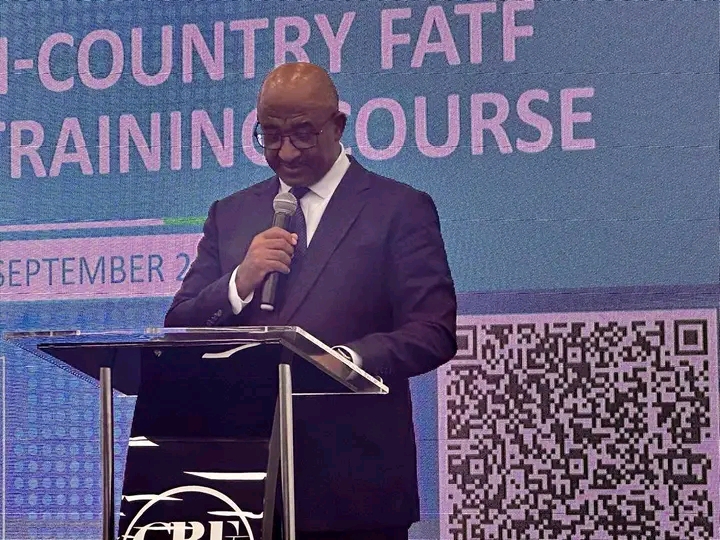
Mbabane- Eswatini will need a coordinated national effort to satisfy the country’s next Financial Action Task Force (FATF) assessment, Central Bank Governor Dr. Phil Mnisi has warned.
Mnisi said the upcoming Mutual Evaluation would not only scrutinise the country’s laws and regulations, but would also assess whether institutions across the country were working effectively to combat money laundering, terrorist financing and proliferation financing.
He said this meant that no single institution could carry the responsibility for Eswatini’s anti-money laundering, counter-financing of terrorism and proliferation financing (AML/CFT/PF) regime.
“As we prepare for the Mutual Evaluation, it is important to remember that success will require a coordinated, national approach,” Mnisi said.

The governor was speaking on Monday at the opening of the FATF Standards Training Programme, hosted by the Central Bank of Eswatini from September 14 to 18, 2026.
Mnisi said the programme came at an important time as the country strengthened its AML/CFT/PF regime ahead of the assessment.
“This training comes at a critical time as Eswatini continues to strengthen its AML/CFT/PF regime and prepare for the upcoming Mutual Evaluation,” he said.
He explained that the Mutual Evaluation would examine both the adequacy of Eswatini’s legal and regulatory framework and the effectiveness of the country’s collective response to financial crime.
This means that compliance will depend not only on the existence of laws, but also on how effectively the various institutions responsible for implementing them perform their respective roles.
Mnisi said stakeholders therefore needed a sound understanding of the FATF Standards and how they should be applied in practice.
He said knowledge gained from the training should help institutions strengthen their compliance systems, improve internal controls and contribute towards making the country’s AML/CFT/PF framework more effective.
The governor’s call for greater coordination places emphasis on cooperation between the different players involved in the country’s financial crime-fighting framework.
These include financial-sector institutions, regulators and agencies responsible for financial intelligence and law enforcement.
Mnisi said the effectiveness of the system would depend on how well these institutions worked together rather than on the performance of one organisation in isolation.
For businesses, particularly financial institutions, the upcoming assessment puts greater focus on the effectiveness of their internal compliance controls and their ability to apply FATF standards in practice.


Mnisi said the training should therefore not be viewed merely as preparation for an assessment, but as an opportunity to strengthen institutional capacity to identify and respond to financial crime risks.
The governor said the country needed all stakeholders to understand their responsibilities and contribute towards a common national objective.
The next Mutual Evaluation will consequently provide a test of whether Eswatini’s strengthened AML/CFT/PF framework is functioning effectively across the country.
Mnisi urged participants to use the training to improve practices within their respective institutions, saying a coordinated approach would be essential if Eswatini was to demonstrate meaningful results when it undergoes the assessment.


Discussion about this post