



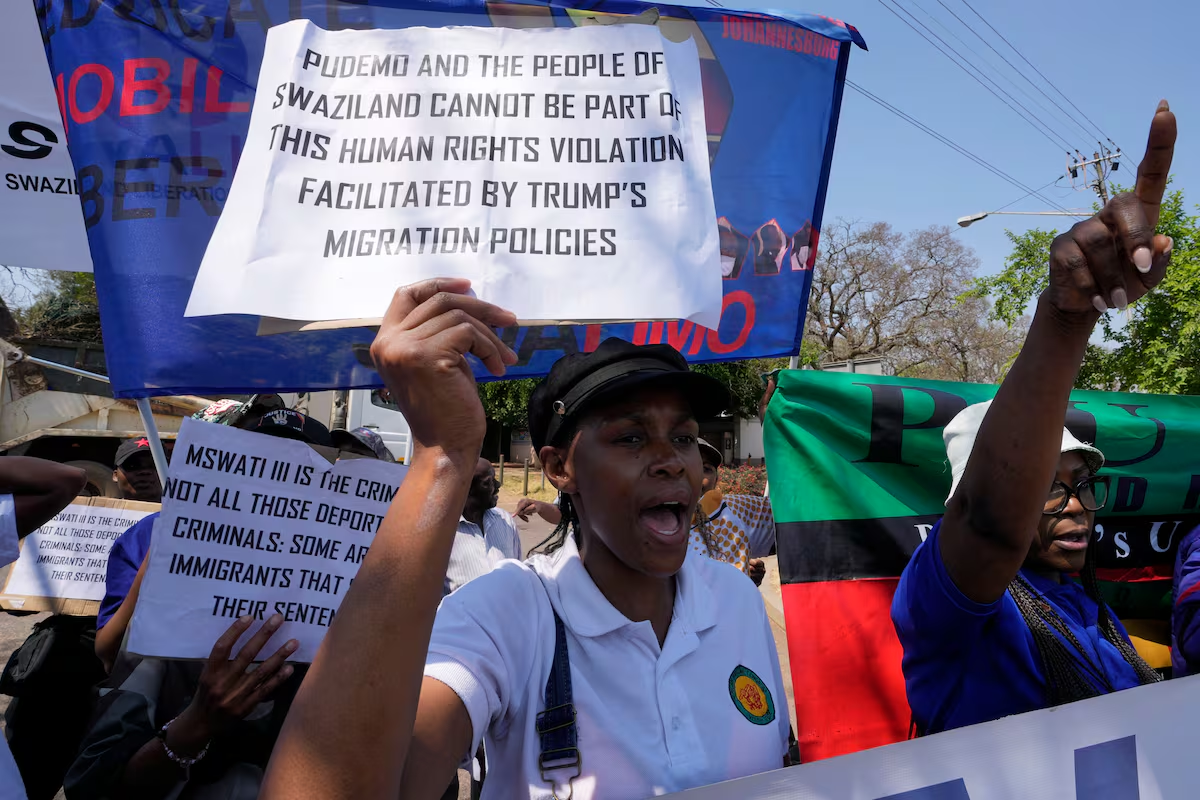
Mbabane – The arrival of 11 more third-country nationals (TCNs) deported from the United States has thrust Eswatini’s controversial bilateral agreement back into the spotlight, as government faces growing pressure to account for millions of Emalangeni linked to the programme following Parliament’s call for a special audit into the handling of the funds.
Government confirmed on Thursday that 11 more deportees had arrived in the Kingdom under the bilateral arrangement with the United States, adding to previous groups received since the programme commenced.
In a Press release, Acting Government Spokesperson Thabile Mdluli said the individuals, who are predominantly from African countries, would remain in Eswatini temporarily and that their rights would be protected in line with national laws and international obligations.
She said government had also put measures in place to ensure the security and well-being of both the third-country nationals and Emaswati during their stay.


“The Kingdom of Eswatini remains a responsible member of the international community and will continue to honour its bilateral and international commitments in a manner that upholds its sovereignty, respects its national laws, and reflects its longstanding humanitarian values,” Mdluli said.
However, the latest arrivals come against the backdrop of growing scrutiny over the financial administration of the agreement, after Parliament’s Portfolio Committee on Finance last week raised concerns over alleged irregular handling of funds associated with the programme.
The committee has called on Auditor General Timothy Matsebula to conduct a special audit into the entire funding arrangement after finding what it described as possible breaches of the Public Finance Management Act.
According to the committee’s report, an investigation that initially focused on alleged irregular expenditure of E7 million uncovered that the amount spent had risen to E21.47 million, with additional commitments of E11.42 million.


The committee alleged that the funds were transferred through the National Disaster Management Agency (NDMA) without the involvement of the Ministry of Finance and the Ministry of Economic Planning and Development, despite their role in overseeing public finances and external funding.
It further questioned the use of part of the money to support the upgrading of the Matsapha Correctional Services facility, saying the expenditure required further scrutiny.
The report also placed the administration of the funds under the spotlight, noting that the Head of Secretariat on Human Trafficking in the Prime Minister’s Office was the controlling officer, while alleging that the Prime Minister’s Office played a central role in the management of the funds.
The committee described the handling of the money as a serious governance concern and recommended that the Auditor General investigate the entire project and submit a report to Parliament within 60 days.
“It is a serious anomaly and highly suspicious that funds that are meant for the Government of Eswatini are being disbursed through the Office of the Prime Minister, without the consent of the relevant ministries,” the report stated.
Despite the parliamentary concerns, government has not publicly disclosed the financial details of the arrangement with the United States, including the value of funding received, the conditions attached to it, or the full number of third-country nationals expected to be hosted in Eswatini.
The arrival of the latest group therefore comes at a time when the government is under pressure to provide greater transparency on both the humanitarian obligations of the agreement and the financial processes surrounding its implementation.
With Parliament seeking an independent audit, the US deportees programme continues to attract political attention, with accountability and public finance management now emerging as key issues alongside the diplomatic commitments between Eswatini and the United States.


Discussion about this post