



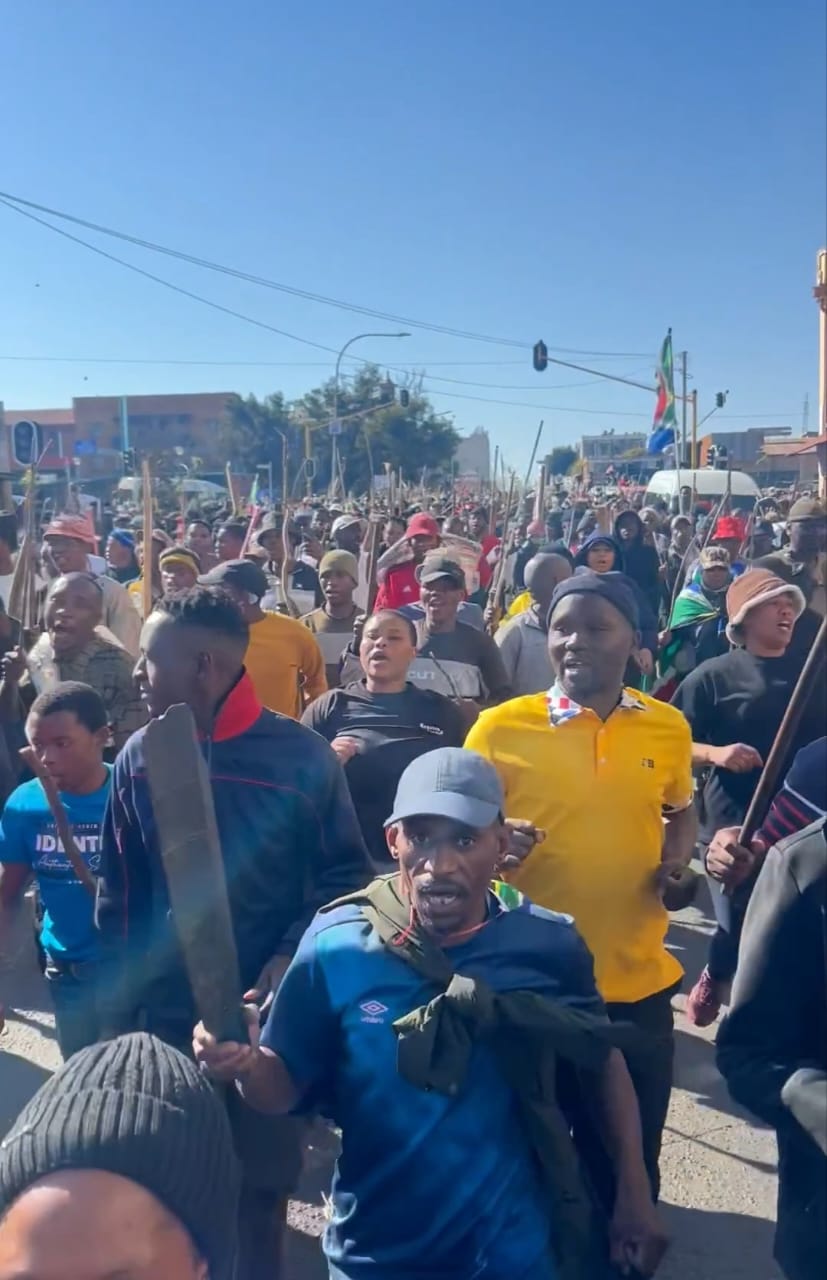
JOHANNESBURG — South African cities ground to a near-halt today as thousands of protesters took to the streets for a coordinated national demonstration organized by the anti-immigration group March and March.
The highly controversial civil movement, founded by former radio personality Jacinta Ngobese-Zuma, previously declared a strict June 30 deadline demanding that all undocumented foreign nationals voluntarily vacate the country.The arrival of the deadline has sparked a massive security deployment by the South African Police Service (SAPS) and the South African National Defence Force (SANDF).
Authorities have set up roadblocks and saturated known flashpoints to suppress potential outbreaks of xenophobic violence. Major commercial sectors in central Durban and Johannesburg remained shuttered on Tuesday as business owners feared a repeat of the deadly civil unrest that historically plagued the regions.
According to reports from the BBC, a heavy police presence was required to manage ethnic Zulu demonstrators carrying traditional shields and staffs in KwaZulu-Natal, creating immediate friction with law enforcement. Meanwhile, community policing forums in Soweto and Eldorado Park struggled under the strain of thousands of demonstrators gathering in public parks.

The marchers allege that an influx of undocumented migrants has severely burdened South Africa’s public healthcare systems, escalated violent crime, and worsened the country’s crippling 33% unemployment rate. “South Africans are tired of standing in long lines at clinics and competing for scarce public school spaces,” voiced Musa Hlongwa, a prominent civil leader backing the movement.
Political support has also mounted, with the uMkhonto weSizwe Party (MKP) publicly endorsing the march under the condition that it remains entirely peaceful.Humanitarian Crisis and BacklashThe intense pressure from March and March has triggered a massive humanitarian exodus.


In the weeks leading up to the deadline, over 25,000 African migrants, primarily from Zimbabwe, Malawi, Mozambique, Nigeria, and Ghana, fled their homes or sought safety in overcrowded makeshift shelters. Embassies have scrambled to coordinate emergency airlifts and bus evacuations to protect their citizens from vigilantism.
The Reuters news agency reported that despite the organizers’ claims of running a non-violent awareness campaign, clashes over the last two months have already claimed at least four lives. Early reports on Tuesday confirmed that at least ten individuals were arrested in Soweto and Hammarsdale for allegedly looting foreign-owned tuck shops.
President Cyril Ramaphosa issued a stern warning through his national newsletter, rebelling against the group’s self-imposed deadline. “The right to protest does not give anyone the license to threaten, intimidate, or vandalize,” Ramaphosa stated, emphasizing that thousands of foreign nationals reside in South Africa legally and contribute significantly to the economy.


Discussion about this post