



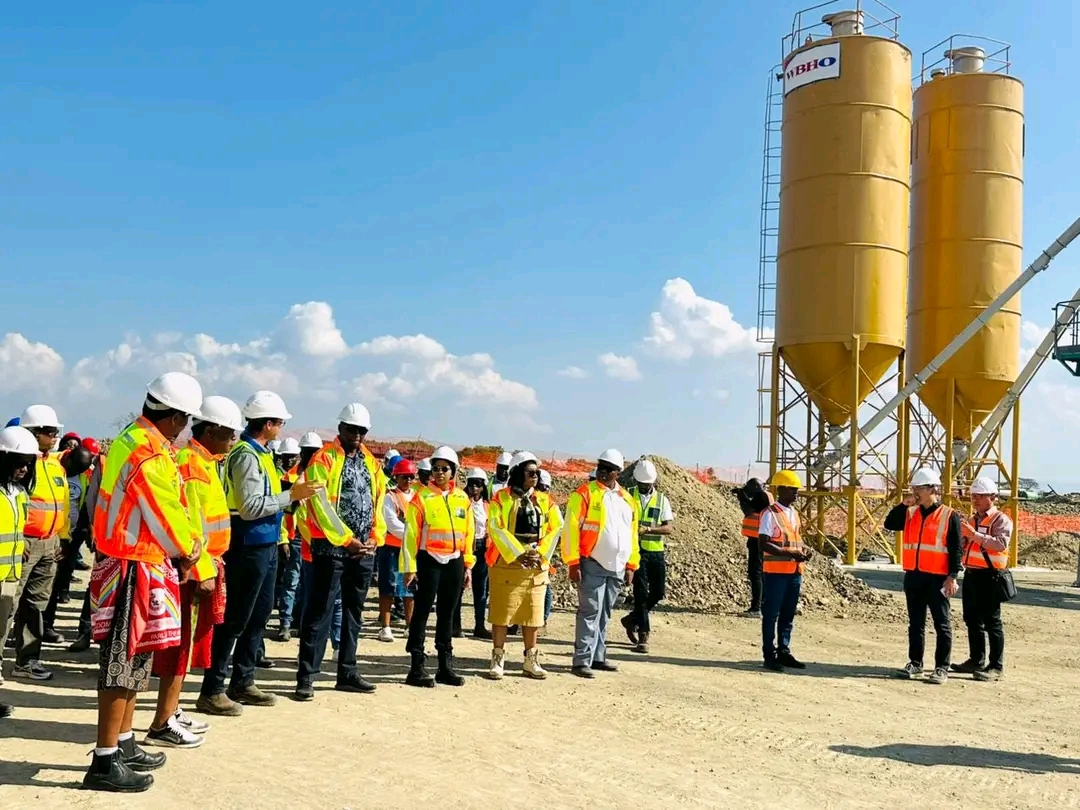
The Strategic Fuel Reserve Facility (SFRF) under construction at Phuzumoya in the Siphofaneni constituency has reached 16 percent completion, marking a significant milestone in Eswatini’s flagship energy security initiative.
The project was inspected this week by Prime Minister Russell Mmiso Dlamini, who expressed satisfaction with the pace of work and reiterated government’s commitment to delivering the facility within the agreed timeframe and standards.
Once completed, the facility will have the capacity to store 80 million litres of fuel, enough to sustain national consumption for at least 60 days in the event of global supply disruptions. Government says this will significantly reduce Eswatini’s vulnerability to external shocks in the fuel market and strengthen long-term energy security.
The project, valued at approximately E5.2 billion, is being implemented by the Eswatini National Petroleum Company, with Overseas Electrical Engineering serving as the main contractor. Completion is expected within a 36-month construction period.

During the site visit, Minister of Natural Resources and Energy, HRH Prince Lonkhokhela, described the development as one of the most important national investments in the Kingdom’s energy infrastructure. He said the facility represents a strategic asset that will enhance economic resilience, protect national sovereignty, and secure future energy needs for Emaswati.
Prince Lonkhokhela commended the progress achieved so far, noting that visible tank foundations and completed preliminary works such as site establishment, bulk earthworks, drainage systems, and foundation preparations demonstrate steady advancement. He also acknowledged the Prime Minister’s continued oversight of the project, saying it reflects strong political commitment to ensuring successful delivery.
Prime Minister Dlamini said he was encouraged that the project is reportedly progressing ahead of schedule. He emphasized the importance of maintaining momentum while ensuring that construction remains within budget, on time, and meets required quality standards.
He further called for increased participation of local businesses in the project, urging implementing partners to prioritize employment creation and the empowerment of local contractors and suppliers. According to him, the project should not only deliver infrastructure but also generate meaningful socio-economic benefits during the construction phase.
Government views the SFRF as a critical component of its broader infrastructure and energy diversification agenda. By increasing national storage capacity, the facility is expected to provide a buffer against global fuel price volatility and supply chain disruptions, while improving national preparedness for emergencies.
The Strategic Fuel Reserve Facility is also expected to play a key role in stabilising fuel availability in the country, supporting transport, industry, and essential services that depend heavily on uninterrupted fuel supply.
Authorities have maintained that, once operational, the facility will stand as one of the largest energy security investments in Eswatini’s history, positioning the country for greater resilience in an increasingly unpredictable global energy environment.


Construction is expected to continue over the next three years, with government maintaining close oversight as the project advances toward completion.


Discussion about this post