



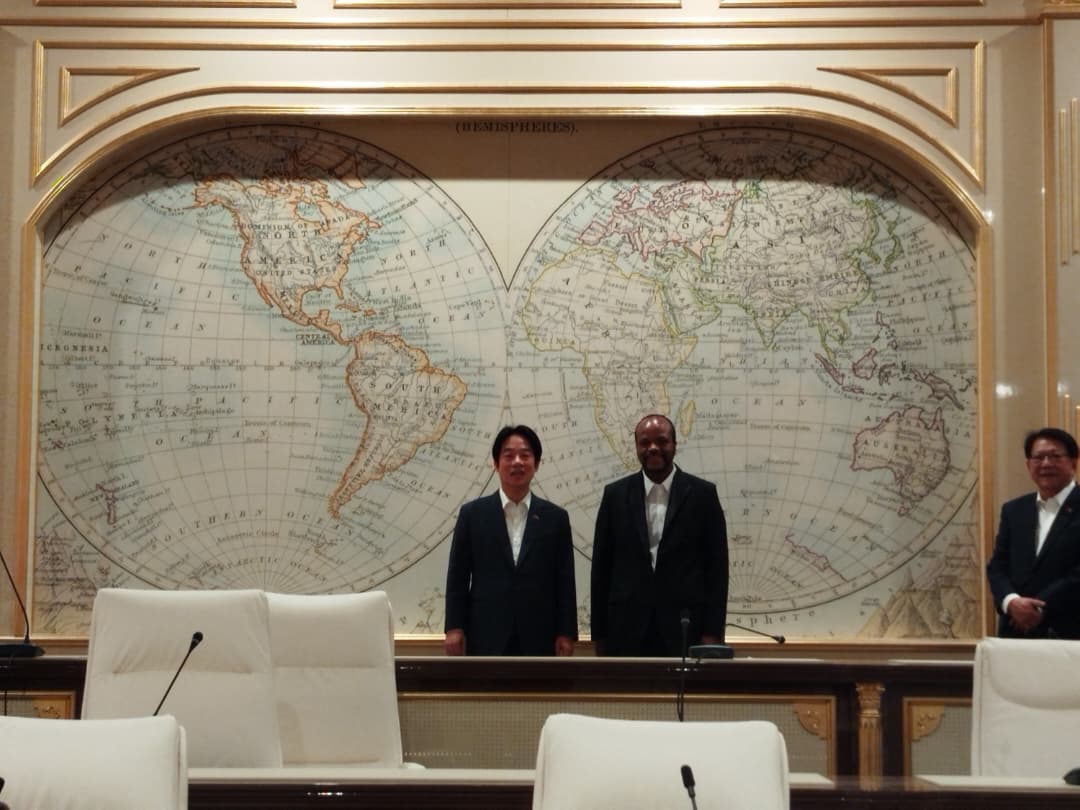
Ezulwini : His Majesty King Mswati III has underscored tourism, industrialisation, and infrastructure development as central pillars for Eswatini’s economic transformation, as he hosted President Lai Ching-te during a tour of the ICC Ezulwini Palazzo.
Speaking during the tour, His Majesty highlighted the need for Eswatini to leverage its untapped potential, particularly in tourism, as a driver of economic growth in the absence of natural resources such as oil and gas.
The King noted that while countries endowed with oil and gas often dominate global earnings, tourism has proven to be a leading revenue source in countries without such resources.
“Part of the agenda is that we should promote tourism because tourism has a very big potential of transforming the country into one of the top countries in terms of wealth,” said His Majesty.
Drawing from his global travels, the King said he had observed a pattern in which nations lacking oil and gas resources often rely heavily on tourism as their primary economic engine.
However, he pointed out that Eswatini is also exploring possibilities in the energy sector.
“Here in Eswatini we do not have oil and gas, but who knows in the near future we might. It is possible because not far from Eswatini there is gas,” he said, referencing developments in neighbouring Mozambique.
He added that government was actively considering such possibilities, noting that proximity to gas reserves could signal potential within the country.
His Majesty further emphasised the importance of infrastructure in unlocking economic opportunities, expressing satisfaction with the development of the ICC Ezulwini Palazzo.
“We are pleased that this building is located in a very special place. There is a lot of history about this site,” he said.
The King also referenced the historical significance of the location, noting that it was the site where African nations gathered in the formation of a United Nations declaration.


Turning to international relations, His Majesty made a strong appeal regarding Taiwan’s global participation, highlighting the contributions of its 23 million citizens.
“In the spirit of the United Nations, we say we are not going to leave anyone behind, and the 23 million people of Taiwan are left behind,” he said.
He called on the global community to recognise Taiwan’s potential contributions to humanity, emphasising the importance of inclusivity in addressing global challenges.


Discussion about this post