



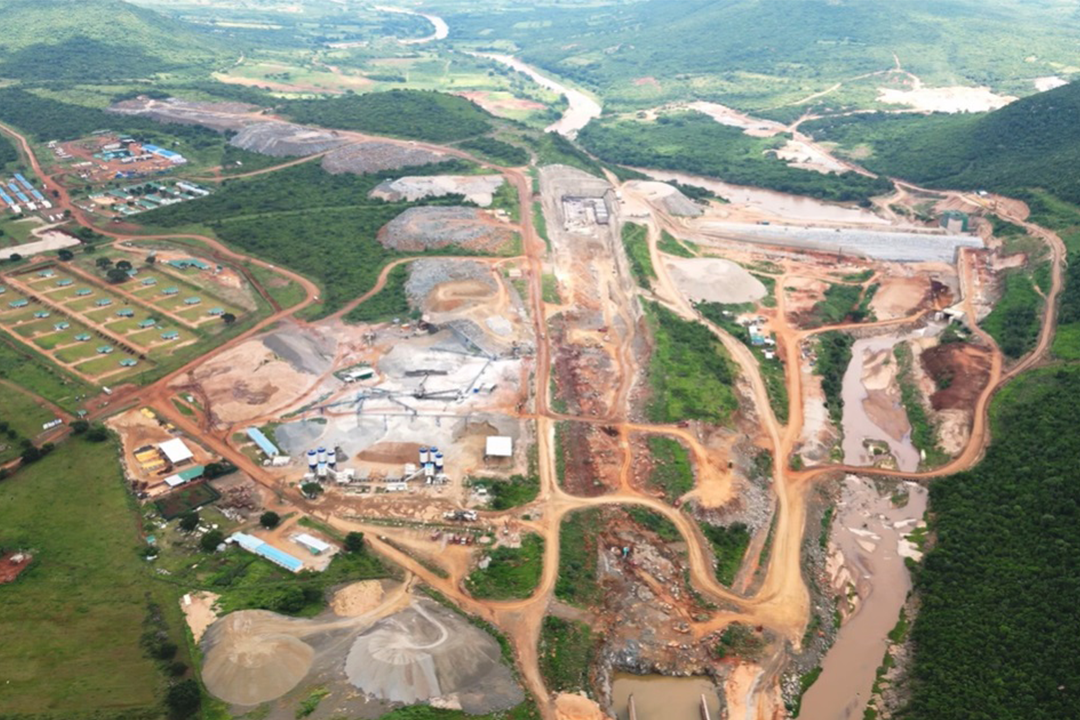
Mbabane- The Kingdom of Eswatini’s ambitious drive toward climate resilience and food sovereignty has reached a critical milestone, with the E2.6 billion Mpakeni Dam now officially 47% complete.
The large-scale infrastructure project, which forms part of the Mkhondvo-Ngwavuma Water Augmentation Programme ( MNWAP), continues to take visible shape along the Ngwavuma River, where major earthworks and core structural components are steadily advancing.
Once completed, the dam is expected to become a key water storage facility designed to support irrigation development and reduce the country’s vulnerability to increasingly unpredictable rainfall patterns.
Implemented under the Eswatini Water and Agricultural Development Enterprise in partnership with the African Development Bank(AfDB), the project remains on track for completion in 2028.

At full capacity, the dam is projected to supply irrigation water to approximately 30,000 hectares of agricultural land, significantly expanding the country’s irrigated farming potential and supporting a shift toward more resilient and commercially viable agriculture.


Beyond its physical scale, the Mpakeni Dam is being positioned as a critical enabler of rural transformation. The broader water conveyance system linked to the project is expected to improve water distribution efficiency across key farming zones, allowing farmers to better plan production cycles and reduce losses linked to drought conditions.
Updating the public through their facebook page, EWADE has emphasised that the project forms part of Eswatini’s broader climate adaptation and food security agenda, aimed at ensuring consistent agricultural output in the face of changing environmental conditions.
By regulating seasonal water flows, the dam is expected to play a stabilising role in both drought mitigation and flood control, offering long-term protection to farmlands across the region.
As construction progresses toward its next phase, the Mpakeni Dam stands as one of the country’s most strategic infrastructure investments, with its long-term impact expected to extend beyond water storage into sustained agricultural growth and improved national food security.


Discussion about this post