



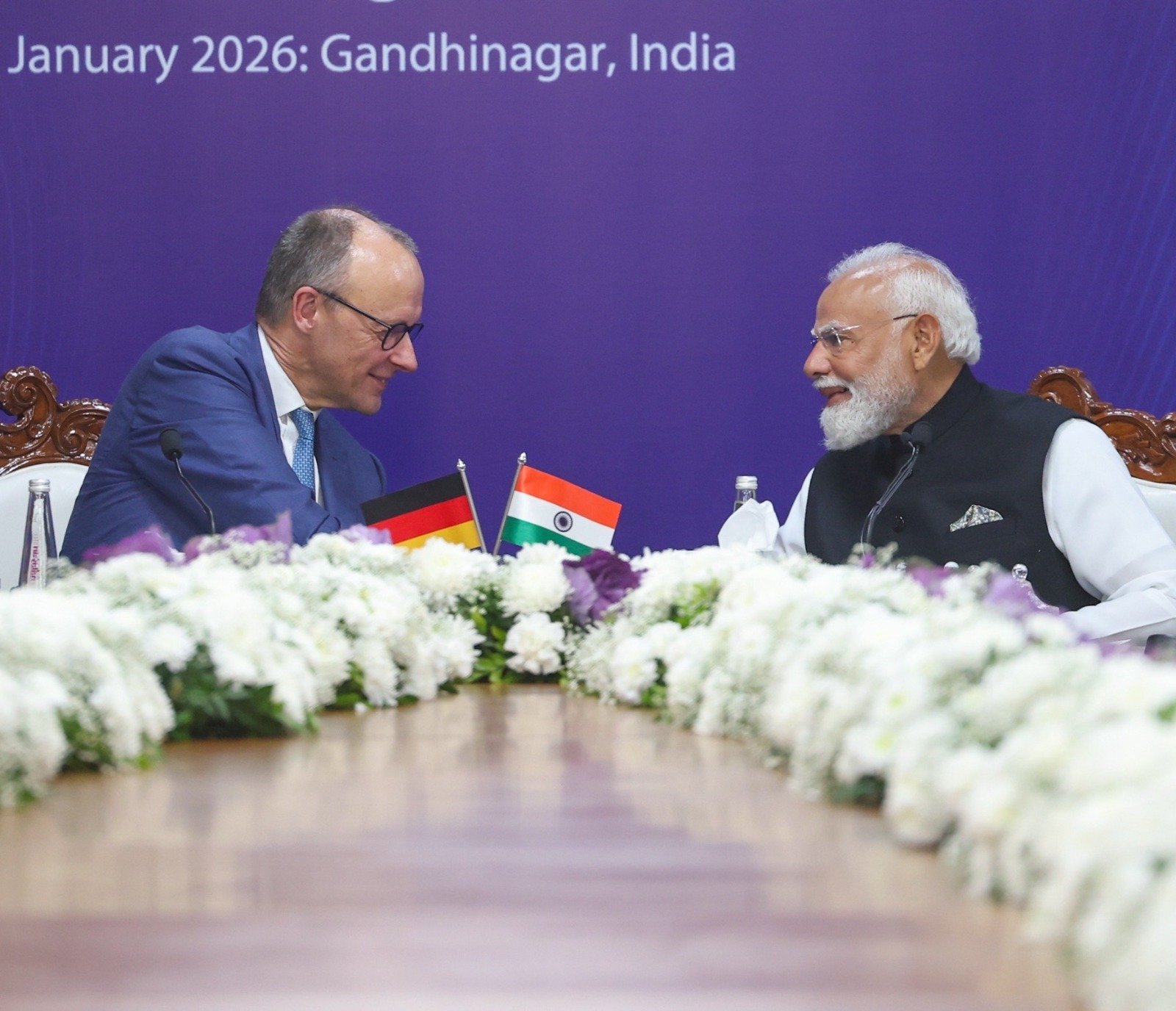
AHMEDABAD, India – German Chancellor Friedrich Merz has raised the prospect of the European Union and India concluding a long discussed free trade agreement by the end of January, as global trade tensions deepen and negotiations between Washington and New Delhi remain frozen.
Speaking to journalists in Ahmedabad on Monday after talks with Indian Prime Minister Narendra Modi, Merz said senior European Union leaders could travel to India to formalise the deal if negotiations are completed in time. The visit marked his first trip to India since taking office.
The proposed agreement, under negotiation for several years, is viewed in European capitals as a way to strengthen economic ties with India while reducing dependence on China and Russia. Trade between the European Union and India reached 120 billion euros in 2024, making the bloc India’s largest trading partner.
For Eswatini and other Southern African Customs Union members, developments around EU trade policy are closely watched, as Brussels continues to reshape its global partnerships through new agreements that may influence market access and competition for developing economies.

Momentum around the EU India talks has increased since the United States raised tariffs on Indian exports and urged New Delhi to cut its purchases of Russian oil. An earlier attempt to reach a trade agreement between India and the United States collapsed last year following a breakdown in communication.


The potential EU India pact would come shortly after the European Union’s agreement with the Mercosur bloc in South America, part of Europe’s wider effort to diversify trade relations amid shifting global rules.
Indian Trade Minister Piyush Goyal, speaking separately in Gujarat, said negotiations were nearing their final stages. German officials described the discussions between Merz and Modi as intensive, fuelling expectations of progress.
The European Union is seeking significant tariff reductions on products such as cars, medical devices, wine, spirits and meat, as well as stronger intellectual property protections. India, on the other hand, wants duty free access for labour intensive exports and quicker recognition of its automotive and electronics industries. Officials involved in the talks have acknowledged that disagreements remain over steel, carbon related charges and market access.
During the visit, Germany and India also signed agreements covering minerals, healthcare and artificial intelligence.
Merz also used the trip to encourage India to lessen its reliance on Russian energy and military equipment. India remains one of the largest buyers of Russian oil and gas and sources much of its defence hardware from Moscow.
While agreeing with European views on Russia’s war in Ukraine, Merz said he recognised India’s continued dependence on Russian supplies, noting the complexity of the situation.
Choosing India for his first Asian visit signalled a broader shift among European leaders, who have traditionally prioritised China. Merz warned that rising protectionism globally is harming both Germany and India, pointing to trade barriers and export controls that have disrupted supply chains, including those affecting German carmakers.




Discussion about this post