



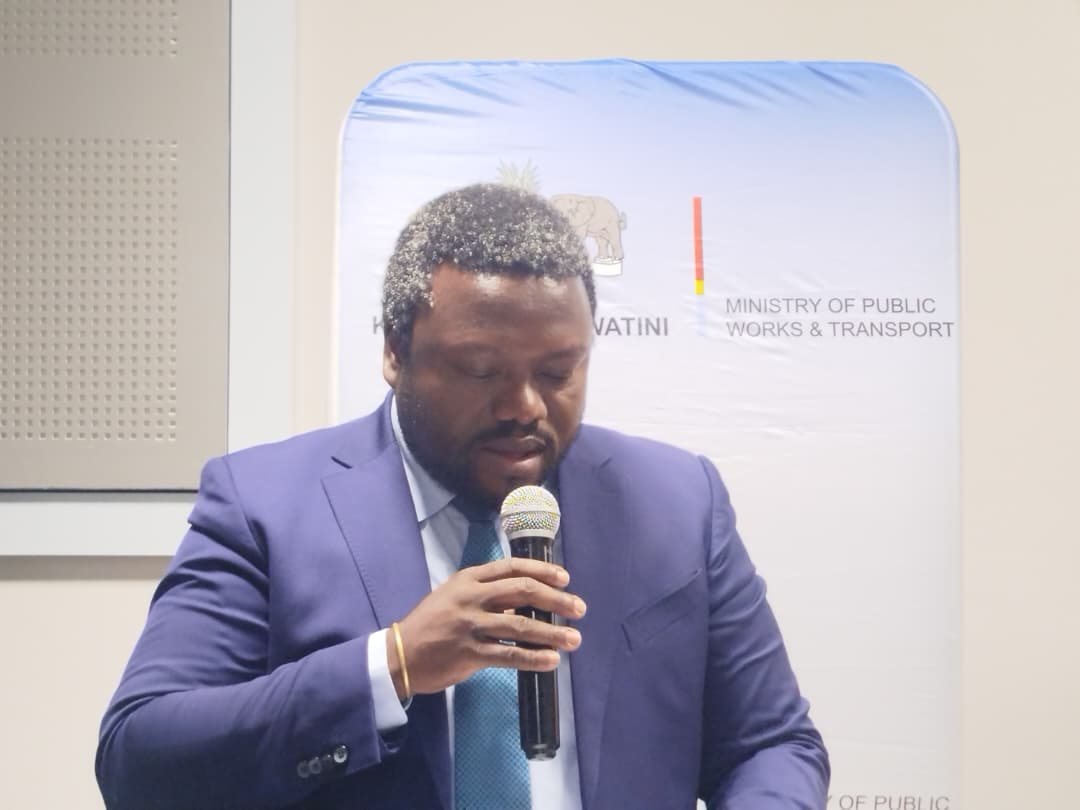
MBABANE – Minister of Public Works and Transport Ndlaluhlaza Ndwandwe has called on the newly appointed Road Transportation Board (RTB) to ensure that Eswatini’s public transport industry remains strictly reserved for indigenous Emaswati.
The minister made the remarks on Wednesday during the official appointment of the Road Transportation Board and the Road Transportation Appeals Board at the Sincephetelo Motor Vehicle Accident (MVA) Building in Mbabane.
Addressing members of the newly constituted board, Ndwandwe said protecting indigenous participation in the transport sector was one of the key responsibilities that should guide the board’s work over the next three years.
He said the public transport industry was one of the few sectors where many Emaswati had invested their savings and built sustainable businesses, making it important for regulators to safeguard their interests.


“The public transport sector must remain the preserve of indigenous Emaswati,” the minister said. “This industry provides livelihoods for many families and creates employment opportunities for citizens. The board must ensure that this objective is protected at all times.”
Ndwandwe further revealed that the country’s public transport sector was already heavily congested, with the number of operators competing for limited business opportunities continuing to grow.
According to the minister, the situation has reached a point where some transport operators have been forced to work in shifts in order to accommodate one another and avoid conflicts over passengers and routes.
He said the oversupply of operators in certain areas highlighted the need for careful regulation and informed decision-making when considering applications for permits.
“The sector is congested. There are operators who have to take turns and work in shifts because there are simply too many vehicles competing within the same market,” he said.
The minister urged the board to exercise caution when assessing applications and to ensure that decisions are informed by actual transport demand rather than pressure from prospective operators.
He said the board’s responsibility was not merely to issue permits but to ensure the availability of efficient, reliable and sustainable transport services throughout the country.
Ndwandwe stressed that the effectiveness of the board would not be measured by the number of permits approved but by its ability to maintain order, fairness and stability within the transport industry.
The newly appointed Road Transportation Board will serve for a three-year term from May 2026 to May 2029.
Nolwazi Mhlanga-Mathabela retained her position as chairperson and will continue leading the board. Other members include Patrick Mkhatshwa, Inkhosikati Thandie Dlamini, Hebert Shabangu, William Kunene, Leonard Cotze, Khanyisile Sihlabela, Somandla Dlamini and interim secretary Bhekizizwe Mkhabela.
Established under the Road Transportation Act of 2007, the board is responsible for administering road transport permits, including route permits, area permits, national road transport permits and international transport permits.
Its functions include evaluating permit applications, advertising applications for public comment, processing objections and making determinations on applications.


The board also advises the minister on matters affecting the transport industry, including passenger transport demand, freight movement, fares and tariffs.
One of the major tasks awaiting the board is determining the most appropriate modes of public transport for specific routes and overseeing a structured process for opening routes for permit applications.
Ndwandwe further encouraged members to strengthen engagement with transport stakeholders, including transport associations, local authorities, the National Transport Body, the Road Safety Council and members of the public.
Meanwhile, the Road Transportation Appeals Board, chaired by Siphefu Shabalala, will continue serving as the final authority for appeals arising from decisions made by the RTB.
The Appeals Board is mandated to promote accountability, transparency and fairness by reviewing disputed decisions and determining whether they should be upheld, amended or overturned.
With both boards now in place, government expects the transport regulatory framework to play a greater role in managing congestion within the sector while ensuring that public transport continues to provide economic opportunities for indigenous Emaswati.
The Road Transportation Appeals Board 2026-2029
Shabalala Siphefu – Chairperson
Dlamini Sabatha – Secretary
Mamba Mandla,
Ntshalintshali Meshack,
Mavuso Sicelo
The Road Transportation Board 2026-2029
Nolwazi Mhlanga – Mathabela – Chairperson
Patrick Mkhatshwa – Member
Inkhosikati Thandie Dlamini – Member
Hebert Shabangu – Member
William Kunene – Member
Leonard Cotze – Member
Khanyisile Sihlabela – Member
Somandla Dlamini – Member
Bhekizizwe Mkhabela – Interim Secretary


Discussion about this post