



Manzini – About 90 young people recently completed training in sewing, upholstery, and metalwork under the Eswatini Youth Empowerment Programme (EYEP) after a three-month skills development course.
The graduation ceremony took place on Friday at the Bethel Vocational Training Centre under the International Youth Fellowship (IYF). Participants were drawn from the Lubombo and Shiselweni regions, many of whom had previously lacked access to opportunities to acquire skills needed to earn a living. Some graduating artisans received essential tools to help them start small businesses in their communities.
EYEP, supported by the United Nations Development Programme (UNDP) and funded by the Ministry of Economic Planning and Development, targets youth who did not complete high school or pursue tertiary education. The programme also offers six-month internships to unemployed graduates, providing hands-on experience and a monthly stipend. The initiative aims to reduce youth unemployment, currently at 56% among those aged 18 to 35.
The ceremony was officiated by UNDP Deputy Resident Representative Nessie Golakai-Gould and IYF Director Rev. David Gang, with Senior Economist Sibongile Dube representing the Ministry of Economic Planning and Development.


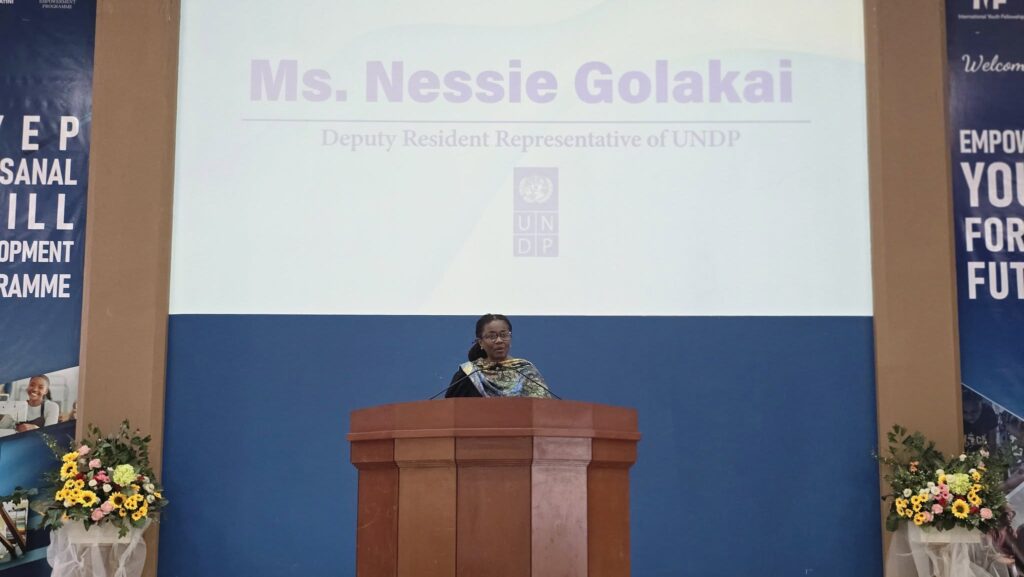
“As stakeholders in development, our role is not to decide for the youth but to actively engage and support them. We want to help them develop innovative solutions to social challenges and improve their living standards,” said Golakai-Gould. She expressed appreciation to all partners for their support, particularly the Ministry and IYF, for equipping young people with tools to build livelihoods and provide services in their communities.


Rev. Gang encouraged graduates to apply their skills and resilience when facing challenges, saying it would help them overcome difficult situations.
The graduates expressed gratitude to EYEP, IYF, their trainers, and partners, promising to put their new skills to good use.
Since 2023, EYEP has trained 450 young people in vocational skills including sewing, metalwork, upholstery, plumbing, construction, electrical installation, and welding. Most of the first 360 trained artisans are now earning a livelihood, while 300 graduates have completed six-month internships with stipends, many of whom have since secured employment.




Discussion about this post