



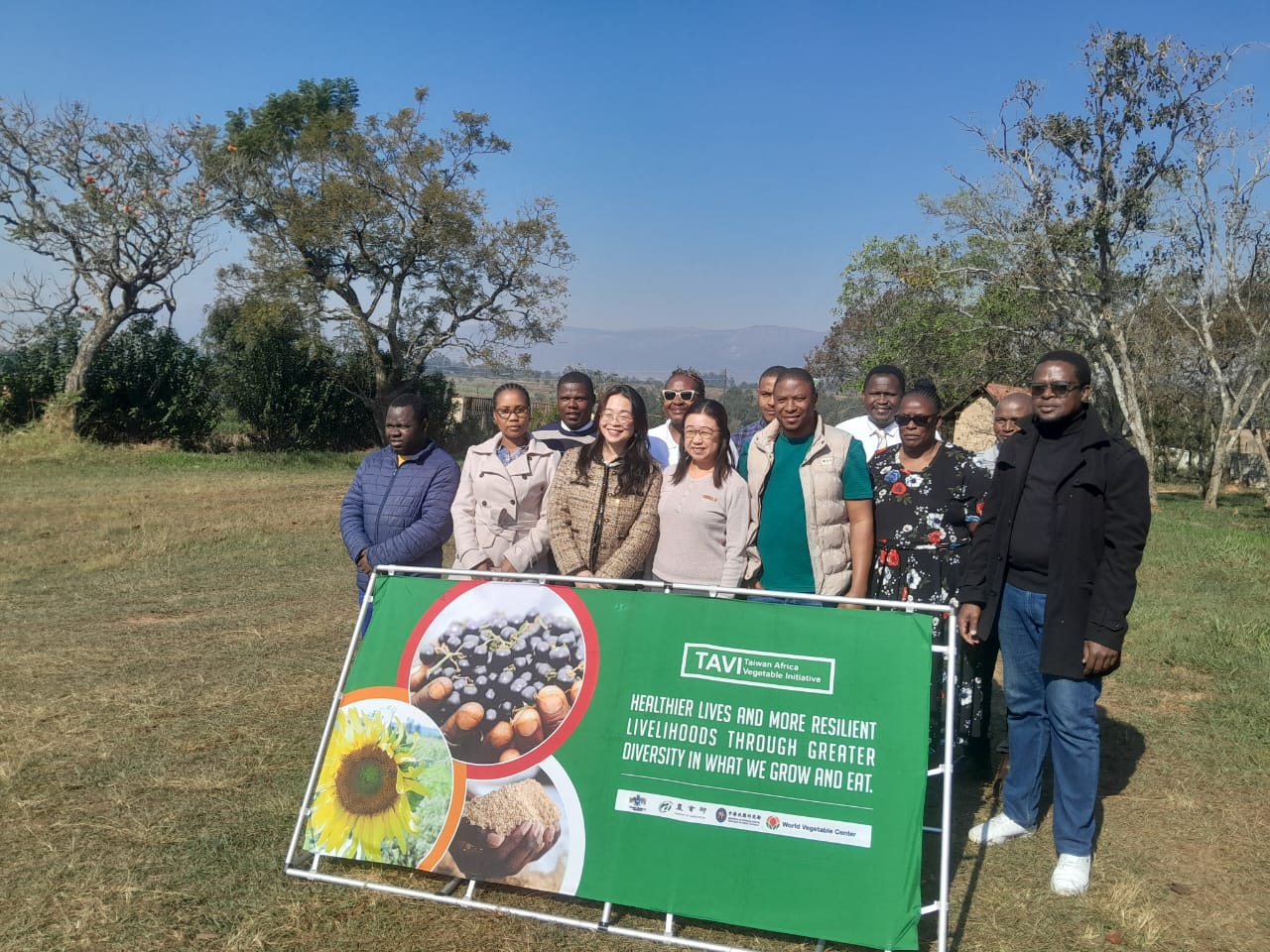
Malkerns– Eswatini’s traditional African vegetables are set to move beyond backyard gardens and subsistence farming as the second phase of the Taiwan-Africa Vegetable Initiative (TAVI II) shifts its focus towards commercial production and structured markets.
Project partners said TAVI II will concentrate on developing complete vegetable value chains by improving production, market access and business linkages between farmers, buyers, processors and consumers.
The strategy is expected to create new income opportunities for smallholder farmers while increasing the supply of nutritious indigenous vegetables across the country.
Officials outlined the new direction during the TAVI II-2026 Media Networking and Briefing Session held at Malkerns Research Station, where they reflected on the achievements of the first phase and presented priorities for the next stage of implementation.


Unlike the first phase, which focused on promoting the production, conservation and consumption of traditional African vegetables, the second phase aims to make the crops commercially viable by integrating them into formal markets.
The project will also strengthen school feeding programmes by linking schools directly with local farmers, creating a stable market for fresh produce while improving children’s access to nutritious meals.
Another major investment under the programme is the continued development of the National Genebank, which preserves indigenous vegetable seeds and plant genetic resources. Officials described the facility as a strategic national asset that will support future research, crop improvement and food security.
Worth noting, TAVI II also seeks to position Eswatini as a regional centre for knowledge and technology exchange on traditional African vegetables. Through collaboration with countries in Eastern and Southern Africa, the initiative aims to promote innovation and encourage wider adoption of climate-resilient vegetable production systems.


Speaking during the briefing, Taiwan Embassy representative Sofia Jeng thanked the local media for supporting the initiative over the years, saying journalists play an important role in raising awareness about agricultural development programmes supported by Taiwan.
She said continued media engagement would help communicate the project’s contribution to improving vegetable production, strengthening food security and creating opportunities for farmers.
Project partners said Phase I laid the foundation by establishing demonstration gardens, promoting nutrition education, conserving indigenous vegetable seeds and building partnerships among government institutions, researchers, schools, farmers and development partners.




Discussion about this post