



The United States has carried out fresh military strikes against targets in southern Iran, intensifying fears that the fragile cease-fire between Washington and Tehran could collapse entirely amid renewed hostilities around the strategically vital Strait of Hormuz.
According to U.S. officials, American forces intercepted and destroyed four Iranian one-way attack drones over the Strait of Hormuz on Wednesday before launching airstrikes on a drone ground-control station in the Iranian port city of Bandar Abbas. Officials claimed the strikes were defensive and aimed at protecting U.S. forces and commercial shipping in the region.
The latest confrontation marks the second time in three days that U.S. forces have struck targets inside Iran, despite ongoing diplomatic efforts aimed at preserving a shaky cease-fire that has repeatedly come under strain since it was brokered earlier this year.
A U.S. official, speaking on condition of anonymity because of the sensitivity of military operations, said the Bandar Abbas control station was preparing to launch a fifth drone when it was targeted by American warplanes.


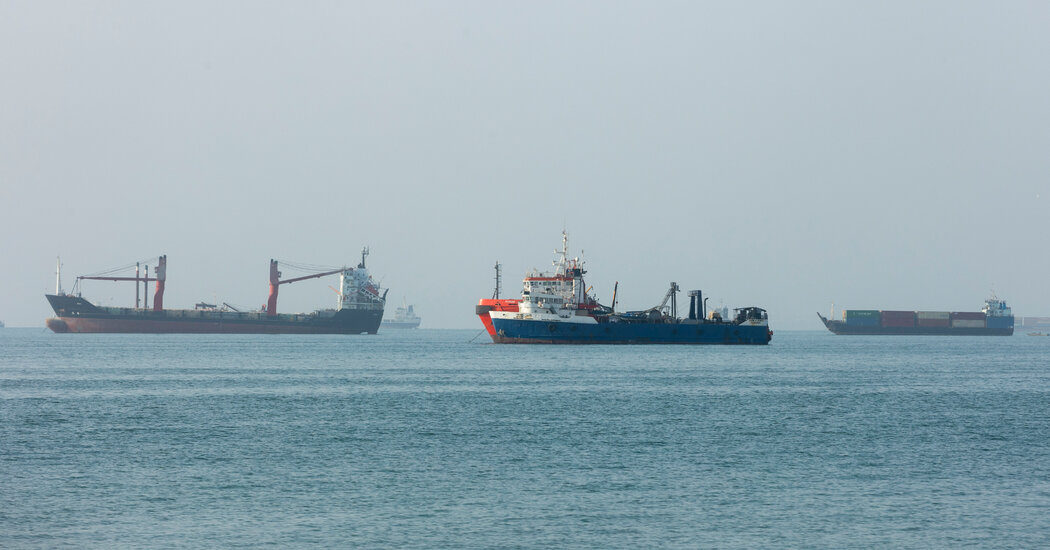
The Strait of Hormuz remains at the center of the escalating tensions. The narrow waterway, through which roughly a fifth of the world’s oil supply normally passes, has seen drastically reduced commercial traffic after Iran effectively blockaded the route during the conflict. International markets have remained nervous over fears that a prolonged closure could trigger a major global energy crisis.
President Donald Trump addressed the developments during a lengthy cabinet meeting at the White House, where he signaled that negotiations with Iran could continue for an extended period. Trump dismissed concerns that domestic political pressure ahead of U.S. midterm elections would force him into a rushed settlement.
“I don’t care about the midterms,” Trump reportedly said, accusing Iranian officials of attempting to delay negotiations in the hope of political changes in Washington.


The U.S. president also rejected reports aired by Iranian state television suggesting that Washington and Tehran were close to signing a preliminary agreement over the reopening of the Strait of Hormuz. Iranian media claimed the draft proposal would allow Iran, together with Oman, to oversee commercial shipping routes through the strait in exchange for the easing of American naval pressure.
However, the White House dismissed the report as a “complete fabrication,” while Trump insisted that the waterway would remain under international protection rather than Iranian control.
The latest military exchange follows earlier U.S. strikes this week targeting Iranian boats and missile launch sites allegedly involved in mine-laying operations around the strait. American officials said those operations were also defensive in nature and intended to safeguard maritime navigation.
Iran’s Islamic Revolutionary Guard Corps (IRGC) responded angrily to Wednesday’s attacks, warning that any further cease-fire violations would provoke a “decisive reciprocal response.” Iranian state-linked media later claimed that the IRGC had targeted a U.S. airbase in retaliation, although details remained unclear.
Iranian Supreme Leader Mojtaba Khamenei also suggested that Tehran could resume strikes against American military installations across the Persian Gulf if hostilities continued.
Diplomatic efforts to salvage the cease-fire are being further complicated by widening regional instability. Fighting has intensified between Israel and the Iran-backed Hezbollah movement in Lebanon, with Israeli forces launching heavy strikes in southern Lebanon for a second consecutive day.
According to Lebanese health authorities, at least 31 people, including four children, were killed in Tuesday’s Israeli bombardment. Iran has reportedly demanded that any broader peace agreement involving the United States and Israel must also address the situation in Lebanon.
While negotiations between Washington and Tehran continue behind closed doors, officials from both sides have indicated that discussions are currently focused primarily on reopening the Strait of Hormuz and reducing military tensions at sea. The highly contentious issue of Iran’s stockpile of enriched uranium has reportedly been deferred for later negotiations.
Trump told reporters that he would not be comfortable with Iran transferring its uranium stockpile to either Russia or China, underscoring the continued mistrust between the two adversaries.
The renewed strikes have deepened uncertainty over whether the cease-fire can survive, with analysts warning that even limited “defensive” exchanges risk spiraling into a wider regional war involving multiple Middle Eastern actors and threatening global energy supplies.
Additional reporting sourced from The New York Times, Reuters and other international media outlets.


Discussion about this post