



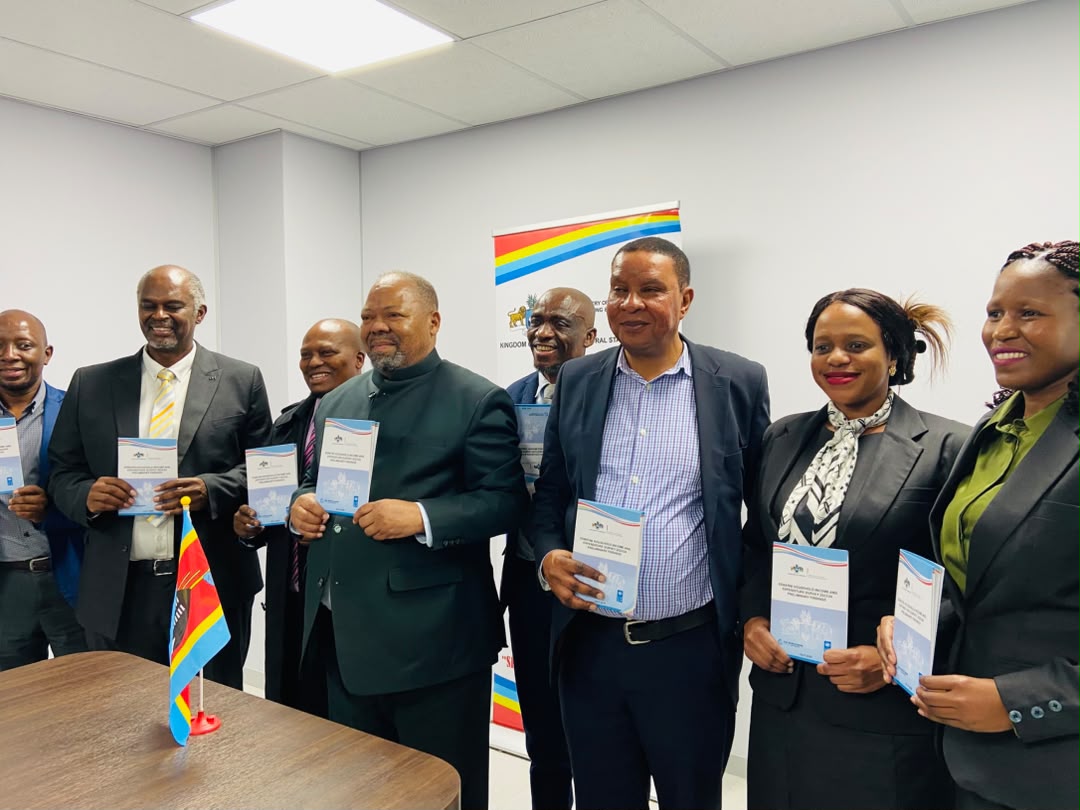
MBABANE – Minister of Economic Planning and Development Dr. Tambo Gina has officially launched the preliminary findings of the Eswatini Household Income and Expenditure Survey (EHIES) 2023/24, revealing a decline in the national poverty rate while highlighting persistent inequalities that require targeted interventions.
Presenting the findings, Dr. Gina described the survey as a critical tool for evidence-based planning and informed decision-making, saying it provides valuable insights into how emaSwati earn their livelihoods, spend their income, save and cope with everyday economic challenges.
He said the survey serves as the country’s official benchmark for measuring poverty, inequality, household consumption and overall welfare, providing Government and stakeholders with reliable data to guide national development policies and programmes.
According to the preliminary findings, the national poverty rate has declined from 58.9 percent in 2016/17 to 53.5 percent in 2023/24, reflecting progress in reducing poverty across the country.


Despite the improvement, the survey revealed significant disparities between rural and urban areas. Poverty in rural communities declined from 70.2 percent to 62.8 percent, while urban poverty increased from 19.6 percent to 25.3 percent, highlighting growing economic pressures in urban centres.
The findings also showed notable regional differences, with Shiselweni Region recording the highest poverty incidence at 72 percent, followed by Lubombo Region at 57.2 percent. Manzini Region recorded the lowest poverty rate at 42.4 percent.
Dr. Gina said the survey further revealed gender disparities, with poverty affecting 55.7 percent of females compared to 51.2 percent of males, underscoring the need to strengthen policies that promote gender equality, economic empowerment and equal access to opportunities.
The report also indicated an improvement in income distribution, with the national Gini coefficient declining from 0.49 in 2016/17 to 0.45 in 2023/24, suggesting that inequality has narrowed. However, Dr. Gina cautioned that considerable disparities in household consumption and living standards remain.
He said the findings reinforce the need to accelerate poverty reduction initiatives, strengthen and expand social protection programmes, promote inclusive and sustainable economic growth, create employment and income-generating opportunities, invest in education, healthcare and human capital development, and address persistent inequalities.
Dr. Gina reaffirmed Government’s commitment to using the survey findings to inform national planning, policy formulation, programme implementation and resource allocation. He encouraged government ministries, development partners, researchers, academic institutions, civil society organisations and the private sector to utilise the data in designing interventions that improve the lives of emaSwati.


He also expressed appreciation to His Majesty’s Government for supporting the National Statistical System and thanked development partners, particularly the World Bank and the United Nations Development Programme (UNDP), for their financial and technical assistance. He further commended the Central Statistical Office, survey teams, enumerators, supervisors and participating households whose contributions made the survey possible.
Concluding the launch, Dr. Gina said every statistic represents a family striving for a better future, a young person seeking opportunity and a community working towards improved living conditions. He called on all stakeholders to work together to reduce poverty, narrow inequalities and promote inclusive growth before officially launching the Eswatini Household Income and Expenditure Survey (EHIES) 2023/24 Preliminary Findings Report.


Discussion about this post