



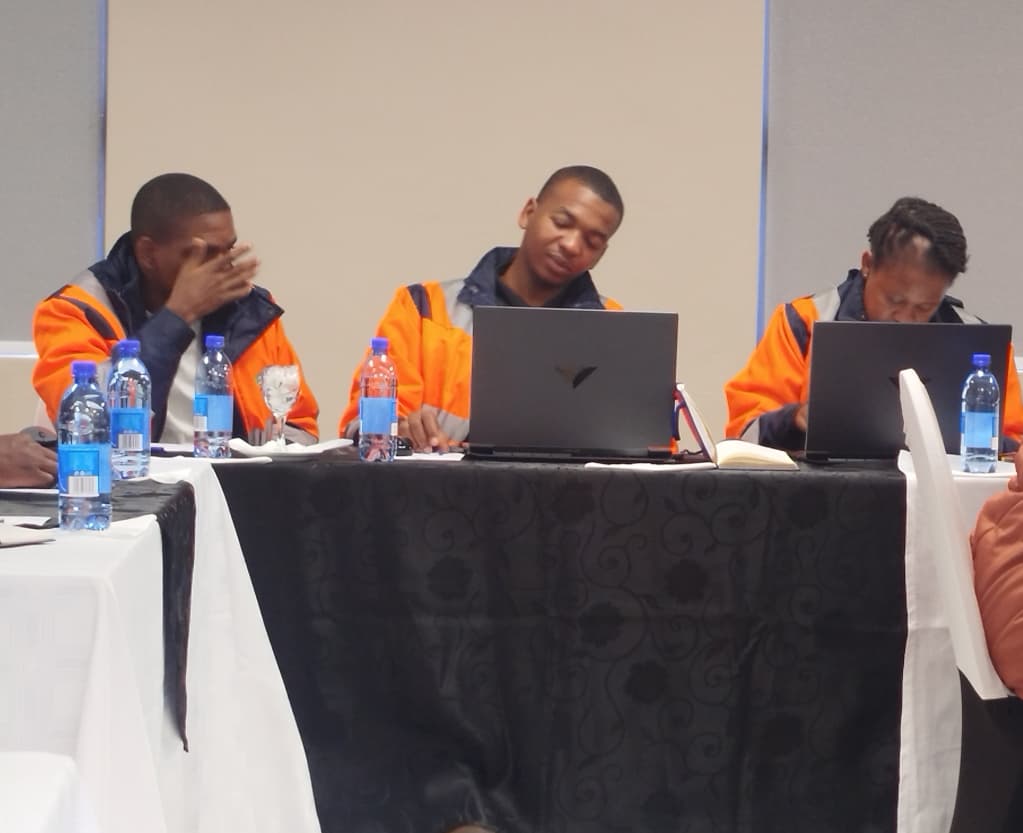
MBABANE – The rapid rise of artificial intelligence (AI) in design and construction has emerged as one of the biggest concerns among Eswatini’s construction professionals.
This was during an industry indaba held in Mbabane on Monday, with architects, engineers and surveyors questioning whether their professions could survive without adapting to technological disruption.
The concerns were raised during a joint working session hosted by the Eswatini Association of Architects, Engineers and Surveyors (EAAES) and the Eswatini Association of Construction Consultants (EACC) at Mountain View Hotel. The session focused on procurement, fees and payments, and the value of consultancy services.
Participants expressed concern that AI-powered design tools were increasingly being used by clients seeking cheaper alternatives, raising questions about the future role of professional consultants in the construction sector.


Several professionals said the industry was at a crossroads, where practitioners had to decide whether they would be disrupted by emerging technologies or become part of the disruption by embracing and adapting to them.
The discussion also highlighted what participants described as a regulatory gap in Eswatini regarding the use of AI and other emerging technologies in construction and design services.


Another major concern raised during the workshop was the absence of a locally recognised fee scale for design and build professionals. Participants noted that many practitioners currently rely on fee structures used in neighbouring South Africa because Eswatini lacks its own standardised framework.
Professionals argued that the lack of a fee structure had created uncertainty in the market and often resulted in consultants undervaluing their services.
They stressed the need for the industry to establish and protect professional fees in order to ensure sustainability and maintain standards within the sector.
One of the participants, Steven Dlamini, said some of the challenges facing the profession stemmed from a lack of understanding among clients and policymakers.
“The problem starts with ignorance from clients and politicians,” he said during discussions.
Intellectual property protection also emerged as a significant issue.
Meanwhile Bhekisisa Mavimbela said professionals frequently encountered situations where their work was copied without permission.
He said consultants could spend months developing concepts and designs only to later discover similar projects being constructed elsewhere.
Mavimbela cited instances where large-scale developments appeared to replicate concepts originally developed by other professionals, leaving the original designers questioning how their ideas had been reproduced without recognition.
The workshop further discussed the importance of industry participation in law-making processes.
Sandile Makhubu urged professionals to actively engage whenever legislation affecting the sector was being developed.
He said one of the industry’s biggest shortcomings was the failure of professionals to participate in the formulation of laws and policies that directly affected their work.
Participants were also reminded of the need to comply with existing laws and regulations governing the construction sector.
Speakers emphasised that legal requirements were not negotiable and warned that failure to follow the law had contributed to recurring disputes within the industry.
It was noted that conflicts arising from non-compliance had increasingly attracted public attention and media scrutiny, highlighting the need for stronger adherence to regulatory requirements.
Despite the challenges discussed, participants agreed that the workshop had provided an important platform for the industry to reflect on its future, particularly in the face of technological change, regulatory shortcomings and growing concerns over the protection of professional services and intellectual property rights.


Discussion about this post