



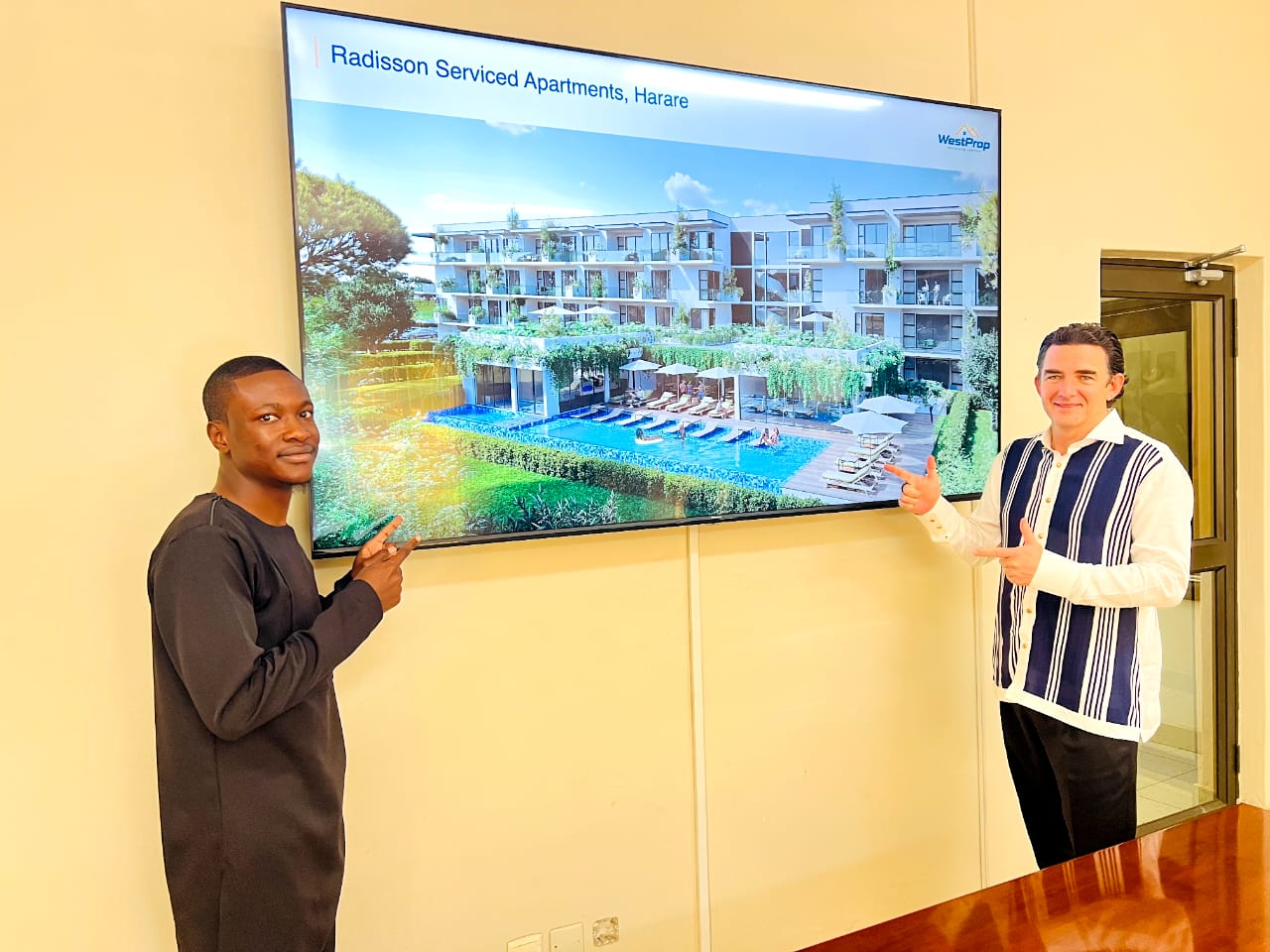
MBABANE – Zimbabwean businessman and Mitrick Global Chief Executive Officer, Ambassador Enock Mangirande has shed more light on the company’s proposed US$5 billion (approximately E82 billion) housing investment in Eswatini, saying the project is expected to create hundreds of jobs for emaSwati and prioritise local companies in its implementation.
The investment proposal, which was recently announced following engagements between the company and members of Eswatini’s royal family, envisages large-scale housing developments in Manzini, Mbabane, Matsapha and Ezulwini. However, Mangirande has clarified that discussions with government are still ongoing and that no formal approvals have yet been granted.
In an interview with this publication, Mangirande said the company intended to work closely with local contractors and businesses as part of its broader strategy to stimulate economic growth while ensuring that project benefits remain within the country.
“Our objective is to maximise local participation and ensure that emaSwati businesses and workers are the primary beneficiaries of the project’s economic opportunities,” he said.


Mangirande revealed that the project would begin with a pilot phase involving the construction of 20 affordable houses. He said more than 500 direct and indirect employment opportunities could be generated during this initial stage alone.
According to him, employment opportunities would extend beyond construction and cover sectors such as land surveying, environmental assessments, road construction, ground clearing, civil engineering, landscaping, security services, logistics, media and public relations, property management and maintenance services.


He said the company’s vision was to collaborate with local emaSwati construction companies and institutions in delivering the developments.
“This approach will help retain foreign currency within the country, contribute to economic growth, increase GDP per capita and create employment opportunities for emaSwati citizens,” he said.
On questions surrounding the financing of the ambitious project, Mangirande identified Bovillus Finance as one of Mitrick Global’s strategic partners.
He said the institution operated under the State of SCNRFP jurisdiction through ETMO in Vanuatu and that further details regarding the project’s financial structure and participating partners would be disclosed at a later stage.
Mangirande did provide documentary proof of funding but maintained that more details of investors and financial arrangements would be released when appropriate, subject to contractual and regulatory requirements.
The businessman also acknowledged that the company was still in the early stages of engagement with the Eswatini Government and had not yet secured land for the proposed developments.
He said discussions were continuing to ensure that any eventual arrangement benefited the government, citizens and the company as a private-sector partner.
“At this stage, discussions are ongoing, and final conclusions have not yet been reached,” he said.
Mangirande added that he expected to hold further meetings with relevant authorities during an upcoming visit to Eswatini, the date of which would be announced later.
Regarding government engagement, he confirmed having met HRH Prince Lindani Dlamini, whom he credited with supporting the investment proposal and facilitating discussions with key stakeholders.
“I appreciate the efforts of Prince Lindani Dlamini in promoting investment opportunities within Eswatini, as well as the broader investment-friendly vision championed by His Majesty King Mswati III,” he said.
Despite these engagements, Mangirande stressed that no formal approvals had yet been granted.
The proposed development comes amid increasing scrutiny of business links between Eswatini’s royal family and Zimbabwean investors.
Asked about the role of members of the royal family in the project, Mangirande said no operational responsibilities had been discussed or assigned.
He said the role of the royal family, as presently understood, was centred on promoting investment and economic development in the kingdom.
“Beyond facilitating engagement and promoting investment, no operational role has been defined or discussed at this stage,” he said.
Mangirande further disclosed that groundworks for the pilot housing development would only commence once memoranda of understanding and other relevant agreements with government had been finalised.
He estimated that the pilot phase would take between six and 12 months to complete, depending on several factors including regulatory approvals, land allocation, environmental impact assessments, infrastructure planning, utility connections, financing arrangements and contractor mobilisation.
The businessman said the successful completion of the pilot homes, compliance with regulatory requirements, market demand assessments, infrastructure readiness and stakeholder satisfaction would determine whether larger phases of the project proceeded.
On housing affordability, Mangirande said Mitrick Global was exploring various options to make home ownership accessible to ordinary emaSwati, including rent-to-own arrangements.
However, he said it was too early to provide selling prices for the houses because development costs could only be determined after feasibility studies, land considerations, infrastructure requirements and construction costs had been fully assessed.
“Our commitment is to work toward solutions that are both commercially sustainable and affordable for ordinary emaSwati citizens,” he said.
Businessman also looking to venture into banking sector
Mangirande has disclosed that beyond housing, he also seek to drive modernization within Africa’s banking and financial services sector by introducing faster, more efficient, and interconnected transaction systems. “These include API-to-API connections that allow financial institutions to exchange information securely in real time; IP-to-IP networks that enable direct digital communication; Ledger-to-Ledger solutions that facilitate seamless transfers and reconciliation of financial records; Nostro-Vostro arrangements that support smoother cross-border payments and international settlements; and Server-to-Server integrations that automate financial transactions and data exchange,” he stated.
The businessman said across Africa, they are also prepared to invest in countries that are open to innovation and supportive of modern financial infrastructure. He said their objective is to accelerate financial inclusion, reduce transaction costs, improve cross-border trade, and strengthen economic growth through advanced banking technology and digital transformation.


Discussion about this post