



MBABANE – The establishment of a new Commission of Inquiry into the affairs of the Eswatini Christian Medical University (EMCU) has triggered fresh debate about possible divisions within government, with former senator Mbho Shongwe questioning why a second investigation has been launched while a parliamentary probe into the same institution is yet to publicly release its findings.
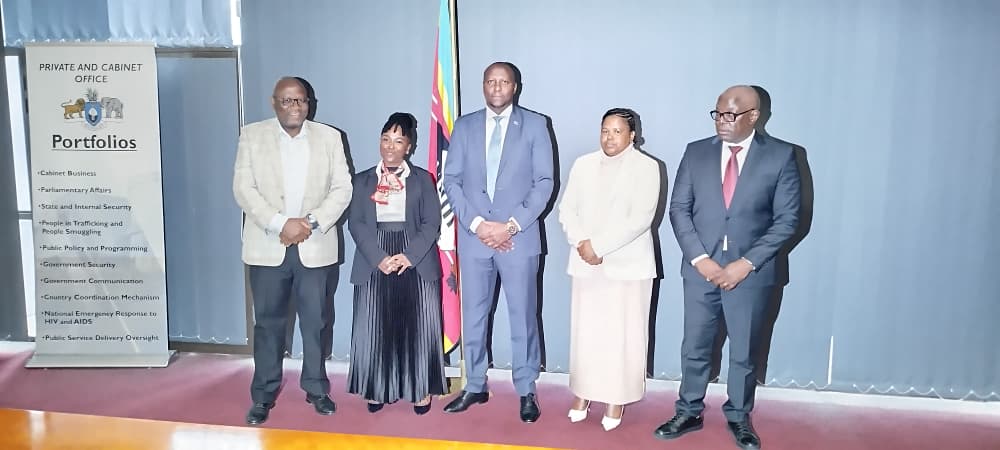
Prime Minister Russell Mmiso Dlamini on Thursday announced the appointment of a five-member Commission of Inquiry tasked with investigating allegations of maladministration, fraud, governance failures, misconduct and conflicts of interest at EMCU.
The commission, appointed under Section 3 of the Commissions of Inquiry Act of 1963, will be chaired by businessman Mbuso Simelane and is expected to complete its work within four weeks.
Its establishment comes against the backdrop of an ongoing controversy surrounding EMCU, where allegations ranging from financial mismanagement to governance irregularities have dominated public discourse for months.


However, critics are questioning the necessity of a second investigation given that Parliament had already established a special seven-member select committee to probe many of the same allegations.
The parliamentary committee was mandated to investigate claims involving the suspension and alleged misuse of the university’s provident fund, irregular vehicle acquisitions, governance failures, possible conflicts of interest involving senior officials and the controversial renewal of executive contracts during a period when the university council was inactive.
The committee was directed to report back to Parliament within 14 days.
Although reports suggest the parliamentary investigation has already been completed, its findings have not yet been publicly released.
Speaking following the Prime Minister’s announcement, former senator Mbho Shongwe said the move raises questions about whether different centres of power within government are pulling in different directions.
“This shows that there is division within government,” Shongwe said.
“There is no need to duplicate. There is division and it seems people want to settle scores. This is an unnecessary burden to the taxpayer.”
Shongwe questioned the rationale behind creating a second investigative body before the first had been allowed to present its findings.
According to him, the situation creates uncertainty and could ultimately undermine public confidence in the outcome of either process.
“The question one would ask himself is what will happen if two reports come out with differing findings. Which report will be accepted and which will not?” he asked.
“It would have been understandable if the first committee was private. But now both committees have been set up by government. It will seem that there are two governments operating in parallel.”
His remarks come amid growing speculation over the fate of the parliamentary report, particularly following allegations that some members of the select committee may have compromised their independence.
The controversy centres on what has become known as the “Badplaas trips”.
The trips, which allegedly involved EMCU founder Pastor Chong Yang Kim and senior public officials, have generated public scrutiny after reports emerged that some members of Parliament involved in investigating EMCU attended EMCU-funded trips to South Africa during the course of the probe.
The issue reportedly caused tensions within government circles and fuelled concerns about potential conflicts of interest.
The controversy intensified after reports surfaced that Members of Parliament who were part of the investigative process had travelled to Cape Town on trips allegedly sponsored by EMCU while examining the very institution under investigation.
Critics argued that such engagements could compromise the perceived impartiality of the parliamentary probe.
It is against this backdrop that some observers believe the executive may have lost confidence in the parliamentary process, despite official denials.


During Thursday’s press briefing, Eswatini TV senior journalist Lington Gule directly asked whether the appointment of the commission signalled a lack of confidence in Parliament.
Gule pointed out that Parliament had already appointed a committee to investigate the same institution and sought clarity on why Cabinet had now initiated a separate process.
Responding to the question, Prime Minister Dlamini dismissed suggestions that the executive lacked confidence in Parliament.
He maintained that the commission should not be interpreted as a vote of no confidence in the legislature.
According to the Prime Minister, the difference lies in the timeline.
He said the newly appointed commission had a clearly defined four-week mandate and was expected to deliver results within that period.
“This is not meant to indicate that Cabinet has no confidence in the work of Parliament,” Dlamini said.
He however noted that the commission would produce results sooner under the timeline that had been established.
In announcing the commission, the Prime Minister said government remained committed to accountability, transparency and good governance across all public institutions.
He said the commission would investigate allegations of impropriety, maladministration, misconduct, fraud and malpractice at EMCU.
Its terms of reference include examining allegations of abuse of authority, dishonesty, collusion, conflicts of interest, governance deficiencies and compliance failures.
The commission is also expected to identify systemic weaknesses that may have contributed to the challenges facing the university and recommend corrective measures.
Members appointed to serve on the commission are Simelane as chairperson, Setsabile Matsebula-Khumalo as vice-chairperson, Mangaliso Magagula and Lunga Dlamini as members, while Hlobsile Ndzimandze will serve as secretary.
Government said the exercise was intended to establish the facts, protect the integrity of the institution and ensure that appropriate corrective measures are implemented in the interests of students, staff and stakeholders.
Yet the parallel investigations have reignited debate about the relationship between the executive and legislative branches of government.
Under Eswatini’s constitutional framework, Parliament serves as the legislative arm responsible for oversight and accountability, while the executive implements government policy and administration.
Shongwe noted that while parallel investigations are not unprecedented, they can become problematic when they cover substantially similar ground and produce competing conclusions.
The concern now being raised is whether the executive commission will reinforce, contradict or effectively replace the findings of Parliament’s select committee.


Discussion about this post