



MBABANE – Government has reaffirmed its commitment to ensuring that every child in Eswatini has access to safe water, sanitation and hygiene (WASH) services, describing them as fundamental to children’s health, education and overall well-being.
Speaking on behalf of Deputy Prime Minister Thulisile Dladla during the launch of Children’s Month 2026 at the UN House in Mbabane, Principal Secretary Siboniso Nkambule said this year’s theme, “Ensuring Universal Access to Water, Sanitation and Hygiene for Every Child in Eswatini,” is a call to action that speaks directly to the dignity, health and future of the nation’s children.
Nkambule noted that a lack of access to clean water, proper sanitation and hygiene continues to expose children to preventable diseases, disrupt education and undermine their well-being.
“Without safe water, children are exposed to preventable diseases. Without adequate sanitation, girls in particular face barriers to education and dignity. Without hygiene, the cycle of ill-health continues,” he said.
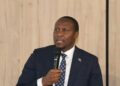

He emphasized that Children’s Month should not only be viewed as a celebration of children but also as an opportunity to renew efforts to ensure that every child, regardless of their location or background, has access to essential services.
Nkambule highlighted the transformative impact that access to water and sanitation can have on children’s lives. He explained that when communities have clean water sources nearby, children spend less time fetching water and more time in school. Similarly, safe and hygienic toilets help keep girls in school during menstruation while proper hygiene practices reduce the incidence of waterborne diseases.
He said the Government of Eswatini has made significant progress in expanding WASH services, although challenges remain, particularly in rural and peri-urban communities.
According to Nkambule, efforts undertaken by government include expanding rural water supply infrastructure to underserved communities across the country’s four regions, strengthening community-led sanitation initiatives, and implementing school WASH programmes that provide reliable water points, gender-segregated sanitation facilities and hygiene promotion activities.
He added that lessons learned during the COVID-19 pandemic reinforced the importance of maintaining adequate sanitation and hygiene facilities in schools and communities.
Government is also integrating WASH standards into health facilities to ensure that children receive healthcare in hygienic environments while continuing to leverage partnerships with development partners for financial and technical support.
“These are not small achievements. They represent the dedication of government, community health workers, teachers and parents who believe that every child deserves the best,” he said.
Nkambule further called on all stakeholders, including government ministries, the private sector, faith-based organisations and communities, to intensify collaboration and ensure that no child is left behind.


“Universal access means that no child is left behind – not the child in the remote Lubombo mountains, not the child in informal settlements, not the child living with a disability, and not the most vulnerable among us,” he said.
He urged the private sector to prioritise WASH as part of corporate social responsibility initiatives by investing in community and school sanitation infrastructure, while encouraging parents, caregivers, community leaders and faith-based organisations to promote positive hygiene behaviours in homes and communities.
Nkambule concluded by stressing that behaviour change begins at household and community level and that achieving universal access to water, sanitation and hygiene requires collective action from all sectors of society.


Discussion about this post