



MBABANE – Government has dismissed claims that Eswatini received E14.3 billion from Taiwan, insisting that the kingdom’s cooperation with its long-time diplomatic ally is limited to grants, technical assistance and jointly agreed development projects.
The clarification was issued by Acting Government Spokesperson Thabile Mdluli following reports cited by Chinese authorities alleging that Taiwan had provided Eswatini with NT$25 billion (about US$795 million which is equivalent to about E14.3 billion) before and after a recent visit to the kingdom by Taiwanese President Lai Ching-te.
Speaking on behalf of Government, Mdluli said the only funding Eswatini had received from Taiwan was through grants and technical support aimed at advancing shared development goals and strengthening bilateral relations.
“The only funding that the Kingdom of Eswatini has received from the Republic of China (Taiwan) is through grants and technical assistance, all aimed at advancing shared development goals and strengthening bilateral relations, which is neither unusual nor unique between friendly nations,” said Mdluli.
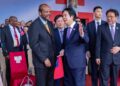

The statement comes after China’s Foreign Ministry accused Taiwan of engaging in what it termed “dollar diplomacy” to maintain diplomatic support from Eswatini, Africa’s only remaining diplomatic ally of Taiwan.
Chinese Foreign Ministry spokesperson Mao Ning alleged that Taiwan was using financial incentives to advance what Beijing regards as a separatist agenda. She further claimed that the alleged funding benefited a small group of individuals rather than ordinary citizens.
However, Mdluli said cooperation between Eswatini and Taiwan was conducted through formal government-to-government frameworks and focused on national development priorities that directly benefited both countries.


According to Mdluli, the partnership spans several sectors including industrialisation, healthcare, agriculture, education, information and communications technology, infrastructure development, energy security and skills development.
She pointed to the Taiwan Industrial Innovation Park (TIIP) as one of the flagship projects emerging from the relationship.
“The Taiwan Industrial Innovation Park, currently in its formative stages, is expected to significantly contribute towards the country’s industrialisation agenda, economic growth and job creation,” she said.
Mdluli revealed that more than 60 Taiwanese companies had visited Eswatini since April last year to explore investment opportunities, a development he said demonstrated growing investor confidence in the kingdom.
The visits, she noted, could pave the way for long-term economic partnerships capable of creating employment opportunities and stimulating economic activity.
Government also highlighted the strategic oil reserve facility being developed with Taiwanese support, describing it as a critical national asset designed to strengthen the country’s energy security and resilience.
According to Mdluli, the facility forms part of broader efforts to protect the country against global fuel supply disruptions while enhancing national preparedness.
She said such initiatives were aligned with Government’s vision of building a self-sustaining and competitive economy capable of delivering sustainable growth.
Mdluli argued that it was misleading to characterise development cooperation between the two countries as improper or self-serving when the outcomes were visible through projects already being implemented.
“It is therefore misleading to portray such cooperation as improper or self-serving when the outcomes are visible and measurable,” she said.
She added that strategic partnerships naturally involve financial and technical support for agreed programmes and projects, particularly where countries share common developmental objectives and long-standing diplomatic relations.
Eswatini and Taiwan have maintained diplomatic relations for more than five decades. Throughout that period, Taiwan has supported a range of projects in the kingdom, including initiatives in health, education, agriculture and infrastructure development.
The relationship has increasingly attracted international attention as Beijing continues efforts to persuade countries to switch diplomatic recognition from Taipei to China under its One-China policy.
Eswatini remains the only African nation that continues to maintain formal diplomatic ties with Taiwan, making the kingdom a key partner for Taipei on the continent.
While the latest allegations have reignited debate over the nature of Taiwan’s support to Eswatini, Government maintains that the cooperation is transparent, development-oriented and conducted through established diplomatic channels.
For Government, the focus remains on the tangible benefits arising from the partnership, including industrial development, investment promotion, energy security and job creation, rather than what it describes as politically motivated allegations surrounding the relationship.


Discussion about this post