




A coordinated, risk-informed and investment-driven disaster resilience model is an essential requirement for effective disaster risk management in southern Africa.
This was one of the outcomes of a regional ministerial roundtable for ministers responsible for disaster risk management in the Southern African Development Community (SADC).
Meeting in Masvingo, Zimbabwe on 14 May, ministers responsible for disaster risk management across SADC warned that the region can no longer afford fragmented responses as climate‑related shocks intensify.
“We collectively commit to transition from fragmented, reactive, and predominantly humanitarian‑centred disaster response toward a coordinated, risk‑informed and investment‑driven model of resilient recovery that deliberately transforms disaster risk into resilience dividends for sustainable development,” the ministers declared.
A coordinated, risk-informed, and investment-driven resilience model is important because it aligns strategic planning, resource allocation and operational flexibility to effectively manage complex, systemic and uncertain risks across multiple domains.
Coordination will enable cross-sector and multi-stakeholder alignment, ensuring that interventions reinforce each other rather than create conflicting or redundant measures. For example, integrated risk management in organisations will connect compliance, cybersecurity, operational and financial domains under a unified governance framework, improving early detection, escalation and adaptation capabilities.
Incorporating comprehensive risk assessments will ensure decision-making is informed by both known and emerging hazards. This will include consideration of direct and indirect consequences, uncertainties and cascading effects.
Risk-informed development and investment will help avoid inadvertent creation of new risks, optimise resource allocation and prioritise actions with the highest return in resilience. For instance, climate-resilient projects designed using risk assessments integrate local data, community knowledge and projections for future hazards, ensuring investments target vulnerabilities effectively.
Treating resilience as an investment rather than a cost incentivises proactive preparation, enabling long-term value creation.
Empirical evidence shows that organisations that invest in resilience outperform peers in operational continuity during shocks.
Investment supports structural and systemic adaptations such as diversified supply chains, resilient infrastructure and adaptive governance, which collectively enhance the capacity to recover and innovate post-disruption.
In short, a coordinated, risk-informed and investment-driven resilience model transitions organisations and communities from reactive crisis management to anticipatory, adaptive and value-generating resilience, capable of withstanding both foreseeable and unforeseen disruptions.
This approach fosters sustainable systems in which resources are allocated efficiently, risks are managed comprehensively and opportunities for innovation and growth are captured, even under uncertainty.
The pledge by the SADC ministers marked one of the most explicit political commitments yet to reposition disaster recovery as a strategic economic priority rather than a post‑crisis expenditure.
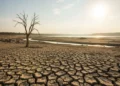
The ministerial roundtable took place against a backdrop of worsening climate extremes across southern Africa.
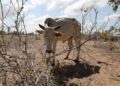
Since 2019, the region has endured a succession of tropical storms such as cyclones Idai, Kenneth, Ana, Gombe and Freddy, alongside recurrent droughts and deepening food insecurity.
The ministers noted that these shocks have “undermined development gains, weakened resilience, strained national budgets and deepened vulnerability across communities,” adding that disasters are now “systemic threats to sustainable development, regional integration, and economic transformation.”
The ministers acknowledged that the region is trapped in what they called a “structural recovery deficit cycle” where countries are repeatedly hit by disasters before they have fully recovered from previous ones.
“This has created a structural recovery deficit cycle in which Member States are often compelled to repeatedly respond to crises, with insufficient fiscal and institutional space to invest in transformative recovery.”
The communiqué warns that “fragmented disaster loss data and underinvestment in resilience continue to weaken the region’s ability to fully quantify risk, build bankable investment cases and mobilise adequate financing for resilient recovery.”
This recognition has fueled calls for a fundamental shift in how SADC prepares for, finances and manages recovery.
The ministers cited findings from the Global Assessment Report 2025, which emphasises that investment in disaster risk reduction yields high economic returns through avoided losses, improved productivity and stronger development outcomes.
As the ministers noted, resilient recovery must be repositioned “from a post-crisis expenditure to a strategic investment agenda that supports long-term prosperity.”
The urgency of this shift is underscored by the region’s heavy dependence on climate‑sensitive agrifood systems.
Agriculture remains central to livelihoods, employment and gross domestic product across SADC, yet repeated climate shocks have exposed the fragility of rain‑fed production systems.
The ministers warned that these shocks are undermining progress towards the Sustainable Development Goals, Agenda 2063 of the African Union and the SADC Regional Indicative Strategic Development Plan (RISDP) 2020-2030.
They stressed the need for climate‑smart agriculture, resilient water systems, irrigation expansion, renewable energy and strengthened social protection.
The communiqué highlights that recovery outcomes are often determined long before disasters strike through stronger preparedness, coherent policy frameworks and investment in risk‑informed planning.
It notes that while vulnerabilities are deepening, “practical pathways exist to transform disaster risk into resilience dividends through anticipatory planning, integrated resilience systems and sustained political and financial commitment.”
To operationalise this shift, the ministers directed the SADC Secretariat to work with partners to implement the SADC Regional Disaster Recovery Framework and Action Plan. This framework is expected to help member states move “from recovery deficits toward resilience-led growth,” with a focus on developing a pipeline of bankable projects in resilient agrifood systems, drought and water security, resilient infrastructure, renewable energy, urban resilience, ecosystem restoration and social protection.
The ministers also called for a coordinated regional resilience financing architecture that goes beyond fragmented post‑disaster funding.
They urged the African Development Bank, United Nations agencies, climate finance institutions, bilateral partners and the private sector to support scalable and predictable financing solutions, including blended finance, guarantees, climate funds, insurance and risk pooling.
Deputy SADC Executive Secretary (Regional Integration), Angele Makombo N’tumba said the region should prioritise sustainable financing for resilience.
“In today’s shifting geopolitical landscape, humanitarian aid flows are uncertain and increasingly contested. SADC must therefore build its own capacity to finance resilience through regional disaster funds, risk insurance pools, and partnerships with the private sector,” N’tumba said.
“This is the essence of self-sustenance: ensuring that our response capacity is not dependent on external generosity, but on our own collective strength.”
The ministers further emphasised the need for strengthened collaboration on Loss and Damage, agrifood systems transformation and integrated resilience‑building models that can convert climate and disaster risks into economic opportunities.
The ministers concluded with a stark warning: “The SADC region can no longer afford a cycle of repeated losses, incomplete recovery and escalating vulnerability.”
The push for a more coordinated and investment‑driven approach builds on existing regional mechanisms, including the SADC Humanitarian and Emergency Operations Centre (SHOC), launched in 2021 in Nacala, Mozambique.
SHOC was established to strengthen regional disaster preparedness and response, and to coordinate humanitarian support to member states.
It forms part of a broader ecosystem that includes the SADC Disaster Preparedness and Response Strategy and Fund (2016-2030), the Climate Data Processing Centre and the SADC Online Vulnerability Atlas.
The mandate of SHOC includes providing technical support to national disaster management entities, improving coordination among regional and international stakeholders, and maintaining a regional database on disaster losses and damage.
The centre is also expected to support early warning systems, drawing on climate data to provide timely alerts on floods, droughts and other hazards.
SHOC became operational in 2024 following ratification of the agreement establishing the centre by 11 countries or the requisite two-thirds of the 16 SADC member states – Angola, Botswana, Democratic Republic of Congo, Eswatini, Lesotho, Malawi, Mozambique, Namibia, United Republic of Tanzania, Zambia and Zimbabwe.
N’tumba called on member states to accelerate the operationalisation of SHOC, noting that the centre “is central to the region’s ability to coordinate disaster preparedness, response, and early recovery.”
“Its continued functionality, staffing, financing, and strategic direction are, therefore, essential to the credibility and effectiveness of the regional disaster risk management architecture,” she said.


SADC is also developing a regional risk insurance scheme and a Disaster Risk Information System to improve data collection and support evidence‑based decision‑making.
The Masvingo roundtable highlighted that while SADC has a robust set of policy frameworks, implementation remains uneven.
The ministers acknowledged that the challenge is “not the absence of frameworks, but the urgent need to accelerate implementation, strengthen readiness, mobilise investment and scale coordinated action.” sardc.net

Discussion about this post