



Mbabane- Local manufacturing, textile, and agricultural exporters are positioning themselves for a major economic windfall following a landmark European Union commitment to invest over EUR 315 million (approximately E6.3 billion ) into regional trade infrastructure and customs modernization.
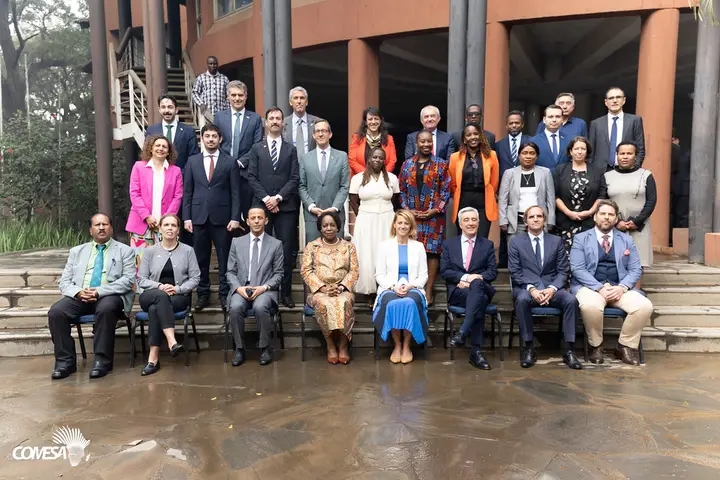
The massive financial inject, announced at the conclusion of the Second EU–COMESA Strategic Political Dialogue in Lusaka, Zambia,on 19 May 2026 aims to aggressively upgrade regional trade facilitation instruments, digitized cross-border clearance systems, and transport corridors across the trading bloc.
Eswatini holds a highly strategic position as the only Southern African Customs Union (SACU) member state to maintain full membership in the Common Market for Eastern and Southern Africa, making the Kingdom a primary beneficiary of these targeted logistics upgrades.
The strategic backing comes at an urgent moment for regional economies, as global shipping networks face severe vulnerabilities. Speaking on the shifting global economic dynamics, COMESA Secretary General Chileshe Kapwepwe emphasized the necessity of building stronger internal trading networks to shield local industries from international supply shocks.


“We meet today at a time of significant geopolitical and economic transformation globally. Recent disruptions along key maritime routes, including the Red Sea corridor, have once again demonstrated the vulnerability of global supply chains and reinforced the strategic importance of resilient regional integration frameworks and diversified transport and logistics networks,” Kapwepwe said.
For local exporters of sugar, soft drink concentrates, and timber, the practical implementation of this dialogue means the upgrading of regional trade instruments that Eswatini already utilizes, including the COMESA Electronic Certificate of Origin and automated customs management systems that prevent cargo trucks from being delayed at border posts for days.
Furthermore, the high-level dialogue explicitly addressed how these strengthened regional frameworks will accelerate the rollout of the African Continental Free Trade Area (AfCFT), ensuring that regional economic communities serve as the foundational engine for wider continental integration rather than creating fragmented, parallel trade tracks.


Reaffirming this continental vision, Ambassador Karolina Stasiak highlighted that existing regional agreements must be leveraged to unify the African market, ensuring that locally produced goods can seamlessly transition into broader African markets duty-free and quota-free.
“The African Continental Free Trade Area represents a generational opportunity. COMESA is critical to its success. The Tripartite Free Trade Area must be a catalyst for the AfCFTA, and not a parallel track that fragments rather than unifies,” Stasiak noted.


Discussion about this post