



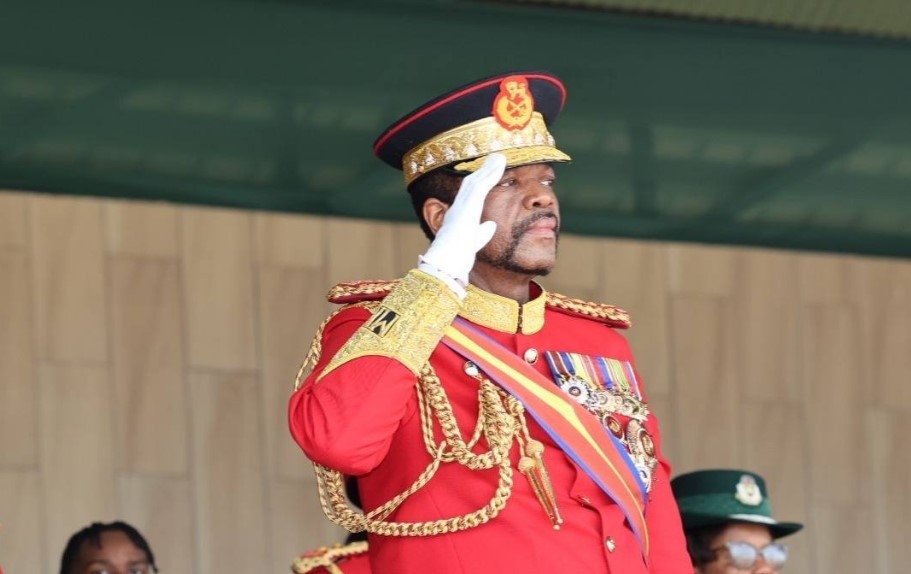
Eswatini’s economy has grown significantly over the past four decades, with Gross Domestic Product (GDP) increasing from approximately E1.4 billion in 1986 to over E95 billion today.
His Majesty King Mswati III said this transformation reflected the country’s collective determination and the consultative approach adopted in national development.
“As we reflect on how far we have travelled together, we take pride in our nation’s remarkable progress. At the time of my coronation, our national GDP stood at approximately 1.4 billion emalangeni. Today, it exceeds 95 billion emalangeni,” he said.
His Majesty King Mswati III attributed this growth to structured national planning initiatives, including the National Development Strategy (NDS), which was developed through broad consultations and Vusela drives.


He said the NDS remained the guiding framework for the country’s ambition to attain first-world status.
His Majesty also commended the private sector for its role in driving economic expansion and sustaining growth.
“We commend the role played by our business sector that has helped grow, transform, and consistently carry the weight of our economic aspirations,” he said.
He noted that manufacturing had become a major contributor to the economy, accounting for approximately 40 percent of GDP. Key industries included agro-processing, textiles, sugar production and forestry.
The establishment of industrial estates was also highlighted as a factor in attracting investment and positioning Eswatini as a competitive investment destination.
His Majesty further outlined government-led empowerment initiatives aimed at supporting emaSwati economically.
These include the Regional Development Fund (RDF), which has disbursed over E1.4 billion in non-refundable support, and FINCORP, which has extended more than E10 billion in loans.
He also acknowledged the role of cooperative schemes, whose assets now exceed E3 billion, noting that they had contributed to financial inclusion, improved financial literacy and poverty reduction.
The King said infrastructure development had complemented economic growth, with the road network expanding from about 500 kilometres in 1986 to over 2,000 kilometres.


Major projects such as King Mswati III International Airport, the Royal Science and Technology Park and the Mavuso Trade and Exhibition Centre were cited as key enablers of economic activity.
He also referenced the upcoming International Convention Centre (ICC) in Ezulwini, expected to boost tourism and stimulate economic opportunities across sectors.
Despite the progress, His Majesty King Mswati III acknowledged that challenges remained, including equitable distribution of resources.
“While we celebrate this growth, we remain mindful that challenges persist… and we recommit ourselves to ensuring no one is left behind,” he said.


Discussion about this post