



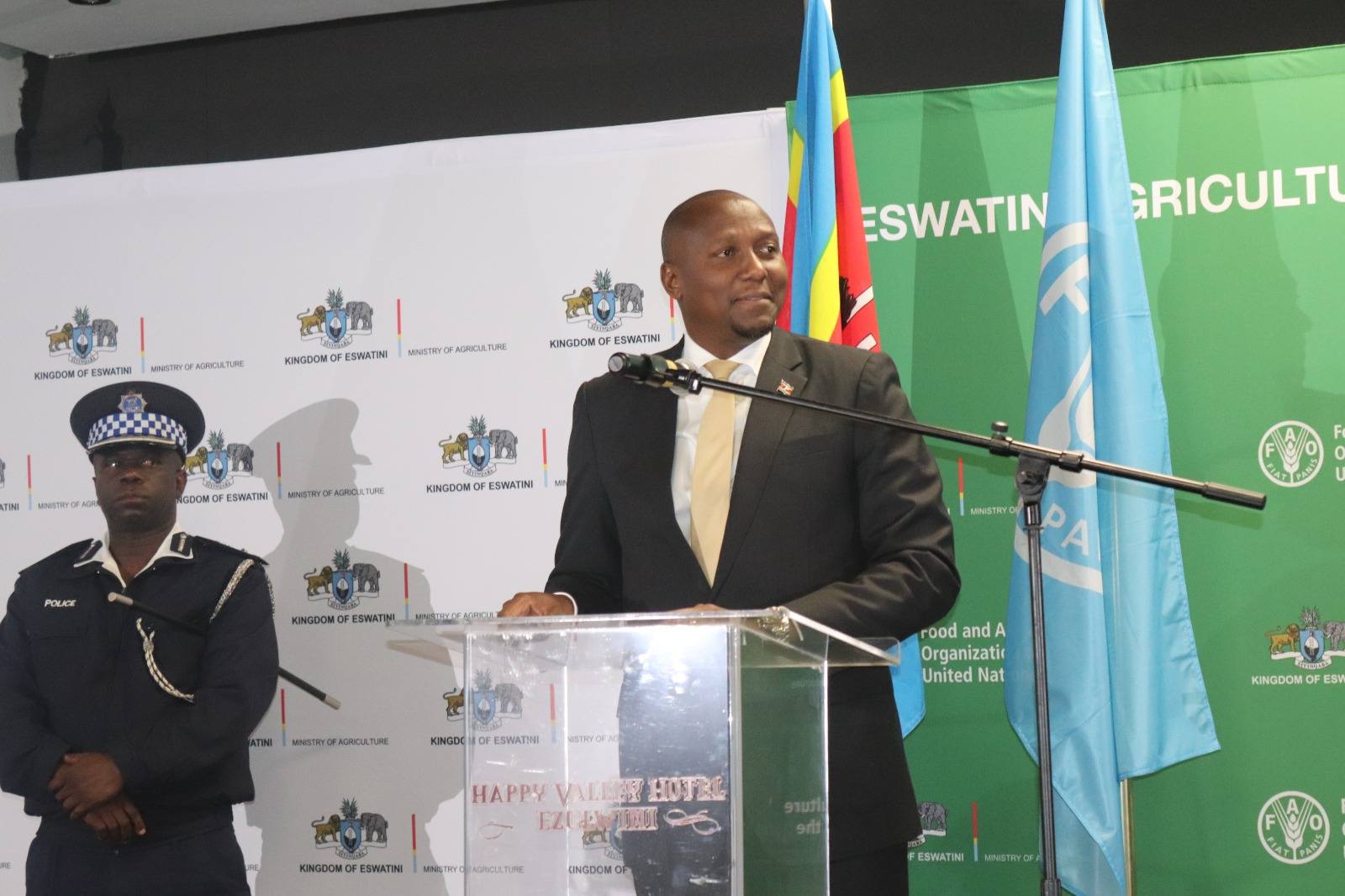
Mbabane – Prime Minister Russell Dlamini has urged stakeholders to channel resources into the agriculture value chain to unlock Eswatini’s full agricultural potential and boost the country’s socio-economic development.
He was speaking yesterday at the 2nd Eswatini Agriculture Business and Investment Forum, held under the theme “Mobilizing Investments in Agri-Food Systems and Youth Empowerment for Food Sovereignty.” The forum brings together public and private sector players to discuss strategies aimed at transforming agrifood systems and achieving food sovereignty.
The Prime Minister highlighted opportunities for investment in areas such as the provision of agricultural inputs like seeds, fertilizers, and agrochemicals; production of high-value products; agroprocessing; agricultural infrastructure; and research and development.Organized by the Food and Agriculture Organization of the United Nations (FAO) in partnership with the Ministry of Agriculture and other partners, the event is supported through a Technical Cooperation Programme project titled “Supporting accelerated implementation of food systems transformation pathways in Eswatini.
During the official opening, FAO Subregional Coordinator and Representative Patrice Talla called for support for the Eswatini Agriculture Development Fund (EADF), describing it as a catalytic fund that provides derisking instruments for investments in grassroots agricultural enterprises, smallholder farmers, and farmer organizations, as well as targeted seed capital and value chain development.


UN Resident Coordinator George Wachira said the United Nations, with FAO’s technical leadership and support from development partners, remains committed to helping Eswatini harness the full potential of its agrifood systems. He said this support is anchored in initiatives such as the Hand-in-Hand (HIH) Initiative and the One Country One Priority Product (OCOP) programme, which are helping to establish agro-industrial parks and agri-tech hubs in strategic locations across the country.


In a panel discussion, Sydney Dladla stated the need for retailers to form long-term partnerships with smallholder farmers, offering them skills development, quality assurance, and contractual reliability. He added that such partnerships, combined with climate-smart agricultural practices, would enhance adaptability, ensure food security, and stimulate the local economy.




Discussion about this post