



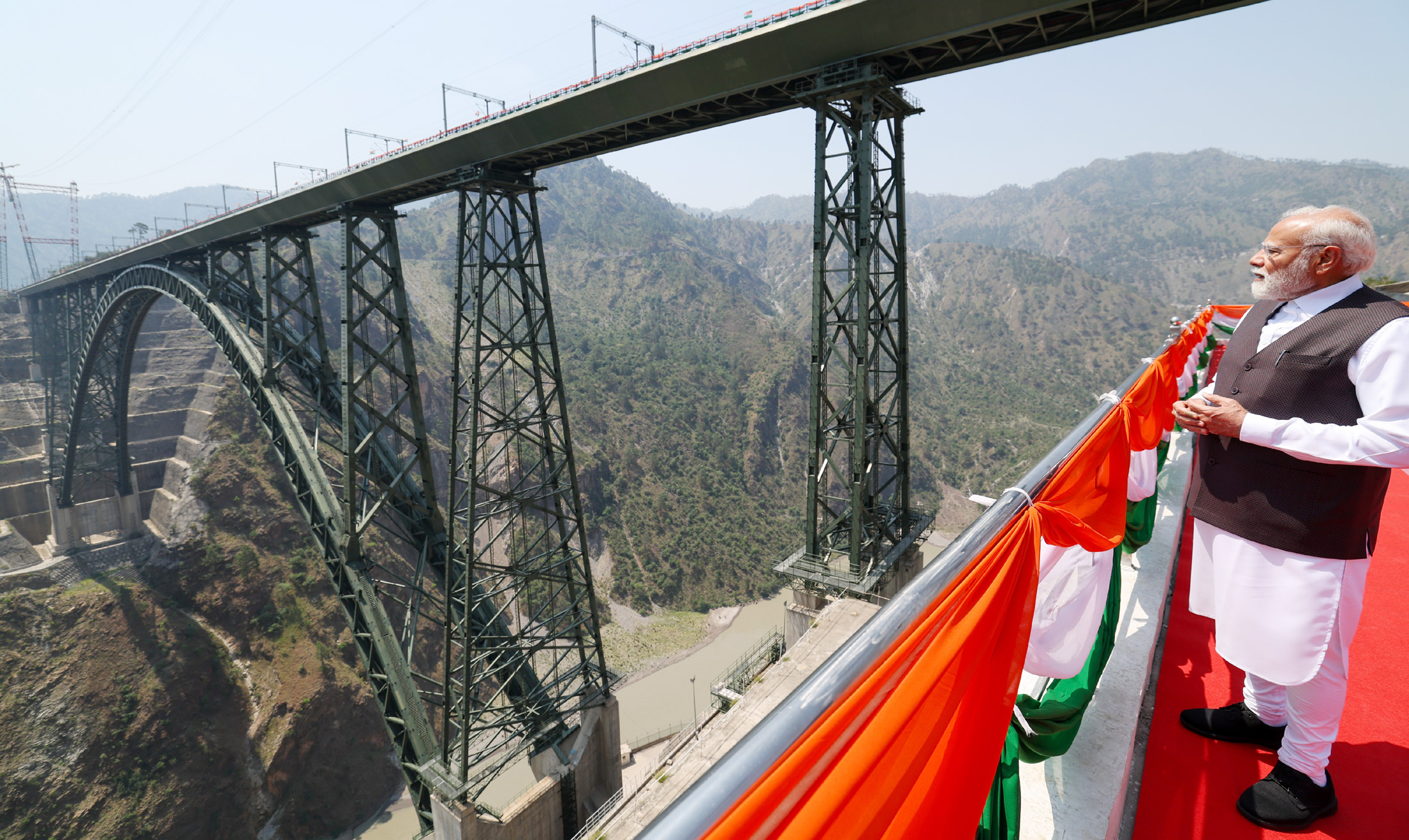
NEW DELHI, INDIA – India now boasts the world’s highest railway bridge, a towering structure over the Chenab River in the Union Territory of Jammu & Kashmir. Prime Minister Narendra Modi unveiled the engineering marvel on June 6, 2025, marking a significant stride in the nation’s infrastructure development.
Standing at an astounding 359 meters above the riverbed, the Chenab Bridge surpasses the height of the Eiffel Tower, setting a new global benchmark in bridge construction. This colossal undertaking forms a crucial part of the Udhampur-Srinagar-Baramulla Rail Link project, designed to boost connectivity in the strategically vital and geographically demanding region of Jammu & Kashmir.
The bridge, first envisioned in 2004, sought to link the Kashmir Valley with the rest of India through a modern railway network. Engineers and workers faced immense challenges due to the region’s rugged terrain, deep gorges, and harsh climate. Two decades of meticulous planning and innovative engineering culminated in the successful completion of this iconic structure.
Spanning 1,315 meters across the Chenab River, an Indus tributary, the bridge utilizes state-of-the-art steel arch technology. It can withstand extreme weather conditions, including high winds and seismic activity, ensuring its safety and durability for decades.

During the inauguration, Prime Minister Modi spoke on the bridge’s importance as a symbol of India’s resilience, innovation, and commitment to inclusive development. He said the bridge is not merely an engineering feat but a beacon of hope and progress for the people of Jammu & Kashmir and the entire nation.
“Today, we witness the triumph of Indian engineering and the spirit of perseverance. The Chenab Bridge stands tall as a testament to our resolve to overcome challenges and build a stronger, more connected India. This bridge will open new avenues for trade, tourism, and cultural exchange, fostering peace and prosperity in Jammu & Kashmir,” Modi stated.
He added, “Infrastructure is the backbone of development. With projects like the Chenab Bridge, we are not only bridging geographical distances but also bridging hearts and minds. This bridge connects aspirations, dreams, and the future of our youth.”
The Chenab Bridge incorporates several cutting-edge features. At 359 meters, it is the world’s highest railway bridge, with a main arch span of 467 meters. Constructed primarily from high-strength steel, its arch design ensures maximum stability and load distribution. Equipped with seismic sensors and wind monitoring systems, the bridge can withstand earthquakes and winds up to 266 km/h. The project also adhered to strict environmental guidelines to minimize ecological impact. Advanced construction techniques, such as incremental launching and cable-stayed methods, facilitated its safe and efficient assembly.
The bridge’s opening is expected to bring transformative benefits to the region. It will reduce travel time between Jammu and Srinagar, easing the movement of people and goods. Improved access to the picturesque Kashmir Valley will likely attract more tourists, generating employment and revenue. The bridge will also enable faster transportation of agricultural products, handicrafts, and other local goods to national and international markets. Furthermore, strengthening infrastructure in border areas enhances national security and rapid mobilization capabilities. Both the construction and operational phases have created thousands of jobs, uplifting local communities.


The Union Minister of Railways called the bridge a “milestone in Indian Railways’ journey towards modernization and expansion.” The Chief Engineer of the Chenab Bridge Project acknowledged the immense challenges faced by the team, from high-altitude working conditions to complex geological formations. A local community leader expressed hope and prosperity, saying the bridge will open new opportunities and integrate them more closely with the rest of India.
The Chenab Bridge’s successful completion sets the stage for further infrastructural advancements in Jammu & Kashmir. The USBRL project will continue to enhance rail connectivity, with upcoming tunnels and bridges designed to overcome the region’s challenging terrain. Prime Minister Modi reiterated the government’s commitment to accelerating development in the region, including initiatives in education, healthcare, digital connectivity, and sustainable tourism.
The Chenab Bridge spans the Chenab River between Kauri and Bakkal in the Reasi district, Jammu & Kashmir. Its construction, which ran from 2004 to 2025, cost approximately INR 12 billion (around USD 150 million).


Discussion about this post