



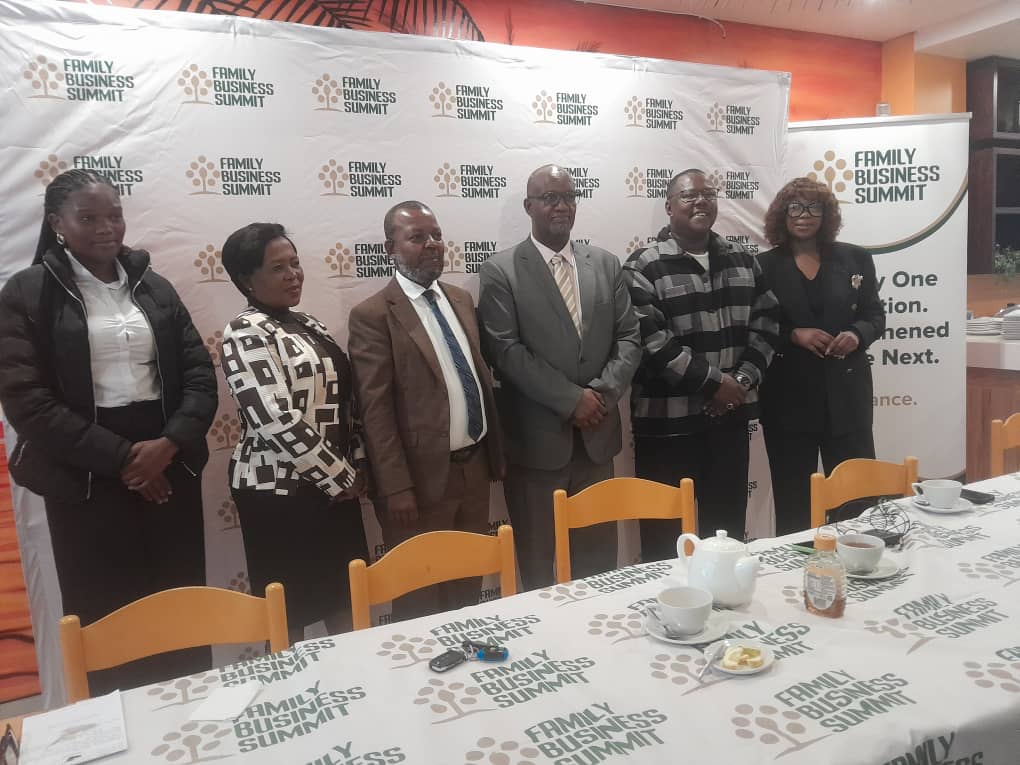
Mbabane – Family-owned businesses have been urged to strengthen governance, succession planning and access to finance if they are to survive beyond their founders and contribute meaningfully to Eswatini’s long-term economic growth.
The call was made by Director of Micro, Small and Medium Enterprises (MSMEs) in the Ministry of Commerce, Industry and Trade, Mluleki Dlamini, during the launch of the Family Business Summit hosted by Regional Excellence and Development Initiative (REDI) in Mozambique restaurant, Mbabane on Wednesday.
Dlamini said family enterprises were a key part of the country’s MSME sector, ranging from small retailers and farms to service providers and manufacturers. However, he noted that their long-term sustainability remained threatened by challenges including poor succession planning, limited access to finance and difficulties in adopting digital technologies.
“Succession planning remains a pressing issue,” Dlamini said. He said the inability of some family businesses to successfully transition from one generation to another could undermine the continuity of enterprises that had the potential to create employment, preserve wealth and contribute to economic development over decades.


The remarks come as the Regional Excellence and Development Initiative (REDI) prepares to bring family-owned businesses together for a dedicated summit focused on governance and best business practices. The summit is scheduled for September 24, 2026, at the Happy Valley Hotel.
Meanwhile, REDI Chief Executive Dr Sikhomba Gumbi said the initiative was prompted by concerns over the ability of local family businesses to survive beyond the founders who established them. He said stronger governance structures were necessary to enable family businesses to expand, manage succession effectively and create wealth that could be transferred across generations.
The summit is expected to create a platform for family business owners to examine how governance arrangements, professional management and succession planning can improve the sustainability of their enterprises.


Dlamini said government also viewed the strengthening of family businesses as part of the broader development of the MSME sector, industrialisation and trade expansion. He called for greater youth participation in family enterprises, arguing that younger generations could introduce new ideas, technology and digital solutions while preserving the foundations established by previous generations.
“Strong families build strong enterprises, and strong enterprises build strong nations,” Dlamini said.He further said supporting family businesses would require collaboration between government, financial institutions, academia, development partners and the private sector.
According to Dlamini, policy support should also include active enforcement of MSME payment prioritization and initiatives aimed at attracting high-value investors who could partner with local enterprises.
The Family Business Summit is therefore expected to move beyond celebrating family enterprises and focus on practical measures that can help them remain competitive and sustainable in an increasingly changing business environment.
For Eswatini’s family-owned businesses, the central question will be whether enterprises built by one generation can develop the structures needed to survive, grow and create wealth for those that follow.


Discussion about this post