



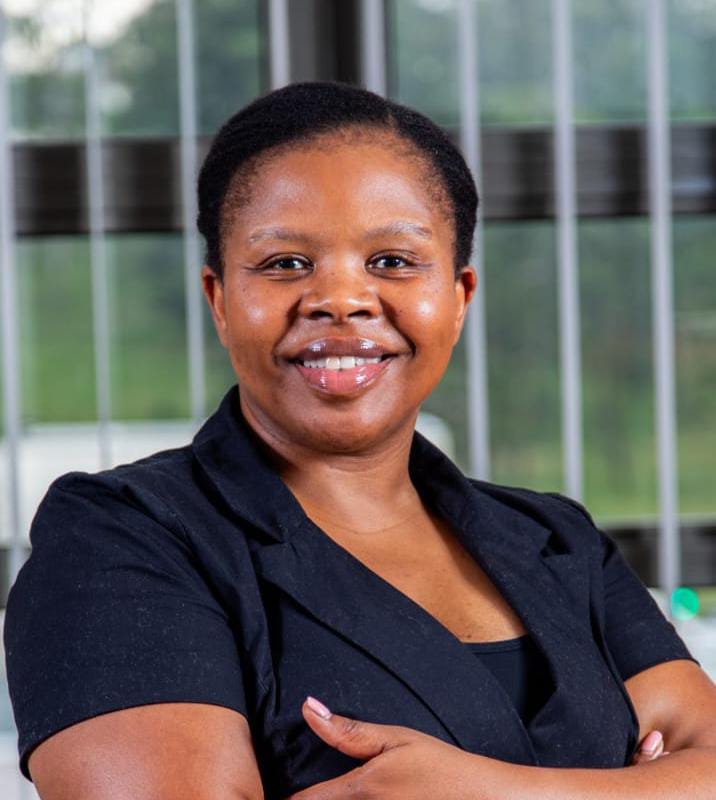
Mbabane: As the global sugar industry moves beyond the crystal into energy, technology and diversification, Eswatini has placed a Black African woman at the centre of a leadership contest that could signal a broader shift in who gets to shape the industry’s future.
For generations, sugar has been about more than sweetness. It has been about land, water, labour, capital and power.
Across Southern Africa, the industry grew within colonial economic systems in which large estates, foreign capital and predominantly white commercial interests occupied much of the space where production, ownership and decision-making converged.

Eswatini’s own sugar economy emerged from that history, developing around large-scale irrigated estates and mills before gradually evolving into a more complex system involving government, private industry and smallholder farmers.


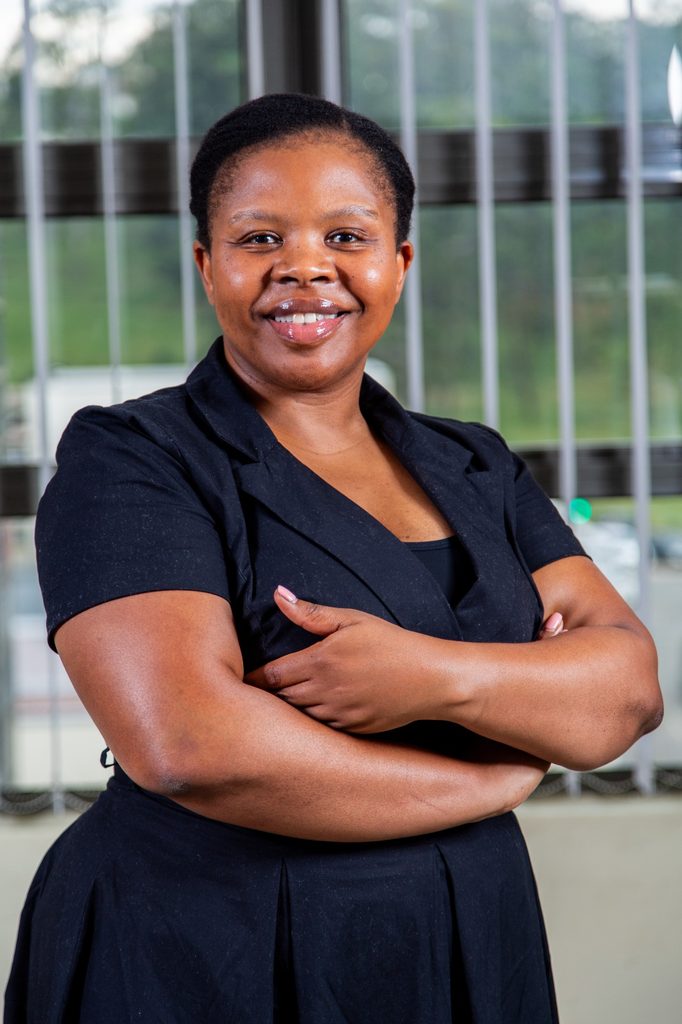
Today, the industry looks very different. And so does the person standing at the door of one of its most important international institutions. Nontobeko Pearl Mabuza, an economist from Eswatini with more than 18 years of experience spanning international trade, development finance, European diplomacy and the sugar industry, is among the candidates competing to become Executive Director of the International Sugar Organization (ISO), the intergovernmental body that brings together the world’s sugar-producing and consuming countries.
Her candidacy comes at an interesting moment. The sugar industry that the ISO was created to understand is no longer simply about producing, trading and consuming sugar. Cane and beet are now regarded as ethanol, renewable electricity, bioproducts and other industrial uses.
Meanwhile, producers face climate volatility, evolving consumer habits, health requirements, technological disruptions, and geopolitical disruptions to trade and supply chains.The question before ISO members is therefore larger than who can manage an international secretariat.
It is who can help an increasingly diverse membership navigate an industry that is itself being reinvented. From sugar estates to a broader economic ecosystem Eswatini offers an unusual case study.
The country’s sugar industry has become one of the pillars of its agricultural economy, but its development has also increasingly been tied to rural transformation and national infrastructure.
The Lower Usuthu Smallholder Irrigation Project, for example, brought irrigation and commercial sugarcane production into communities that had previously operated largely outside the formal sugar economy. Mills became not only processing facilities but anchors for integrating smallholder growers into commercial production.
At the industrial level, investment has pushed the sector beyond conventional sugar production.
Refining and packaging have increased value addition, while cogeneration has enabled sugar production to intersect with renewable energy.
More recently, an agreement allowing the export of up to 40MW of renewable electricity to Eswatini’s national grid has further demonstrated the industry’s potential to contribute to energy security.
It is a useful reminder that the future of sugar may not be measured only in tonnes of sugar. It may also be measured in megawatts, jobs, new products, market opportunities and the number of rural producers able to participate in commercial value chains.
That evolution closely mirrors the wider transformation confronting the ISO. Its members range from major global producers to smaller economies with very different levels of industrial capacity. Their challenges are therefore not interchangeable.
For a large producer, diversification might mean scaling biofuels or biochemicals. For a smaller producer, it might mean improving market access, strengthening productivity, developing value-added products or finding ways to withstand a sudden shift in global trade. The institution needs to understand both.
Why Eswatini’s experience matters
This is where Mabuza’s professional trajectory becomes relevant without requiring the candidacy to be reduced to a question of nationality. Before entering the sugar industry, she spent a decade as an economist with the European Commission Delegation in Eswatini.
Her domain of work included areas of trade, competitiveness, development finance, public-sector reform, regional integration and economic policy, including SADC matters, WTO and EU-SADC EPA.
She then had several years of direct experience in trade and external affairs and then as Head of Advocacy and Stakeholder Engagement in the sugar industry in Eswatini.
Her work has included market access, international trade analysis, regional and international stakeholders, industry strategy coordination and assisting in the creation of the industry’s sustainability roadmap.
That combination is significant because the ISO’s Executive Director is not simply required to understand sugar production.
The role requires international negotiation skills, economic analysis, institutional management and a diplomatic sense, as well as the ability to communicate with government and industry stakeholders in a neutral role typical of an international official.
Mabuza’s experience has been gained in those various worlds.
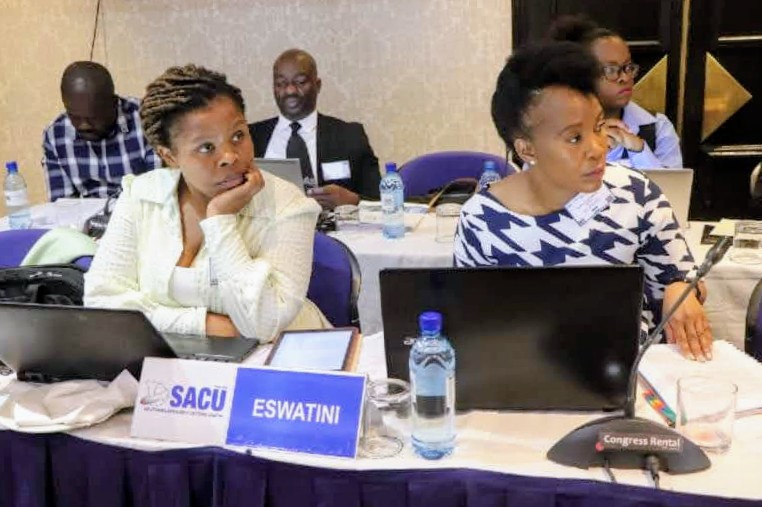
She has served in national and regional and multilateral trade systems, in a national industry and inside government bodies in the field of international development.
In practical terms, she’s been working much of her career as a translator between institutions that are often not the same: government and business, producers and policies, local agendas and international rules.
That may prove more valuable to an organisation whose central purpose is to bring divergent interests into the same room.
The significance of a Black African woman
There is, however, another dimension to this candidacy that cannot simply be reduced to qualifications.
The global sugar economy has a long history in which the control of land, capital and production was concentrated among powerful commercial interests.
Leadership in commodity industries, like leadership across many sectors of international economic governance, has historically been overwhelmingly male and disproportionately drawn from established centres of economic power.
A Black Swazi woman entering the contest for the leadership of the world’s principal intergovernmental sugar organisation therefore carries symbolic weight. But symbolism alone cannot run the ISO.
What makes the candidacy consequential is the combination of identity and experience. Mabuza would bring to the contest the perspective of an African producer, but also that of an economist who has worked within European institutions; a trade specialist who has dealt with international agreements; and a sugar-industry professional who has worked on the practical problems of market access, diversification and industry strategy.
That combination matters because the ISO’s mandate is fundamentally about connecting perspectives.It exists to facilitate dialogue between producing and consuming countries, improve market transparency, provide analysis and create platforms where members can exchange information and develop responses to shared challenges.
The organisation’s future therefore depends less on representing one particular sugar economy than on understanding why different sugar economies need different things.


A leadership contest about more than geography Brazil and Mauritius bring substantial credentials of their own. Brazil’s position in the global sugar and ethanol economy gives it extraordinary insight into production at scale and the energy dimension of the sector.
Mauritius brings the experience of a country whose economy and development history have long been intertwined with sugar and whose industry has had to innovate beyond traditional production.
Eswatini cannot compete with either country on sheer scale.It does not need to. Its case rests on a different proposition: that the person leading a global institution serving countries of radically different sizes should understand what it means to operate without the advantages of scale.
Eswatini’s sugar industry has had to connect international markets with regional trade arrangements, commercial agriculture with smallholder development, sugar production with energy generation and domestic economic priorities with global market realities.
That makes the country an unlikely but instructive vantage point from which to look at the future of the industry.
And Mabuza’s experience places her close to many of those intersections .Over the past decade, she has also helped coordinate engagements through which other African sugar-producing countries have studied aspects of Eswatini’s industry.
That is precisely the kind of knowledge exchange the ISO itself seeks to facilitate: experience moving across borders and becoming useful beyond the country where it was developed.
Sugar’s next chapter
The ISO’s challenge now is not simply to keep track of the world’s sugar. It is to help its members understand what sugar is becoming.
Climate change will test yields and water security. Energy transitions will create new markets while changing the economics of traditional production. Artificial intelligence and other technologies could alter farming and processing. Health policies will continue to challenge conventional consumption patterns.
Supply chains will be challenged by trade disputes and geopolitical shocks. And beneath all of those pressures is a fundamental question: How does an industry built around one commodity remain resilient when its future increasingly depends on becoming something much bigger than that commodity?
That is where the leadership contest becomes significant. A Black Swazi woman is now asking ISO members to consider a leadership model shaped not by the size of the country she comes from, but by the range of worlds she has worked across.
Her candidacy does not make the choice automatic. Nor should it. But it does force a useful question onto the table: if the sugar industry is changing, should the profile of those entrusted to lead its global institutions change with it? For an industry whose history has been deeply intertwined with land, capital and power, the prospect of a Black African woman leading its principal intergovernmental body would be more than a personal milestone.
It would be a marker of how far the industry has travelled — and perhaps a sign of where it is going next.


Discussion about this post