



Ezulwini- While 87 per cent of Eswatini’s adults are now financially included, 13 per cent remain outside the formal financial system.
Central Bank of Eswatini (CBE) Governor Dr Phil Mnisi said the 87 per cent inclusion rate was encouraging, but should not be viewed as the finishing line, with the country now needing to focus on bringing the remaining population into the financial system and ensuring that those already included can use financial services meaningfully.
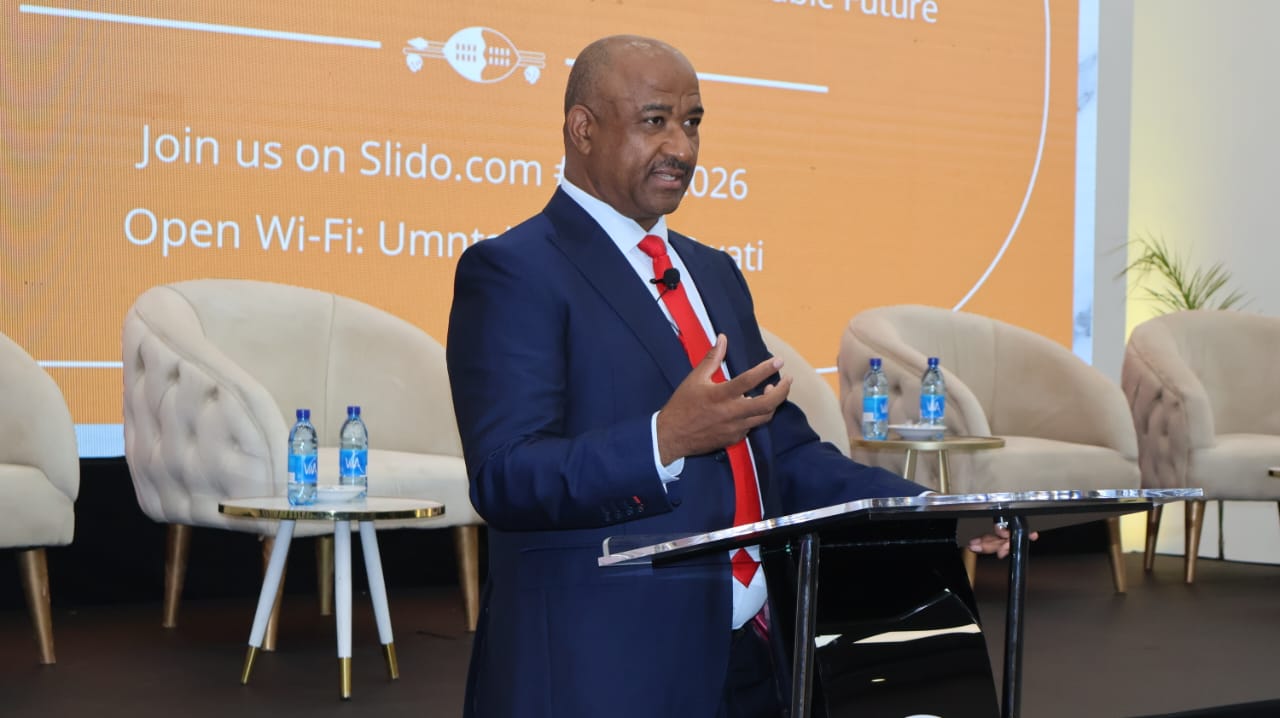
Mnisi was speaking on Thursday during the inaugural Eswatini Financial Markets Forum held at the CBE Complex in Ezulwini under the theme Safeguarding Eswatini’s Reserves for a Sustainable Future.
The Governor said the country had made significant progress in expanding access to formal financial services, but warned that financial inclusion should not be measured simply by the number of people who have access to a bank account or other financial products.


He said the real measure of success should be whether people were able to use financial services to improve their lives, grow businesses, save, invest and protect themselves against economic shocks.
“Access must lead to empowerment, and empowerment must lead to participation in growth,” Mnisi said.
The 13 per cent who remain financially excluded therefore represent an important area of focus for policymakers and financial institutions as Eswatini works towards a more inclusive economy.
Mnisi said the financial system needed to reach sections of society that had historically remained on the margins, including young people, households, entrepreneurs, small and medium enterprises, women-led businesses and underserved communities.
He said simply increasing the number of people with access to financial services would not be enough if those services remained unaffordable, inaccessible or unsuitable for their needs.
“A modern financial system cannot be judged only by the sophistication of its products. It must also be judged by the breadth of its access, the fairness of its opportunities, and the extent to which it supports real economic participation,” he said.
The Governor said the next phase of financial sector development should therefore focus on what he described as “inclusion with purpose”, ensuring that financial services help people participate more fully in the economy.


He identified this as one of four strategic priorities for Eswatini’s financial system, alongside deepening and modernising financial markets, accelerating safe innovation and strengthening institutional capability.
The country is already taking steps to modernise its financial infrastructure. Mnisi pointed to the launch of the Fast Payments Module of the Eswatini Payment Switch, which allows for faster and interoperable payments, as one of the developments aimed at improving the efficiency of the financial system.
The CBE has also published its Digital Lilangeni Design Paper and continues to operate its Regulatory Sandbox, allowing financial innovators to test new products within a controlled environment.
Mnisi said these developments were important in building a financial system that could better support households and businesses while improving Eswatini’s competitiveness.
He said financial sector competitiveness should not only be about attracting capital into the country, but also ensuring that capital is channelled towards productive activities that create jobs, support businesses and stimulate economic growth.
The Governor also stressed the importance of financial resilience, particularly because Eswatini is a small and open economy exposed to global economic developments.
He said strong institutions, sound policies and disciplined financial management remained essential to maintaining financial stability and confidence.
Safeguarding the country’s reserves, he added, remained critical to meeting external obligations and maintaining confidence amid global uncertainty, changing capital flows, climate risks and rapid technological change.
Deputy Governor Felicia Dlamini-Kunene said financial markets were central to national development because they help mobilise capital, manage risk and build confidence.
She said money could be viewed as the “lubricator” of the real economy, highlighting the need for a financial system capable of supporting economic activity.


Discussion about this post