



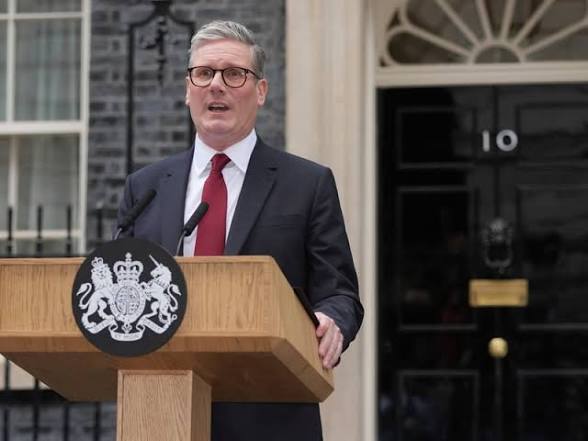
LONDON – British Prime Minister and Labour Party leader Sir Keir Starmer has announced his resignation, bringing an abrupt end to a premiership that lasted less than two years and triggering a leadership battle within the governing Labour Party.
Starmer confirmed on Monday that he would step down as both prime minister and Labour leader after facing mounting pressure from senior party figures, cabinet ministers and Labour MPs who had increasingly questioned his ability to lead the party into the next general election. According to reports from The Guardian and The Times, Starmer said he accepted “with good grace” that he was no longer the right person to lead Labour and pledged to oversee an orderly transition of power.
The resignation marks a dramatic fall for a politician who led Labour to a landslide victory in the 2024 general election after 14 years of Conservative rule. Starmer had taken over the party in 2020 following Labour’s heavy election defeat under Jeremy Corbyn and was credited with rebuilding its electoral fortunes and tackling allegations of antisemitism within the party.
In his resignation speech, Starmer described becoming prime minister as the “proudest moment” of his life and highlighted achievements including stronger workers’ rights, efforts to reduce inflation and measures aimed at improving living standards. He also thanked his family and party supporters for their backing during his time in office.
His departure follows months of political turbulence. Labour suffered a series of electoral setbacks in local and regional elections, while opinion polls showed declining public support for both the government and Starmer personally. Internal divisions intensified after a succession of high-profile resignations and public criticism from senior Labour figures. Several media outlets reported that more than 100 Labour MPs had called for a change in leadership in recent days.
Attention has now shifted to who will succeed Starmer. Former Greater Manchester mayor and newly elected Member of Parliament Andy Burnham has emerged as the leading contender. Burnham’s recent victory in a parliamentary by-election strengthened his position and fuelled speculation that he could take over as Labour leader and prime minister before Parliament reconvenes in September.
Other names being discussed as potential contenders include Foreign Secretary Yvette Cooper and former Deputy Prime Minister Angela Rayner, although political analysts believe Burnham currently enjoys the strongest support among Labour MPs.


Starmer’s resignation adds to a period of extraordinary political instability in Britain. According to The Guardian, he becomes the sixth British prime minister to leave office within a decade, highlighting the volatile nature of UK politics since the Brexit era.
For now, Starmer is expected to remain in Downing Street until Labour selects a new leader, ensuring continuity in government while the party begins the process of choosing the person who will lead Britain into its next political chapter.


Discussion about this post