



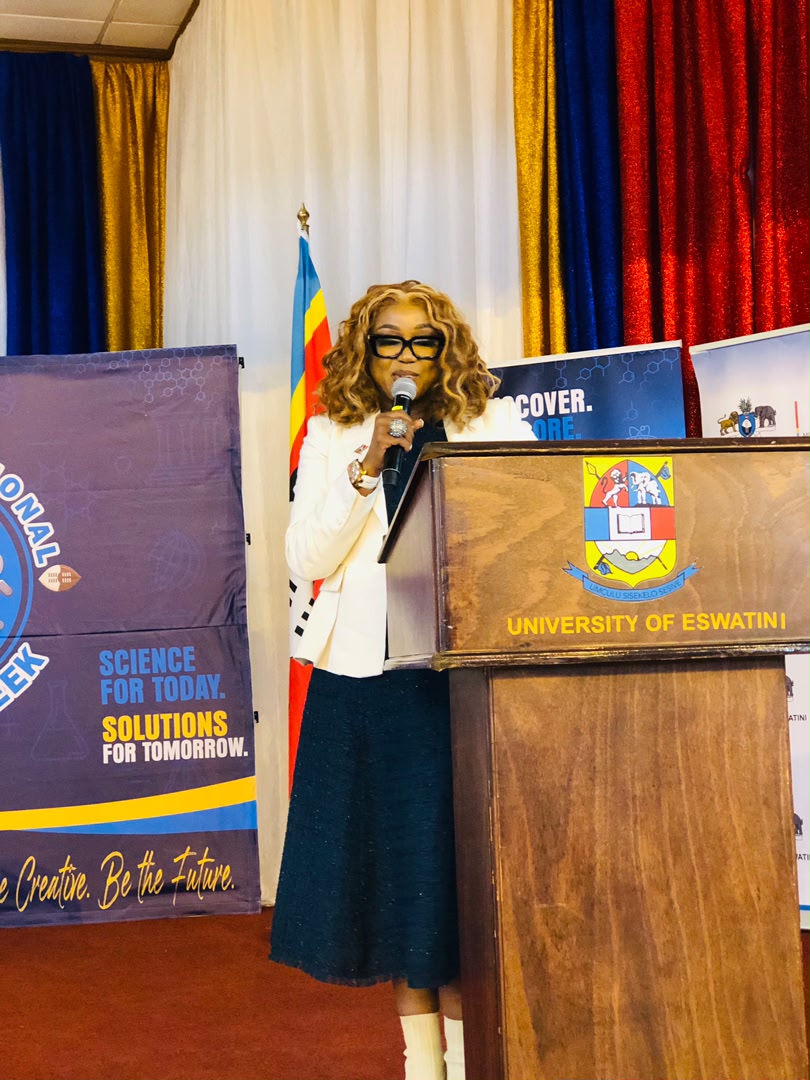
Matsapha- Information, Communications and Technology Minister Savannah Maziya has challenged
Eswatini’s science and innovation sector to focus on delivering tangible benefits for citizens, saying
technological advancement should translate into jobs, improved public services and solutions to
everyday challenges facing Emaswati.
Speaking at the launch of National Science Month 2026 at the University of Eswatini’s Kwaluseni Campus
on Monday, Maziya stressed that government’s vision for science and innovation extends beyond
research laboratories and academic institutions.
“At the heart of our vision is a simple belief: innovation must improve lives,” she said.
“We want science to solve real challenges. We want research to inform policy. We want technology to
improve service delivery. We want innovation to create jobs, businesses and opportunities for our
people.”


The Minister’s remarks come as governments around the world increasingly seek to harness
technological advances such as artificial intelligence, biotechnology and automation to drive economic
growth and improve public services.
Maziya said Eswatini is positioning itself to participate meaningfully in the global knowledge economy
through the Digital Eswatini Agenda, but emphasized that technology adoption must ultimately translate
into practical benefits for citizens.


According to the Minister, the country’s ambition is not only to adopt technologies developed elsewhere
but also to cultivate local innovators capable of developing solutions tailored to Eswatini’s needs.
“Our goal is not merely to consume technology developed elsewhere, but to nurture innovators,
researchers and entrepreneurs who will create solutions for Eswatini, Africa and the world,” she said.
Maziya noted that rapid technological changes are reshaping economies and labour markets globally.
Citing global trends, she said countries that invest in science, technology and innovation will be better
positioned to compete in the future economy.
The Minister also highlighted the importance of investing in young people, noting that more than 70
percent of Eswatini’s population is under the age of 35.
“The scientists, engineers, software developers, innovators and entrepreneurs who will shape Eswatini’s
future are sitting in our classrooms, lecture halls and innovation hubs today,” she said.
“Our responsibility is to create an environment where their ideas can flourish, where innovation is
encouraged and where talent is transformed into opportunity.”
She said government continues to invest in STEM education, digital skills development, research
institutions and innovation ecosystems to equip young people with the tools needed to participate in a
technology-driven economy.


Discussion about this post