



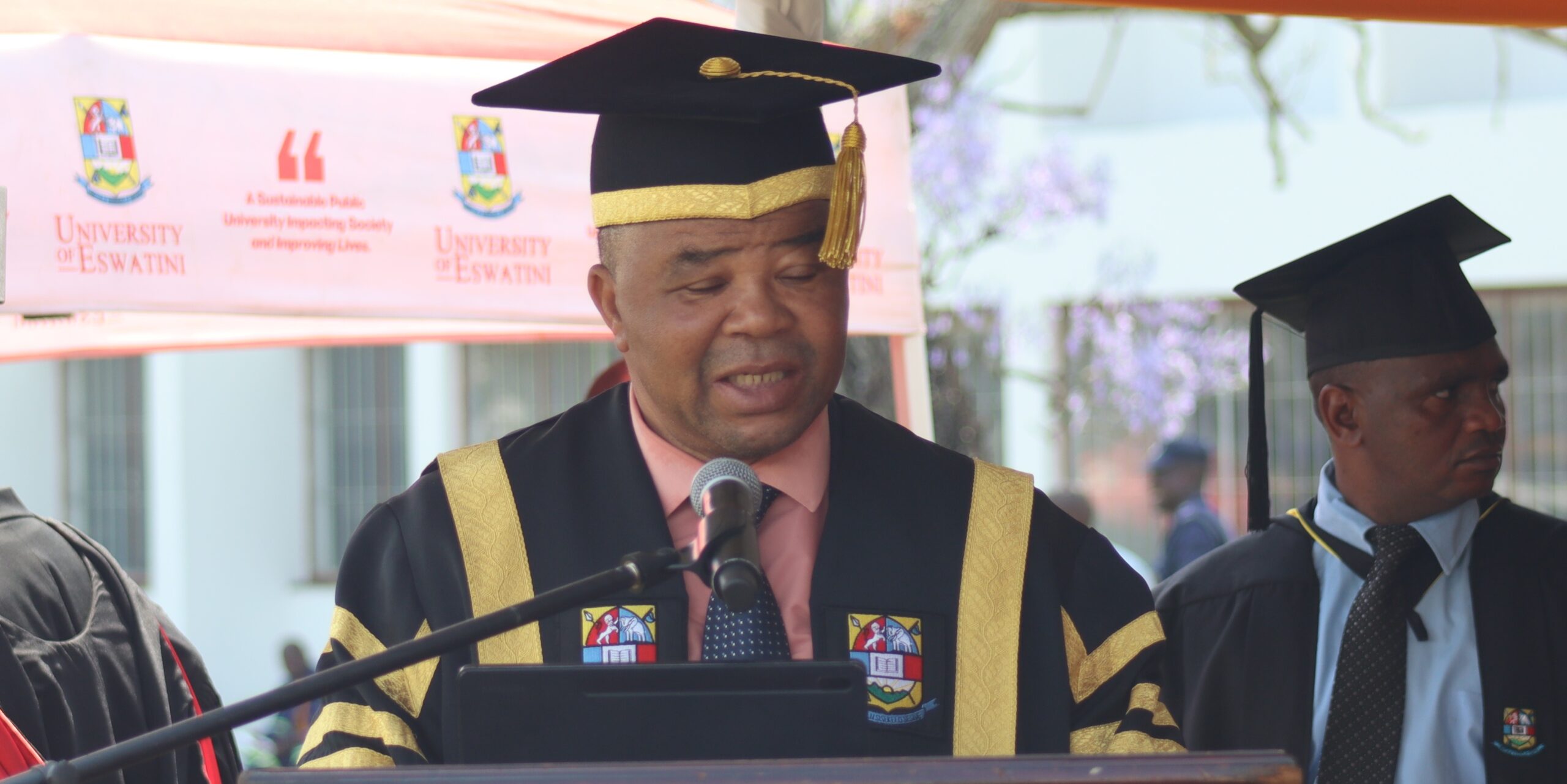
Kwaluseni – The University of Eswatini (UNESWA) has introduced several new programmes in the academic year under review aimed at addressing national and regional skills gaps while improving graduate employability and entrepreneurship.
This was revealed by the UNESWA Vice Chancellor Justice Thwala who said the new programmes had been rolled out across various faculties, responding to industry needs and emerging job market demands.
The new programmes include a Postgraduate Diploma in Public Sector Accounting, Postgraduate Diploma in Procurement and Supply Chain Management, Postgraduate Diploma in Taxation, and a Postgraduate Diploma in Neonatology. Other additions are an MA in Theology, a Short Mandarin Course (developed in collaboration with the Embassy of China on Taiwan), and a BSc in Actuarial and Financial Mathematics under the Faculty of Science and Engineering.
The postgraduate diploma in Public Sector Accounting, launched jointly with the Ministry of Finance, is designed to enhance accountability and strengthen financial management in the public service. Similarly, the diploma in Procurement and Supply Chain Management was developed with the Eswatini Public Procurement Regulatory Authority (ESPPRA) to professionalise procurement processes.


The postgraduate diploma in Neonatology responds to rising neonatal and infant mortality rates, developed in consultation with the Ministry of Health to train specialised healthcare professionals.


Meanwhile, the Mandarin course will expose emaSwati to Chinese language and culture, enhancing opportunities in tourism, trade, diplomacy, and international business. The BSc in Actuarial and Financial Mathematics seeks to produce graduates with skills relevant to the insurance, pension, and financial sectors.
Recognising challenges in science entry requirements, the university’s Senate has amended the Faculty of Science’s admission rule — now requiring only a pass in English rather than a C grade — to increase access for students with high aptitude in science.
Thwala stated that these initiatives are part of its broader mission to align higher education with national development priorities and global competitiveness.


Discussion about this post