



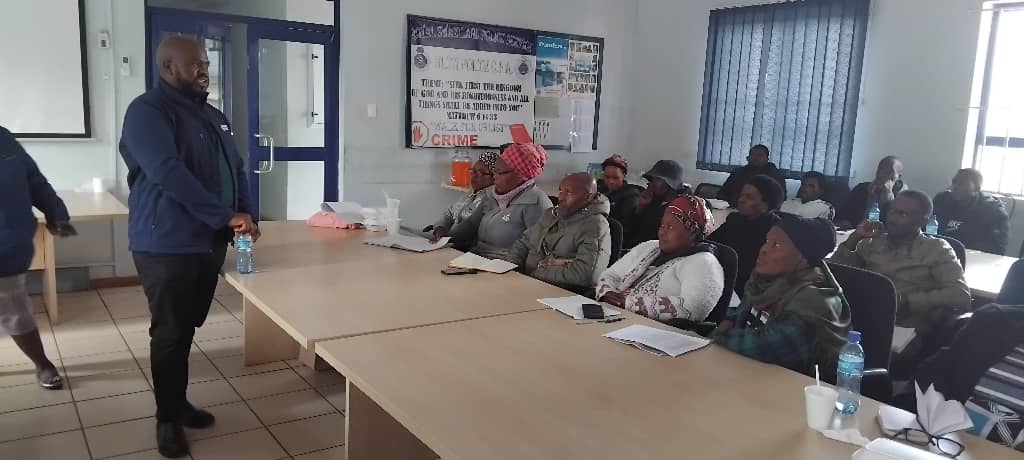
The Eswatini Water and Agricultural Development Enterprise (EWADE) has taken a significant step towards grassroots empowerment in Hhohho Emuva chiefdom through a community planning workshop held last week in Hluti. This initiative supports the ongoing Mkhondvo–Ngwavuma Water Augmentation Program (MNWAP), which aims to foster sustainable development in the region.
The three-day workshop brought together local leaders, community representatives, and various sector stakeholders to develop a Chiefdom Development Plan (CDP). Facilitated by EWADE’s Community Development Officer, Majahonkhe Shongwe, the meeting focused on creating a strategic plan that reflects the chiefdom’s vision and priorities across multiple sectors such as agriculture, education, environment, infrastructure, health, youth empowerment, gender inclusion, and eco-tourism.
EWADE provided both technical and financial support for the workshop, ensuring that the planning process was community-led rather than top-down. National bodies, including the Ministry of Education and Training, National Disaster Management Agency, Royal Eswatini Police Service, National Agricultural Marketing Board, and others, participated to offer expert input aligned with their mandates.
“This workshop is the foundation for real transformation,” said Nokwazi Hlophe, EWADE’s Corporate Communications Manager. She noted that while the physical infrastructure like the E2.6 billion Mpakeni Dam is a major feature of MNWAP, empowering communities to plan their futures remains essential for lasting progress.


The resulting CDP will serve as a living document to guide development efforts, attract investment, coordinate stakeholders, and monitor progress over time. Shongwe explained that the plan enables the people of Hhohho Emuva to take ownership of their development journey, turning community aspirations into actionable goals.


EWADE’s approach aims to bridge national policy with local needs, focusing on rural areas often overlooked in large-scale projects. The organization plans to replicate this community-driven planning process in other chiefdoms affected by MNWAP, reinforcing its role as a facilitator of inclusive and sustainable development.




Discussion about this post