



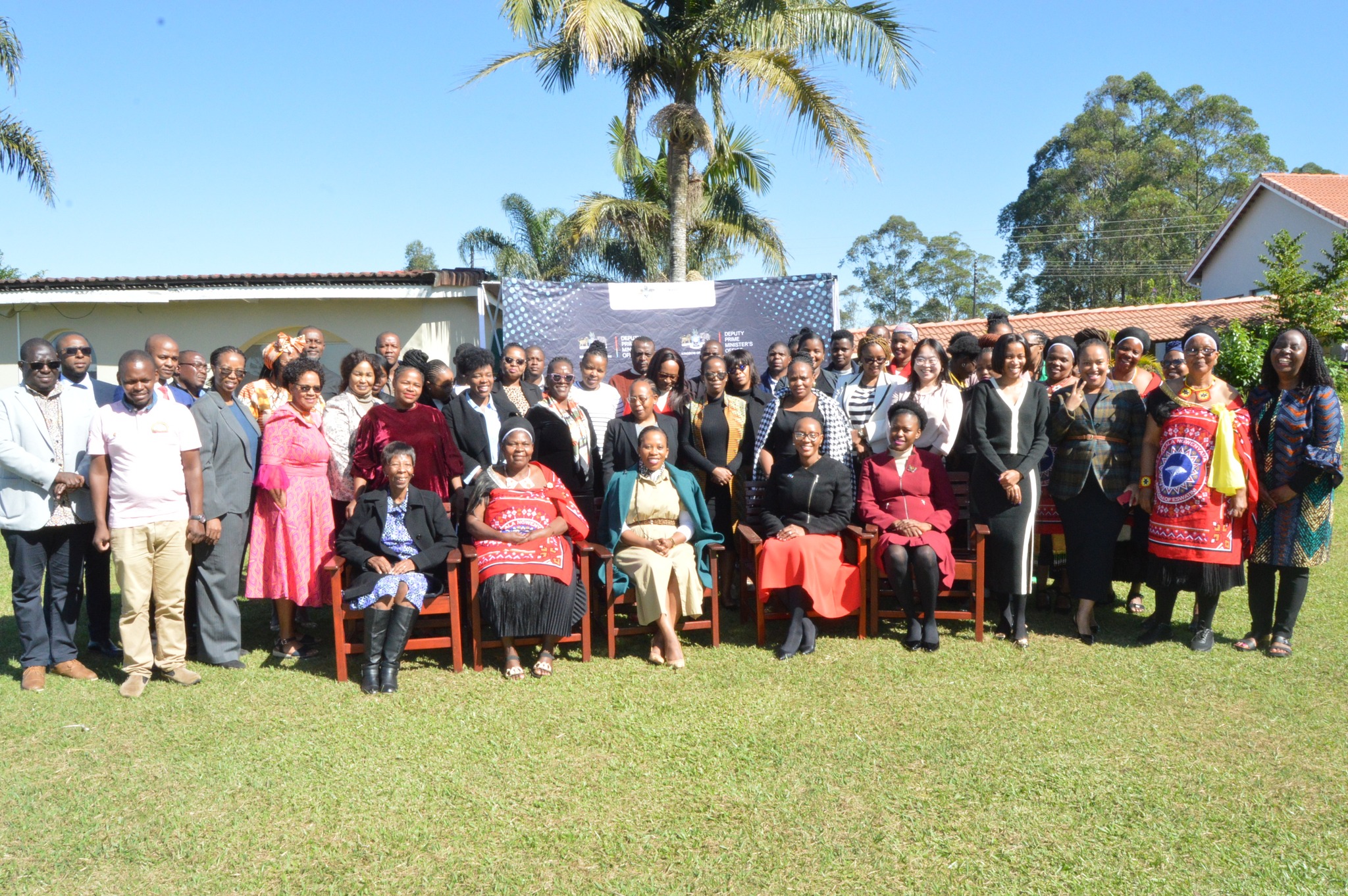
MBABANE – Government, through the Office of the Deputy Prime Minister, has joined forces with the Southern African Development Community (SADC) Secretariat to begin developing a national action plan that will guide Eswatini’s approach to the Women, Peace and Security (WPS) Agenda.
A four-day workshop held from 13 to 16 May 2025 at Mountain View Hotel in Mbabane brought together 74 national stakeholders, including representatives from government departments, civil society, traditional and religious leaders, and development partners. The aim was to build local capacity around the WPS Agenda and guide Eswatini in crafting a context-specific roadmap for action.
Speaking at the launch of the workshop, Director of Gender and Family Issues, Nomzamo Dlamini, who represented the Deputy Prime Minister, said achieving lasting peace requires inclusive approaches that reflect the voices and leadership of all sectors of society, especially women. She urged various sectors – from government to grassroots – to work together in shaping and executing Eswatini’s WPS framework.
The WPS Agenda, grounded in the United Nations Security Council Resolution 1325 adopted in 2000, recognises the disproportionate impact of conflict on women and girls, while promoting their inclusion in peacebuilding, mediation, and recovery processes.

The workshop focused on how Eswatini can practically move from consultation to implementation. A draft roadmap was developed by participants, outlining steps toward a full National Action Plan on WPS.


Representing SADC, Ms Kealeboga Kelly Dambuza-Chifani praised Eswatini’s commitment, noting that the country joins a growing number of member states pushing forward national WPS frameworks. She said SADC’s regional strategy on Women, Peace and Security (2018–2030) has spurred similar engagements across the region.
Fabrice Kitenge Tunda, Mediation and Peacebuilding Officer at the SADC Secretariat, also introduced participants to the Network of Women Mediators in Southern Africa, an initiative meant to increase women’s participation in peace efforts at both national and regional levels.
Participants included officials from departments such as Gender, Police, Environment, Disaster Management, and Social Services, alongside non-state actors who shared experiences on community safety, conflict prevention and women’s rights. The draft roadmap will now serve as a guiding document for national consultation and implementation.


Discussion about this post