



Manzini – Government ministries, municipalities, UN agencies, and civil society groups gathered at The George Hotel on Wednesday for a national workshop to validate Eswatini’s Third Voluntary National Review (VNR) report on progress towards the Sustainable Development Goals (SDGs).
The workshop, convened by the Ministry of Economic Planning and Development (MEPD), brought together local authorities, technical experts, and development partners to scrutinize the draft VNR and accompanying Voluntary Local Reviews (VLRs) before submission to Cabinet and the United Nations.
Principal Secretary in the Ministry, Ms Thabsile Mlangeni, welcomed stakeholders and confirmed that Eswatini is one of only seven countries presenting a third VNR at the 2025 UN High-Level Political Forum, joining 38 others in reporting voluntary progress on the 2030 Agenda. She noted that the report includes, for the first time, locally-driven assessments from seven municipalities: Ezulwini, Manzini, Matsapha, Mbabane, Ngwenya, Nhlangano, and Siteki.
The 2025 VNR theme focuses on “advancing sustainable, inclusive, science- and evidence-based solutions,” with five SDGs—health (3), gender equality (5), decent work (8), life below water (14), and partnerships (17)—receiving in-depth review. However, the report covers all 17 goals.


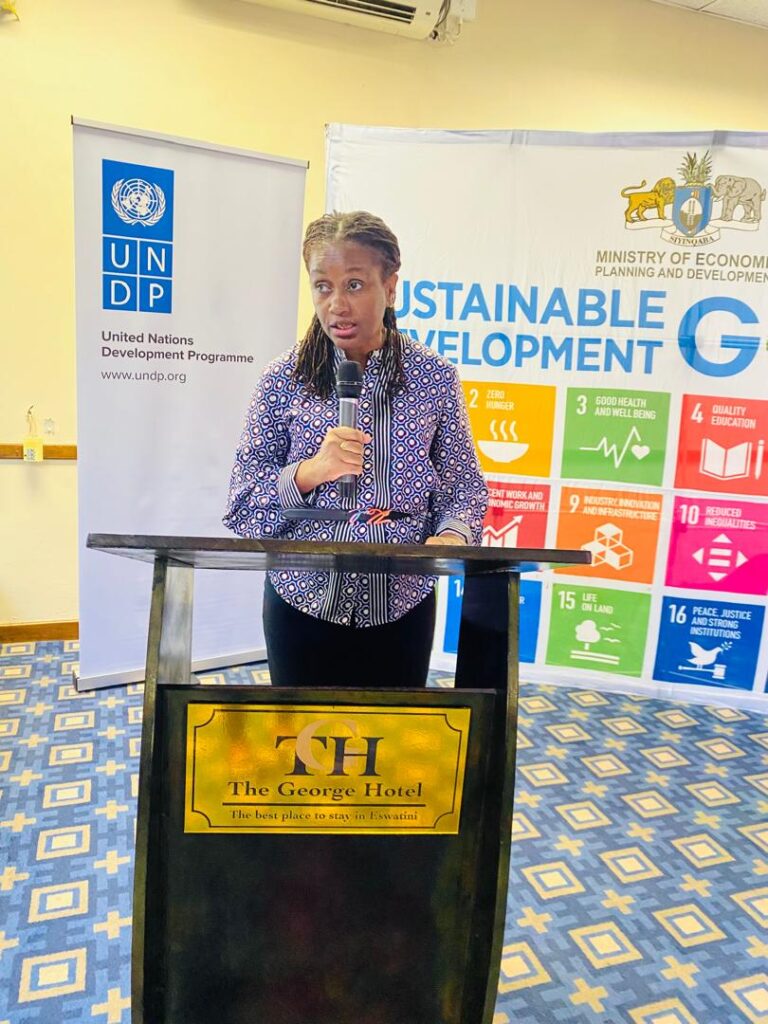
The validation session aims to ensure that inputs from across society—particularly women, youth, and persons with disabilities—are accurately reflected in the final report. “This workshop is not just about ticking boxes; it’s about ensuring the report represents the realities on the ground,” said Mlangeni.


She described the integrated VNR and VLR model adopted by Eswatini as a flagship initiative, distinguishing the country from others that typically separate national and local SDG assessments. The goal is to improve coordination between local and national governments and align policies more closely with community needs.
The validation also comes at a midpoint in the implementation of Eswatini’s National Development Plan (2022/23–2027/28), which incorporates global and regional frameworks including Agenda 2030, the African Union’s Agenda 2063, and the SADC RISDP.
UNDP’s Deputy Resident Representative Henrik Franklin described the partnership between UN agencies and the government as longstanding, and praised the efforts of local councils in embracing SDG localization.
The UN Department of Economic and Social Affairs (UNDESA) has been supporting the VNR/VLR process with financial and technical assistance, including training of officials.




Discussion about this post