



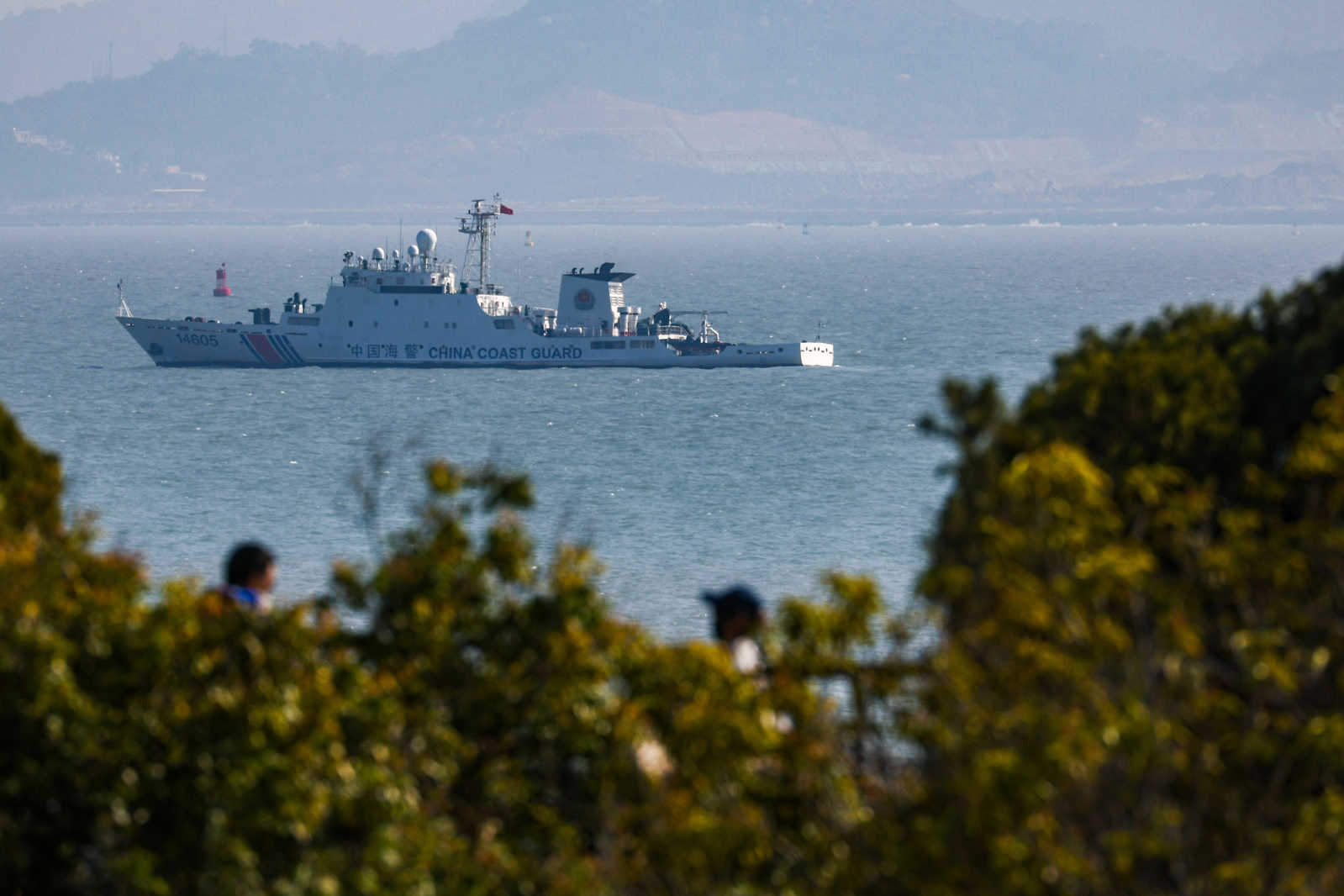
Western geopolitics treats international law as a neutral, rule-based system designed to prevent aggression through collective assurance, whereas the Chinese Communist Party views jurisprudence as an offensive weapon.
The People’s Liberation Army Press text, “Legal Warfare: 100 Cases – Classic Case Analysis,” recently translated into English, outlines this mindset. Finalized in June 2004, the volume marks Beijing’s formal codification of legal warfare into its “Three Warfares” doctrine.
Though a military manual, execution relies on a whole-of-government apparatus spanning the CCP Central Committee and foreign ministry, laying the strategic groundwork for the March 2005 Anti-Secession Law.
The PLA’s approach represents a deliberate inversion of Western protocols. Rather than using legal boundaries to assure adversaries of peaceful intent, the CCP treats law as an instrument of coercive deterrence designed to restrict an opponent’s operational options and dictate the escalatory ladder.
The PLA’s legal approach to Taiwan is rooted in its retrospective analysis of the 1958 shelling of Kinmen. Building on the 1954-1955 First Crisis — where Mao Zedong forced the ROC’s evacuation of the Dachen Islands — the PLA’s 1958 strategy centralized military, political, and legal struggles under a single command to isolate Taiwan and test the newly minted US–ROC Mutual Defense Treaty.
Kinetic playbook
During the 1958 crisis, Beijing unilaterally declared a 12-nautical-mile (22.2 kilometers) territorial sea limit. Former Chinese Premier Zhou Enlai used this to reclassify offshore islands as internal waters, attempting to deny the US legal justification to operate.
The PLA narrative falsely claimed this legal declaration compelled US warships to abandon their escort of Taiwan Navy resupply ships. In reality, the Eisenhower administration authorized the Seventh Fleet to escort Taiwan supply ships directly to within 3 nautical miles of Kinmen’s shores to break a crushing PLA blockade.


US ships defied Beijing’s claim by escorting convoys through international waters up to this point. This left Taiwanese craft to complete the run inside the immediate conflict zone.
The PLA text underscores the strategic intent behind China’s former Defense Minister Peng Dehuai’s subsequent alternate-day shelling schedule. By keeping the civil war active, Beijing provided Chiang Kai-shek (蔣介石) with leverage to resist US pressure to withdraw forces from Kinmen and Matsu.
Mao Zedong used this friction as a strategic noose to keep the offshore islands geopolitically linked to the mainland. This blocked early US diplomatic initiatives to create a clean geographic partition and institutionalize a permanent split between what were viewed then as “two Chinas.”
This noose template establishes a core tenet: military strikes extend political and legal rhetoric. In security theory, this is compellence, or using physical force to alter an adversary’s political trajectory. This doctrine has evolved into a pattern of escalatory signaling in response to high-level diplomatic engagements:


Discussion about this post