



Mbabane – Eswatini’s education system must equip learners with practical competencies to solve problems, communicate effectively and contribute to national development, rather than measure their success primarily by their ability to pass examinations.
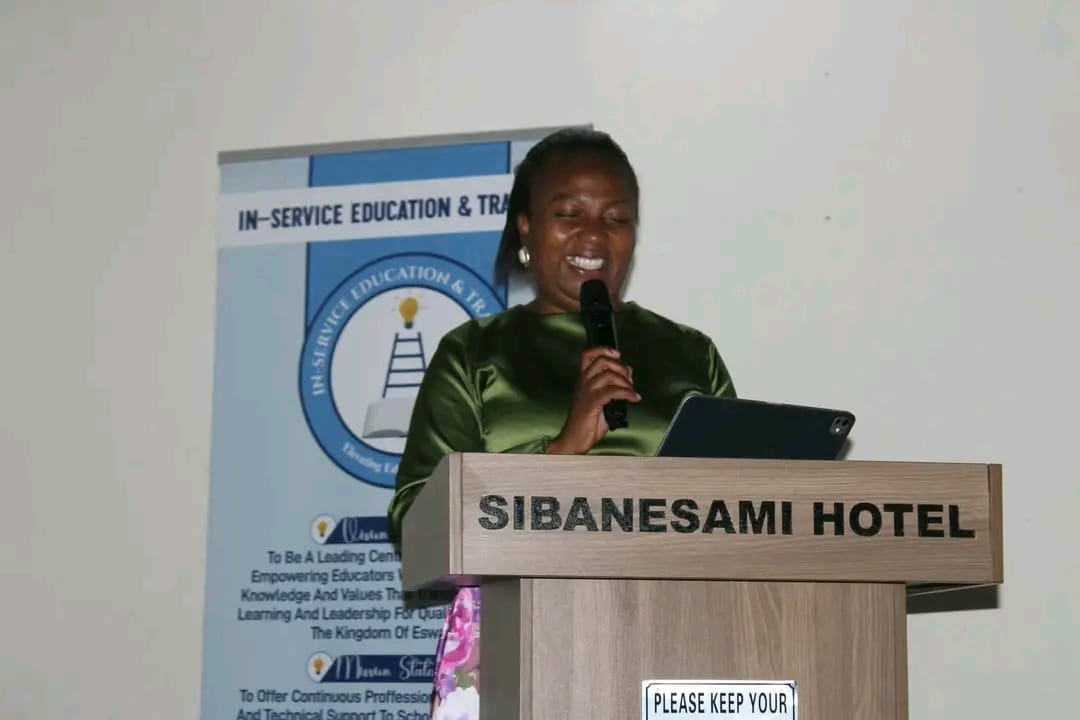
This is the position of Principal Secretary (PS) in the Ministry of Education and Training Nanikie Mnisi, who says the country’s education reforms must translate into meaningful changes in classrooms and prepare learners for challenges beyond the school environment.
Mnisi’s position comes as the Ministry marks progress in the implementation of Competency-Based Education (CBE) following the development of a comprehensive nine-module training manual aimed at strengthening the delivery of the competency-based curriculum.
The manual, funded by the European Union (EU), follows the recent Education Indaba and stakeholder capacity-building engagements. It provides practical guidance on curriculum interpretation, lesson planning, authentic assessment and instructional leadership.


It is designed to equip teachers, school leaders, inspectors and education partners with the tools needed to move away from rote learning towards an approach that emphasises the practical application of knowledge, skills, attitudes and values.


The shift places greater responsibility on the education system to ensure that learners can demonstrate what they know through practical application, critical thinking, problem-solving and collaboration.
Under the competency-based approach, success extends beyond examination results to include the ability of learners to use their acquired knowledge to address challenges in their everyday lives and communities.
The nine-module manual is expected to provide educators with a common practical reference as they interpret the curriculum, prepare lessons and assess learners’ competencies.
The Ministry has acknowledged the contribution of the EU and development partners, including UNICEF, SWANCEFA, FODSWA, the World Food Programme (WFP) and Alliance Française, as well as teacher unions and technical drafting teams who contributed to the development of the resource.
Mnisi expressed appreciation to the partners for their commitment and collaboration in supporting education transformation in Eswatini.
The success of the reforms will ultimately depend on how effectively the guidance is implemented in schools and translated into everyday teaching and learning.
The Ministry’s ambition is to ensure that learners leave the education system with more than academic knowledge, but also the skills, attitudes and values needed to participate meaningfully in society and contribute to the country’s development.
“Our responsibility as a Ministry is to ensure that learners do not merely acquire knowledge for the purpose of passing examinations. Rather, they must be able to apply that knowledge, together with their skills, attitudes and values, to solve problems, communicate effectively, collaborate with others and contribute meaningfully to their communities and the development of our nation,” PS Nanikie Mnisi said.


Discussion about this post