



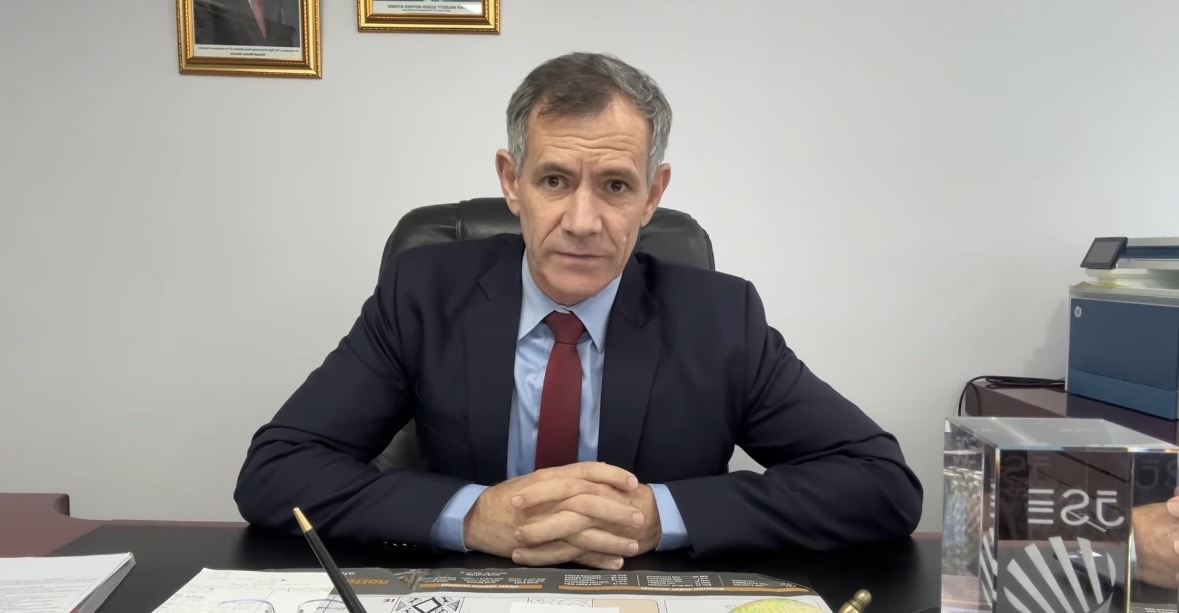
Mbabane – The Ministry of Finance is tightening its tax compliance measures by scrutinising property ownership as it seeks to identify individuals and businesses whose declared income does not match their wealth.
Finance Minister Neal Rijkenberg said the new requirement would require individuals with property valued at more than E3 million to account for the property in their tax returns, as part of efforts to close loopholes that allow some taxpayers to avoid paying what they owe.
He said the focus was particularly on properties held under title deeds in urban areas, where ownership and property valuations can be clearly established.
Rijkenberg said the tax authority was increasingly finding cases where businesses reported little or no profit over several years while their owners were able to acquire multiple properties.


“If you have declared zero profit in your business for the last ten years, but you’re buying a few properties in Buhleni, for instance, one now has to be clear,” he said.
The Minister explained that the measure was intended to close what he described as gaps in the tax system, rather than target a particular group of taxpayers.
He said the government had previously identified weaknesses in the movement of money through the financial system, adding that information was not always flowing effectively between banks, the Financial Intelligence Unit (FIU) and tax authorities.
Rijkenberg said the government was now looking at property ownership as another area where undeclared wealth could potentially be identified.
He stressed that people who had legitimately earned their income and used it to purchase property had nothing to fear, provided they had properly declared their income and assets.
The Minister also warned that unequal tax compliance could hurt businesses that pay their taxes because those avoiding tax could gain an unfair advantage over compliant businesses.


“What happens is the ones not paying tax outcompete the ones paying tax, and you end up with a whole society ultimately not paying tax,” he said.
Rijkenberg appealed to everyone doing business or earning income in Eswatini, including foreign nationals, to comply with the country’s tax laws.
He said taxes were necessary to enable government to fund public services such as healthcare, education and road infrastructure.
Meanwhile, Rijkenberg said the quarterly inflow of Southern African Customs Union (SACU) revenue expected next week would provide some relief to government’s cash-flow pressures.
He said the government was also working on raising additional funds for affordable budget support.
Part of the SACU revenue would be directed towards micro-projects, with particular attention being given to the Community Development Fund, where delayed payments have affected small contractors.
Rijkenberg said the government would use the available relief to try to address some of the outstanding payments and ease pressure on small contractors.


Discussion about this post