



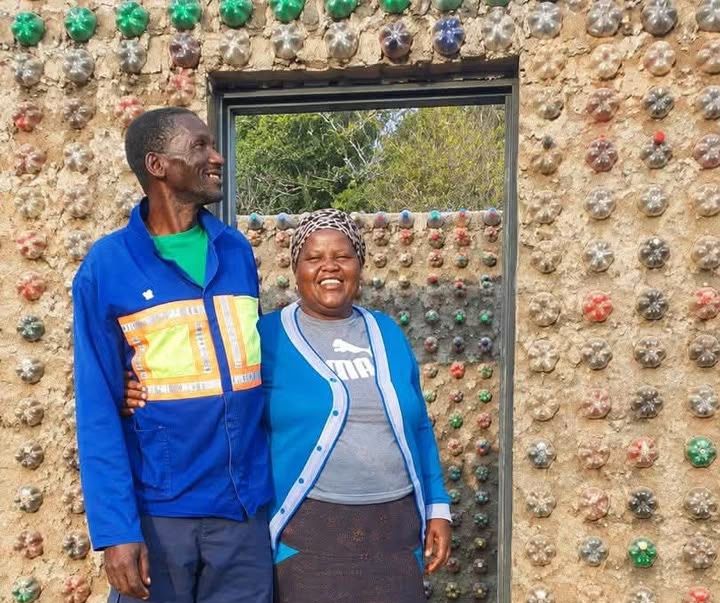
LAVUMISA – What began as discarded plastic bottles has found a new purpose in the home of the Ndwandwe family in Nsubane, Lavumisa, where hundreds of bottles have been incorporated into the walls of their house.
Dumisane Ndwandwe has transformed ordinary plastic bottles that could have ended up in the environment into part of his family’s home, giving the waste a second life while creating a distinctive feature visible from both inside and outside the house.
The bottles are filled with sand to give them weight before being carefully arranged within the walls, creating a noticeable pattern across the structure.
“I filled the bottles with sand so that they could have weight,” Ndwandwe explained.


The unusual construction method has also drawn attention to the wider challenge of plastic waste management in Eswatini, where discarded plastic remains an environmental concern.


According to the United Nations Development Programme (UNDP), plastic waste poses risks to the country’s rangelands and aquatic environments when it is poorly managed. Plastic that is dumped or left unattended can accumulate in communities and waterways, potentially affecting livestock and ecosystems.
The Ndwandwe family’s approach demonstrates one form of reuse, where a material is kept in its existing form and given another function rather than immediately becoming waste.
While recycling involves processing discarded materials into new products, reuse allows an item to serve another purpose without necessarily undergoing that process. In this case, the bottles have been repurposed as part of the family’s home.
The initiative also highlights the importance of looking at waste differently. Items commonly regarded as rubbish can sometimes be repurposed, reducing the amount of material entering the waste stream.
However, the structural safety and long-term durability of bottle-based construction would need to be assessed by qualified building professionals to determine whether the method meets appropriate construction standards.
For the Ndwandwe family, the bottles are no longer simply empty containers. They have become part of the place they call home.


Discussion about this post