



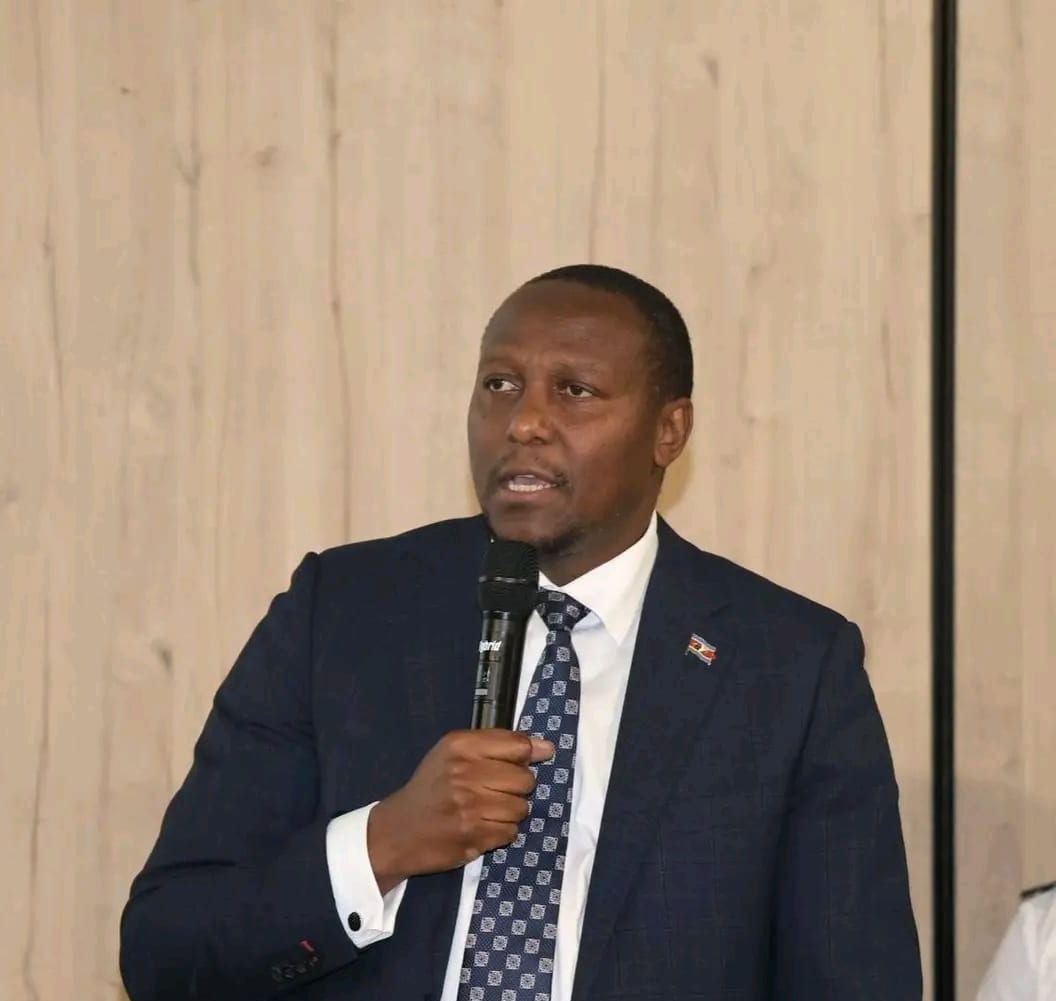
Ezulwini– Prime Minister Russell Mmiso Dlamini has called for a fundamental shift in how Eswatini approaches national development, urging emaSwati to move away from dependency and consumption towards self-reliance, productivity, ownership and value creation.
He was speaking at the Kingdom Leadership and National Transformation Seminar held at Happy Valley Hotel on September 21, 2026, where he said development could not permanently be imported and called for emaSwati to become active participants in building the country’s future.
“Development cannot permanently be imported. Investment and international partnerships remain necessary and welcome, but they must complement – not substitute – our own national agency. We must become the principal authors, investors and beneficiaries of Eswatini’s development,” said Dlamini.
The seminar was attended by Cabinet Ministers, Members of both Houses of Parliament, Principal Secretaries, Campus Crusade for Christ members and senior government officials. The keynote speaker was Professor Delanyo Adadevoh, Campus Crusade for Christ Senior Global Vice President and founder of the International Leadership Foundation, who spoke on integrity, freedom, justice and stewardship.


Dlamini said Africa had for too long remained a spectator in the exploitation of its own resources despite possessing abundant land, minerals, energy resources, human capital and markets. He said Eswatini needed to build the capacity to own, finance and control its productive assets while continuing to benefit from capital, technology and knowledge from abroad.
“His Majesty King Mswati III has given us an unequivocal mandate to transform this Kingdom. Only last Thursday, His Majesty again challenged the Nation to think boldly about development, industrialisation and the mobilisation of capital necessary to build the Eswatini of tomorrow,” he said.
“The message is clear: we must think bigger, act faster and be courageous enough to do things differently. Transformation therefore begins in the mind.”
The Prime Minister said the country needed a new sense of national confidence, with emaSwati taking greater responsibility for the country’s development while learning from the rest of the world without simply copying foreign models.
“We must welcome capital, technology and knowledge from abroad while steadily building the capacity to own, finance and control the productive assets of our country,” said Dlamini.
He also cautioned against assuming that political or economic models imported from other countries would automatically resolve Africa’s challenges.
“Neither should we assume that importing political or economic models from elsewhere is, by itself, a cure for Africa’s difficulties. History affords no such guarantee. Institutions succeed when they command legitimacy, uphold justice, protect human dignity and respond to the history, culture and circumstances of the people they serve,” he said.
Dlamini further called on leaders to put the national interest ahead of personal, political and institutional interests, saying transformation would require sacrifice from the present generation.
“Personal ambition must yield to national interest. Political interest must yield to national interest. Institutional interest must yield to national interest. Our generation must be prepared to sacrifice something of itself so that the generation after us may inherit something greater,” he said.


He, however, warned that such transformation would not endure without integrity.
Adadevoh said countries seeking transformation needed to think beyond immediate political or economic cycles and develop long-term plans that could guide successive generations.
“There are many nations in Africa and across the world that are desiring for new futures and they are working on plans for their development. My recommendation is that when we are looking at the transformation of a nation, you have to think generationally,” said Adadevoh.
He said a generational plan should address the major areas of national development, with details then worked out through long-term strategic plans.
Adadevoh also stressed the importance of positive self-identity, saying Africans needed to know, appreciate and accept themselves as part of building stronger societies.
“What I’d like to recommend for my fellow Africans is the value of positive self-identity. It is important to know yourself, to appreciate yourself and to accept yourself. If you don’t have a positive self-identity, you cannot fight your way through the jungles of life,” he said.
On integrity, Adadevoh said national institutions could not withstand the test of time if integrity was limited to leaders while ordinary citizens were excluded from responsibility.
“You can invest capital. You can have the best brains on the board. You can even have very skilled management, but if the ordinary citizens do not have integrity, integrity that will also invite a high sense of patriotism, then institutions cannot stand the test of time,” he said.
“So, we don’t only point at our leaders, we must also point at ourselves.”
Meanwhile, Hhohho Regional Woman MP Tanele Zanele Magagula stressed the need for people of integrity in leadership, saying Eswatini could make meaningful progress if those entrusted with leadership upheld strong ethical values.
Magagula also questioned how leaders could better understand and respond to the aspirations of citizens.
Minister of Labour and Social Security Phila Buthelezi echoed the Prime Minister’s call for disruption, saying leaders should stop complaining about bureaucracy and inefficiencies and instead change the way government operates.


Discussion about this post