



Mbabane– Businesses that have demonstrated compliance with customs requirements could soon spend
less time at Southern African Customs Union (SACU) borders as the regional bloc moves to test the
mutual recognition of Authorised Economic Operator (AEO) status across its five Member States.
The second phase of the SACU AEO Mutual Recognition Arrangement pilot commenced on Tuesday at
selected border posts and will run until March 2027.
The latest phase involves Botswana, Namibia and South Africa, following the completion of the first
phase involving Eswatini, Lesotho and South Africa earlier this year.
The initiative is aimed at giving accredited businesses preferential treatment when moving goods across
borders, with the expected benefits including quicker clearance, fewer routine inspections and priority
treatment where physical inspections are necessary. SACU has previously described the AEO programme
as a customs-business partnership that rewards compliant operators with trade facilitation benefits.


Under the mutual recognition arrangement, the AEO status granted to an eligible business in one SACU
country will progressively be recognized by customs authorities in other Member States.
This could significantly reduce the amount of time compliant businesses spend at border posts, while
lowering costs linked to delays and making the movement of goods across the region more predictable.
The arrangement could also allow certain inspections to be conducted at approved alternative locations
instead of at the border.
The pilot will also help identify operational challenges before SACU proceeds with full implementation.
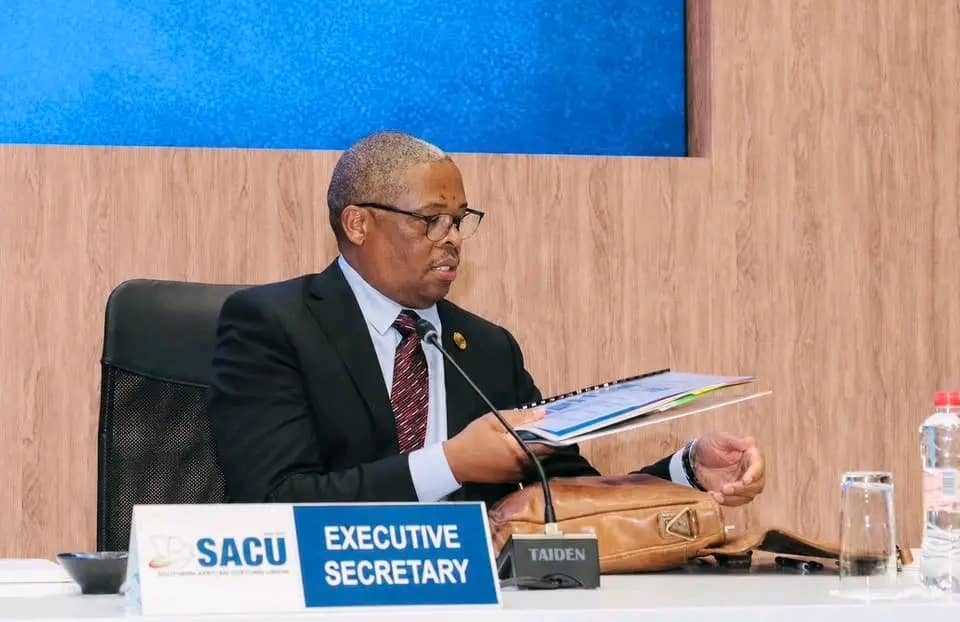
SACU Executive Secretary Dumisani Masilela said the pilot would provide an opportunity to identify
challenges and make recommendations to ensure the successful implementation of the regional
arrangement.
The initiative is part of SACU’s broader efforts to modernise customs administration and improve trade
facilitation while maintaining supply-chain security.
The AEO programme is based on the principle that businesses with a strong record of customs
compliance should receive incentives in return for working with customs authorities to strengthen
supply-chain security.
By the end of the first quarter of the 2026/27 financial year, SACU had 1,070 accredited AEOs** across
the region.
South Africa accounted for the overwhelming majority, with 1,006 accredited operators, followed by
Eswatini with 33, Lesotho with 14, Namibia with 10, and nd Botswana with nine.


The figures place Eswatini among the smaller AEO programmes in SACU, but businesses already
accredited under the national programme stand to benefit directly as mutual recognition is expanded.
For Eswatini companies involved in regional trade, the success of the pilot could therefore have a direct
bearing on the cost and efficiency of moving goods through SACU borders.
Full implementation of the regional arrangement is expected to commence in April 2027, subject to the
outcome of the pilot.
The development comes as SACU continues to push for a more integrated and efficient regional trading
environment, with policy harmonisation, customs modernisation and smoother movement of goods
identified as important elements of regional economic integration.


Discussion about this post