



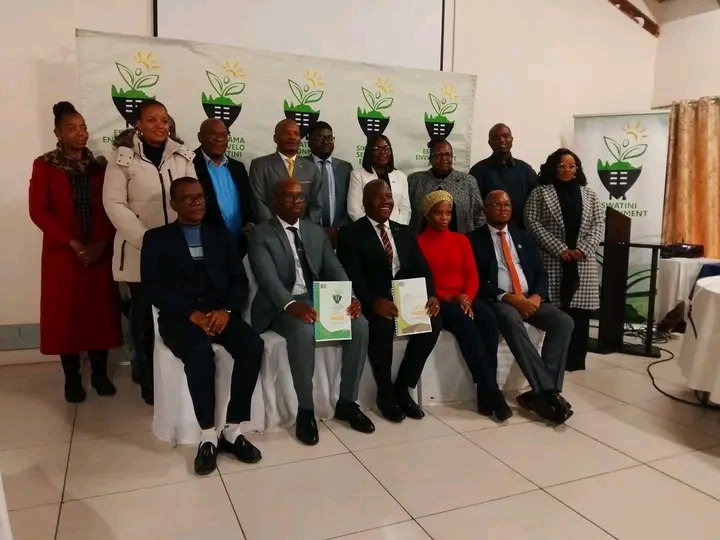
Ezulwini – Eswatini and Namibia are looking to move their environmental cooperation beyond agreements and into potentially bankable projects in carbon capture, renewable energy, climate resilience and green industrialization.
The push comes after Prime Minister Russell Mmiso Dlamini challenged the two countries to ensure that their new partnership produces tangible results rather than becoming another agreement without practical outcomes.
The Prime Minister’s directive was revealed by Eswatini Environment Authority (EEA) Executive Director Gcina Dladla during the signing of a Memorandum of Understanding (MoU) between the Eswatini Environment Fund and the Environmental Investment Fund of Namibia (EIF) at Sibane Sami Hotel in Ezulwini on Tuesday.
Dladla said Dlamini had made it clear during a meeting with officials from the two countries that the partnership must deliver measurable results.


“He wants tangible outcome of this partnership, not just a visit, not just a handshake, not just paperwork, but tangible outcome of this partnership,” Dladla said.
Meanwhile, Environmental Investment Fund of Namibia Chief Executive Officer Bennedict Libanda, said the two countries could develop projects that combine environmental protection with economic development.
Libanda identified carbon capture and storage, renewable energy and green industrialization among the areas that could be explored under the partnership.
He said carbon capture could be investigated through collaboration with universities and other scientific institutions to identify geological areas suitable for capturing and storing carbon.
The captured carbon could then potentially be combined with hydrogen and mineralized to produce products such as fertilizer, creating a link between climate mitigation and industrial production.


Libanda said such initiatives could form part of Namibia and Eswatini’s broader green industrialization ambitions. He also pointed to Namibia’s significant solar and wind resources as another potential area for cooperation.
Namibia’s renewable energy capacity could be developed in projects linked to the Southern African Power Pool, while complementary renewable energy investments in Eswatini could contribute to regional energy security.
“These are the kind of projects that you can think within our respective countries where we can collaborate,” Libanda said. The proposed projects come against a backdrop of significant environmental pressures in Eswatini.
Dladla said more than 90 per cent of the country had been affected in some way by invasive alien species, with more than 200 invasive plants already present.
He said more than 10 per cent of the country’s land was classified as wasteland in the last State of the Environment Report, meaning the extent of degradation had made such areas unsuitable for farming or settlement.
According to Dladla, Eswatini currently collects only 17 per cent of its waste, with collection largely concentrated in towns and cities. He noted that the remainder is often burnt, dumped or left scattered in the environment, with the waste stream including hazardous, electronic, industrial and healthcare waste.
However, Dladla said these challenges could also provide opportunities, particularly in addressing youth unemployment through environmental enterprises and climate-related programmes.“We are not just dealing with a climate and environment crisis, but we are also dealing with an economic crisis, youth unemployment crisis,” he said.
He said the partnership should therefore focus on developing solutions that could address both environmental degradation and socio-economic challenges.


Discussion about this post