



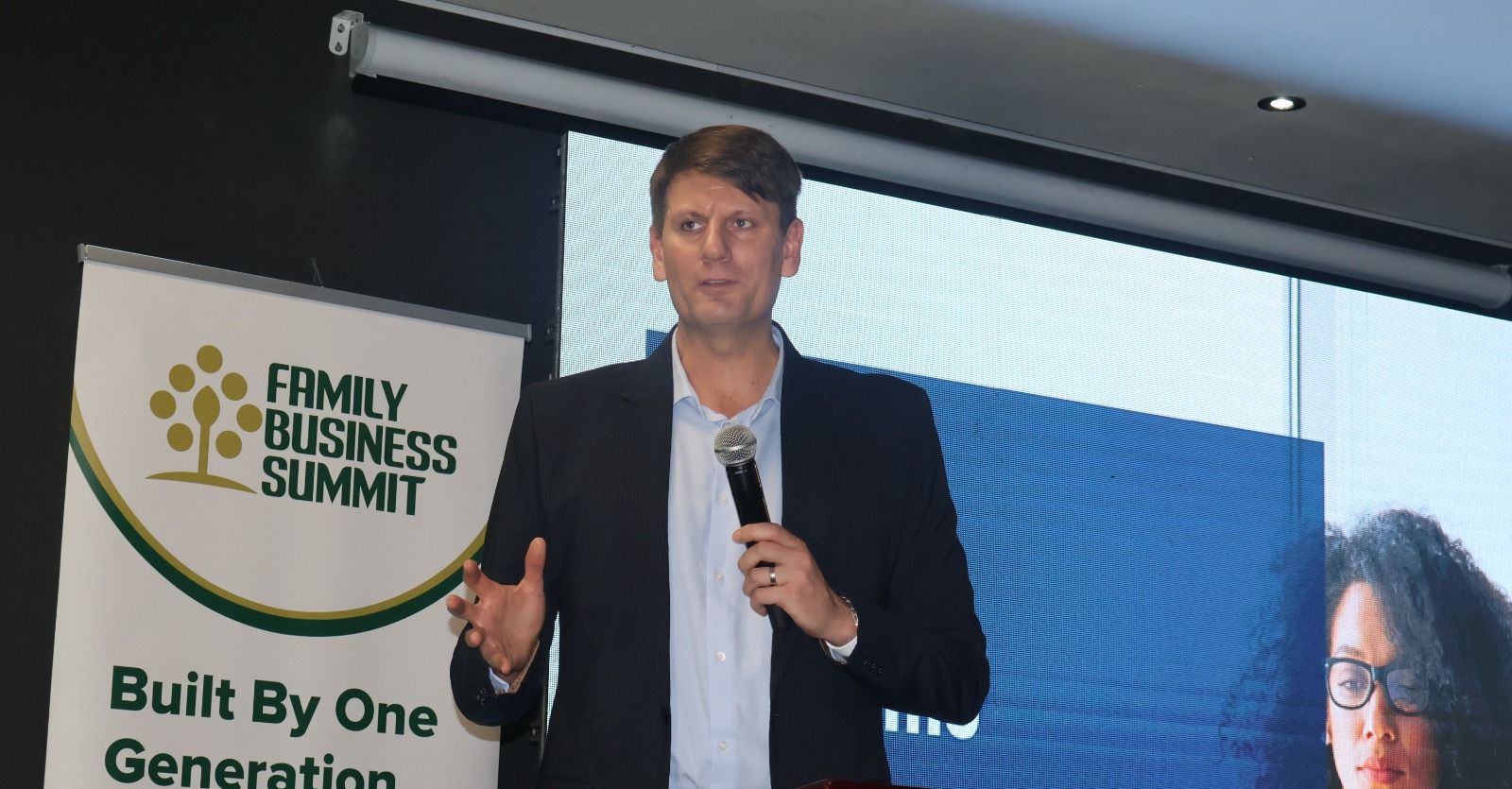
Ezulwini- Family businesses should not automatically hand management control to relatives simply because they belong to the family, KPMG Partner Creagh Sudding has warned.
Sudding said the next generation of family businesses would increasingly separate ownership from day-to-day management, with family members retaining ownership while professional managers take responsibility for running the enterprises.
Speaking at the third Family Business Summit at the Happy Valley Hotel on Thursday, Sudding said the shift was already reflected in KPMG’s global research, which projects that only 12 per cent of family businesses will remain directly family-run by 2035.
“Currently, globally, there’s 47% of the family businesses out there that are family-run,” Sudding said. “By 2035, the estimation, based on the feedback from the 2,000 family businesses that were surveyed, only 12% will be family-run,” he added.


The projection is contained in KPMG’s 2026 Global Family Business Report, which draws on responses from 1,927 family and founder-led business leaders across 41 countries.
According to Sudding, the development does not necessarily mean families will relinquish control of their businesses. Instead, ownership and management could increasingly become separate functions, allowing families to remain owners while appointing professionals to manage operations.
“The next generation are not going to step in to run the business, but they’re going to become responsible owners of those businesses, and you get the professional management to ensure the resilience and sustainability of that business,” he said.
Sudding said succession planning should therefore focus on whether the person taking over the business has the required skills and ability to lead, rather than simply whether they are a family member.
“If they’re not the right person for the job, they shouldn’t be the next person to lead the business,” he said.
He said having a clear succession and transition plan was also important for external stakeholders, particularly financial institutions that provide funding to family-owned enterprises.
“For your stakeholders, for example, the bankers in the room, they like to see that,” Sudding said. “They like to see that succession plan, that transition plan, that your business isn’t going to fail just because you want to hand it over to the next-generation family member.”
Sudding identified growth, risk, wealth, transition, people and governance as six areas that family businesses need to address as they prepare for the future.
He cautioned businesses against pursuing growth without considering whether that expansion could expose the enterprise to excessive risk.
According to Sudding, family businesses need to assess not only risks affecting their operations but also those that may arise from the conduct of individual family members.


He cited an example from South Africa where a family member’s social media activity created reputational risks for both the individual and businesses linked to the family.
The example, he said, demonstrated why family businesses need structures that recognise that the conduct of individual family members can have consequences for the wider enterprise.
The changing structure of family businesses comes as succession remains a critical issue for enterprises seeking to survive beyond their founders.
Rather than assuming that ownership should automatically translate into management authority, Sudding’s remarks point to a model in which families retain their stake in the business while professional managers are given responsibility for its daily operations.
For family-owned businesses, the challenge is therefore increasingly becoming how to preserve family ownership while putting in place the governance, leadership and management structures needed to sustain the enterprise across generations.


Discussion about this post