



Ezulwini – The Eswatini Electricity Company (EEC) has suffered a dramatic deterioration in its financial position, with a E438.3 million net profit recorded in 2020 expected to turn into a projected E231.1 million loss this year.
The reversal comes despite the power utility’s revenue increasing by about E800 million over the same period, from E2.50 billion in 2020 to a projected E3.30 billion in 2026.
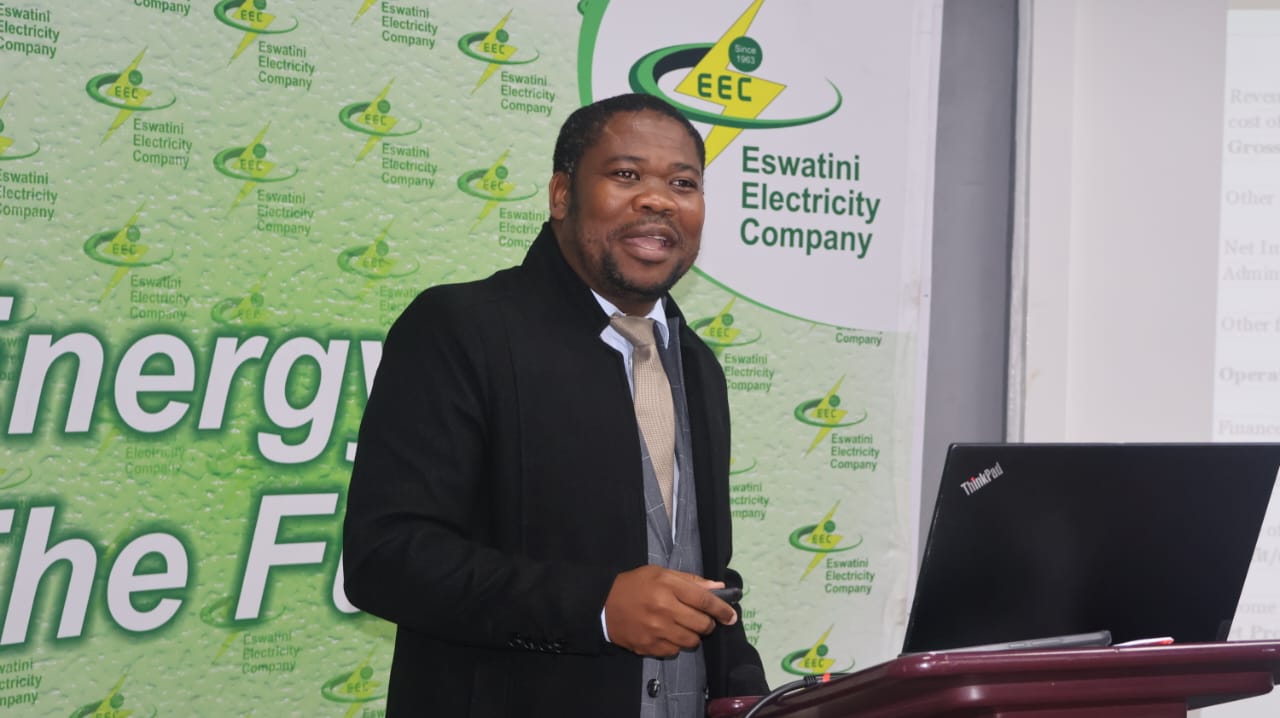
The figures were disclosed by EEC Acting Managing Director Mphumuzi Maziya during a breakfast meeting with editors at Sibane Sami Hotel in Ezulwini on Tuesday.
EEC recorded a net loss of E80.4 million in 2025, and the latest projections indicate that the loss could widen by more than E150 million this year as the company grapples with rising costs associated with supplying electricity.


To ease the financial strain, the Acting MD announced that EEC prepares to submit a new electricity tariff application to the Eswatini Energy Regulatory Authority (ESERA), this October, although he did not give much details of how much will be the increase.
However, EEC’s James Mabundza cautioned against concluding that the tariff application would automatically lead to an increase in electricity prices.
Mabundza said the utility had not yet finalized the figures it would present to ESERA, adding that any proposed adjustment would have to go through the regulatory process before a decision could be made.


The pressure on EEC’s finances is largely reflected in the widening gap between the money it generates and the cost of supplying electricity. During the 2025/26 financial year, the utility recorded revenue of about E3.30 billion against a cost of sales of approximately E3.32 billion.
This resulted in a gross loss of E20.5 million, a significant reversal from the E148.8 million gross profit recorded in the previous financial year.
At the same time, EEC’s finance costs more than doubled, rising from E34.2 million to E77.7 million, further increasing pressure on the company’s bottom line.
Maziya said EEC was responding by tightening expenditure and looking for ways of reducing its operating costs. Among the measures being implemented are greater use of virtual meetings and tighter controls over procurement.
He highlighted that the utility is also exploring cheaper sources of electricity as it seeks to reduce the cost of power supply. These include increasing the use of locally generated solar power and purchasing electricity through the Southern Africa Power Pool.
While EEC is under pressure to contain costs, it is simultaneously expected to invest in new generation and transmission infrastructure to meet the country’s growing electricity requirements.
Among the projects under consideration are the 13.5MW Lower Maguduza hydro project, the 10MW Maguga expansion and a proposed 300MW coal-fired power station.
However, the utility has acknowledged that its current capital expenditure funding and borrowing capacity are not sufficient to finance some of the major projects on its own.
Adding to the financial strain is the continued theft and vandalism of EEC infrastructure, which the utility says is costing it millions of emalangeni.
Copper theft alone cost EEC about E2.33 million during the 2024/25 financial year, while a further E1.7 million was lost in 2025/26.
Maziya said these figures did not represent the full financial impact of vandalism because they excluded other costs such as labour, lost revenue, power interruptions and the restoration of damaged infrastructure.
The vandalism has extended to critical transmission infrastructure, including the 400kV Eswatini-Mozambique interconnector and 132kV transmission lines, where tower components have also been targeted.


Discussion about this post