



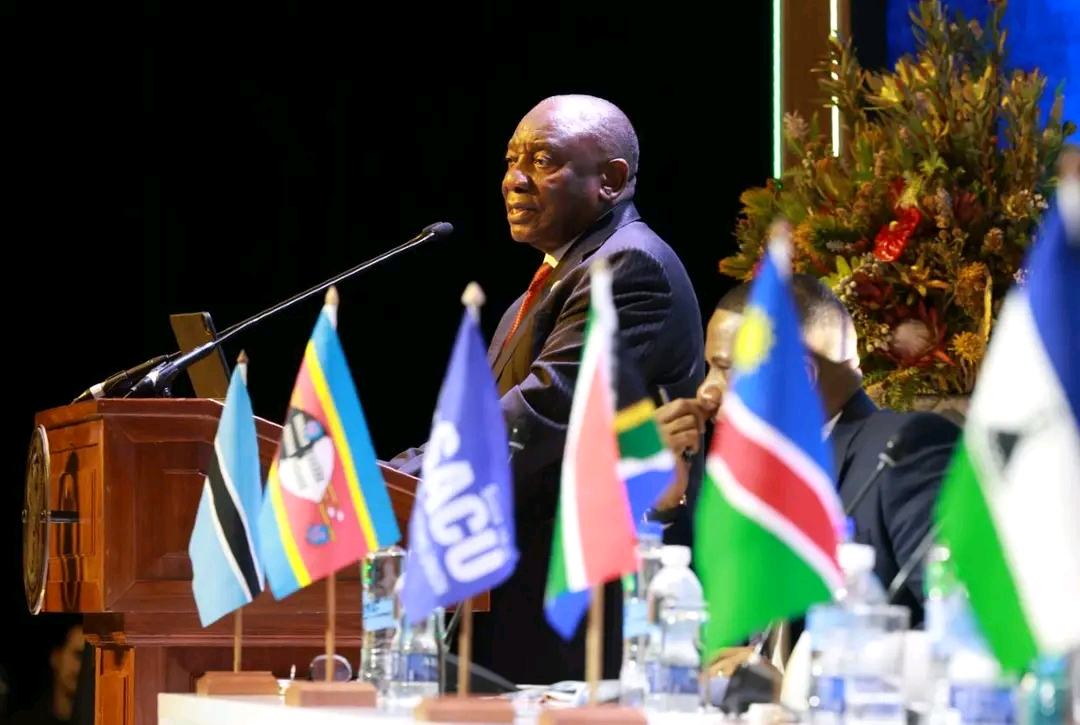
CAPE TOWN, SOUTH AFRICA – Preference for major construction projects to be funded by the soon-to-be-established SACU Development Fund will be given to contractors within member states.
This will be done to, among other things, avoid capital flight and the dominance of foreign multinationals in major infrastructure projects. The assurance was given at the post-9th SACU Summit press conference yesterday (Friday).
Times of Eswatini Managing Director Martin Dlamini raised the issue with South African Finance Minister Enoch Gondongwana.
He asked how SACU would insulate mega-projects funded by the envisaged fund from being monopolised by massive multinational corporations from Europe, Asia or America.


Dlamini sought assurances on policies to award contracts to regional companies or structure them as joint ventures to prevent capital leaving the SACU pool.
His question arises from increasing local frustration in Eswatini, which was highlighted in a recent investigation by the Times of Eswatini.
The newspaper reported that public tenders worth E17.2 billion had been awarded predominantly to foreign firms, representing a significant setback to the domestic economy.These awards resulted in substantial missed opportunities, with every Lilangeni spent on foreign materials, management fees and profits flowing out of the country rather than circulating locally to support jobs and businesses.
In his reply, Minister Gondongwana emphasised a clear preference for looking within SACU’s borders first. “I frequently discuss these issues with my counterparts,” he said. “Our priority is to ensure that the companies contracting for these major infrastructure pipelines and plants come from SACU member states.”
He acknowledged practical challenges, noting that when projects secure funding from international bodies such as the World Bank, their conditions typically require global bidding processes.To counter these challenges, the minister said SACU is focused on maximising internal resource mobilisation through regional development financing institutions.
“By funding projects locally, the bloc can restrict procurement to regional firms, thereby retaining the full economic multiplier effect within the union,” he said.
This approach aligns with SACU’s broader reimagined vision of fostering shared prosperity and reducing dependency on external players.


By prioritising intra-regional capacity in construction and related industries, the fund aims not only to deliver infrastructure but also to strengthen local expertise supply chains and employment opportunities across Botswana, Eswatini, Lesotho, Namibia and South Africa.


Discussion about this post