



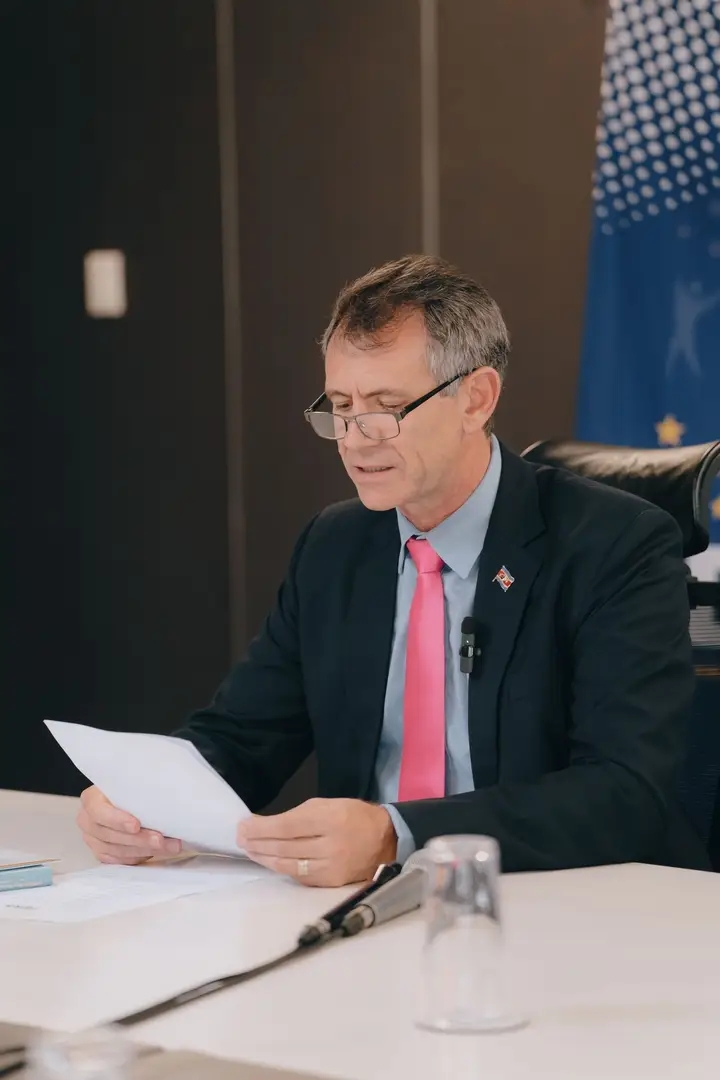
Mbabane – The Kingdom of Eswatini has formally signed an agreement to become a founding member of the Africa Strategic Investment Alliance (AfSIA), a move expected to improve access to financing for small and medium enterprises (SMEs) while opening new trade opportunities across the African continent.
Minister of Finance, Neal Rijkenberg, announced that the government has completed all necessary approvals and officially signed the Memorandum of Understanding (MoU) with AfSIA, paving the way for the establishment of the alliance’s operations in the country.
Speaking during the Ministry of Finance’s *Finance in Focus last week Friday, Rijkenberg said Eswatini had committed approximately E 90 million (US$5 million) towards the initiative over several years.
He explained that AfSIA, which operates under the AE Trade Group and aligns with the objectives of the African Continental Free Trade Area, aims to transform the way SMEs are financed by linking funding to viable value chains and established markets.


“We do fund SMEs in Eswatini, but AfSIA introduces a model that looks beyond simply providing capital. It examines the entire value chain to ensure there is a market and off-take arrangements for products, thereby improving the chances of business success and loan repayment,” said Rijkenberg.


Drawing on examples from countries such as Ethiopia, he noted that similar programmes have demonstrated stronger success rates by supporting entrepreneurs throughout the production and marketing process rather than focusing solely on financing.
According to the minister, the alliance will soon establish an office in Eswatini, after which further details will be released regarding loan applications and support programmes available to local entrepreneurs.
Beyond SME financing, AfSIA is expected to facilitate greater trade between Eswatini and other African markets by helping businesses identify and access opportunities across the continent.
The minister said the initiative would benefit enterprises of all sizes, from small businesses to large corporations, by creating new channels for exporting locally produced goods.
“We want to make it easier for businesses to trade across Africa, whether they are selling agricultural products, manufactured goods or other services. AfSIA will help unlock those opportunities and support the growth of intra-African trade,” he noted
Rijkenberg further highlighted that the alliance is expected to introduce innovative payment systems designed to simplify cross-border transactions and improve the use of African currencies in regional trade.


Discussion about this post