



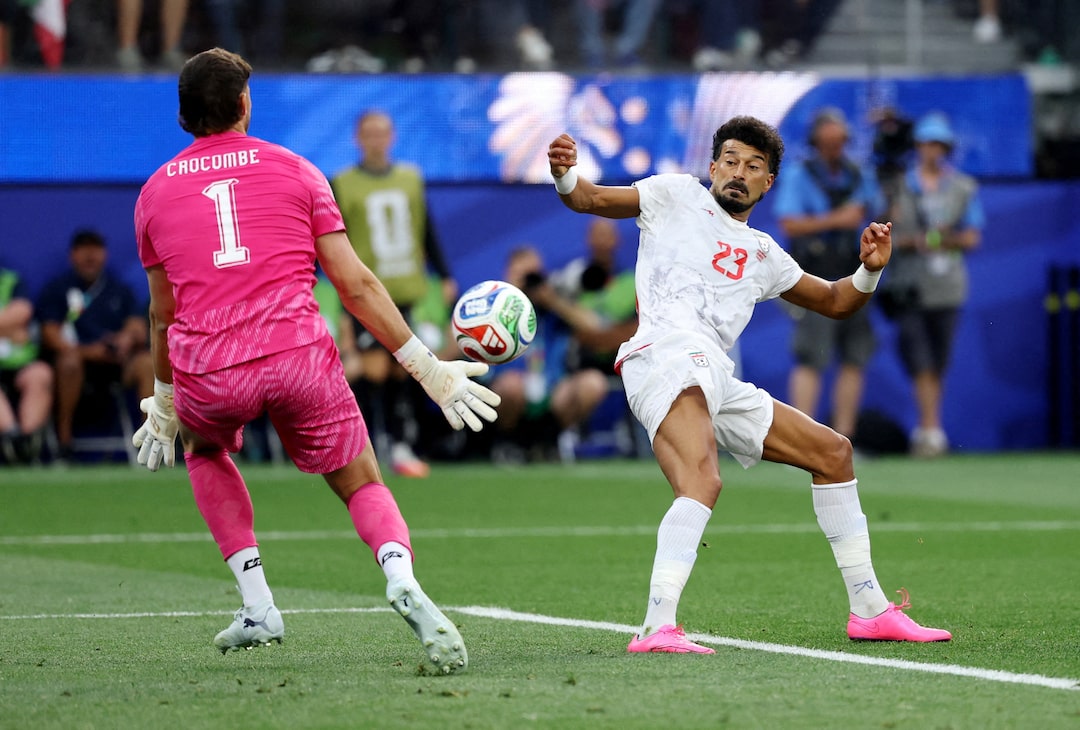
The 2026 FIFA World Cup is increasingly becoming a tournament remembered as much for controversy as for football, with the latest incident involving Iran’s national team adding to a growing catalogue of political, security and logistical disputes overshadowing the world’s biggest sporting event.
Iran head coach Amir Ghalenoei revealed after his side’s 2-2 draw against New Zealand that the team was ordered to leave the United States only hours after the match and return to its training base in Tijuana, Mexico.
According to reports by CNN, Reuters, AP and other international media, the unexpected move disrupted the team’s recovery plans and added to frustrations already caused by visa complications and travel restrictions affecting members of the Iranian delegation.
The incident has become one of the most high-profile controversies of a tournament that was supposed to showcase football’s power to unite nations.


Instead, it has repeatedly found itself caught in the crossfire of international politics, immigration disputes and security concerns.Iran’s participation has been particularly contentious.
The team was forced to relocate its original training base from Arizona to Mexico due to concerns surrounding United States visa restrictions and geopolitical tensions following the conflict involving Iran, Israel and the United States earlier this year.
Several Iranian officials and support staff reportedly struggled to secure entry visas, while anti-government protests were staged outside the team’s opening match in Los Angeles.
Beyond the Iranian saga, immigration policies implemented by the United States have generated widespread criticism.
Analysts and advocacy groups have argued that travel restrictions and visa barriers have prevented many supporters from participating in what FIFA promotes as a global celebration of football.
Concerns have been raised that fans from several qualifying nations have faced significant obstacles in obtaining travel documentation.
Security concerns have also plagued the tournament from its opening days. In Mexico City, violent clashes erupted near the iconic Azteca Stadium before Mexico’s opening match.
According to The Guardian, hooded protesters hurled petrol bombs, bricks and bottles at police officers, resulting in injuries and multiple arrests.
Although authorities contained the unrest before kick-off, the scenes raised fresh questions about security preparedness across the three host nations.
Meanwhile, social tensions and protests in Mexico have repeatedly threatened to overshadow World Cup festivities. Demonstrations linked to broader political and social grievances have unfolded in the lead-up to matches, forcing security agencies to maintain a heightened state of alert.
The tournament has also faced criticism over ticket accessibility. Experts and fan groups have accused FIFA of operating an opaque ticketing process that has left many supporters frustrated and priced out of attending matches.
Rising accommodation and transportation costs have further fuelled concerns that the World Cup is becoming increasingly inaccessible to ordinary football fans.
Human rights and inclusivity concerns have added another layer of controversy. LGBTQ+ supporter groups in some countries have expressed reservations about travelling to certain host cities, citing safety concerns and uncertainty regarding fan expression policies.


While thrilling matches have provided moments of sporting brilliance, the headlines outside the stadiums continue to tell a different story.
From visa disputes and political protests to security incidents and fan-access concerns, the 2026 FIFA World Cup is rapidly becoming one of the most controversial tournaments in modern football history.


Discussion about this post