



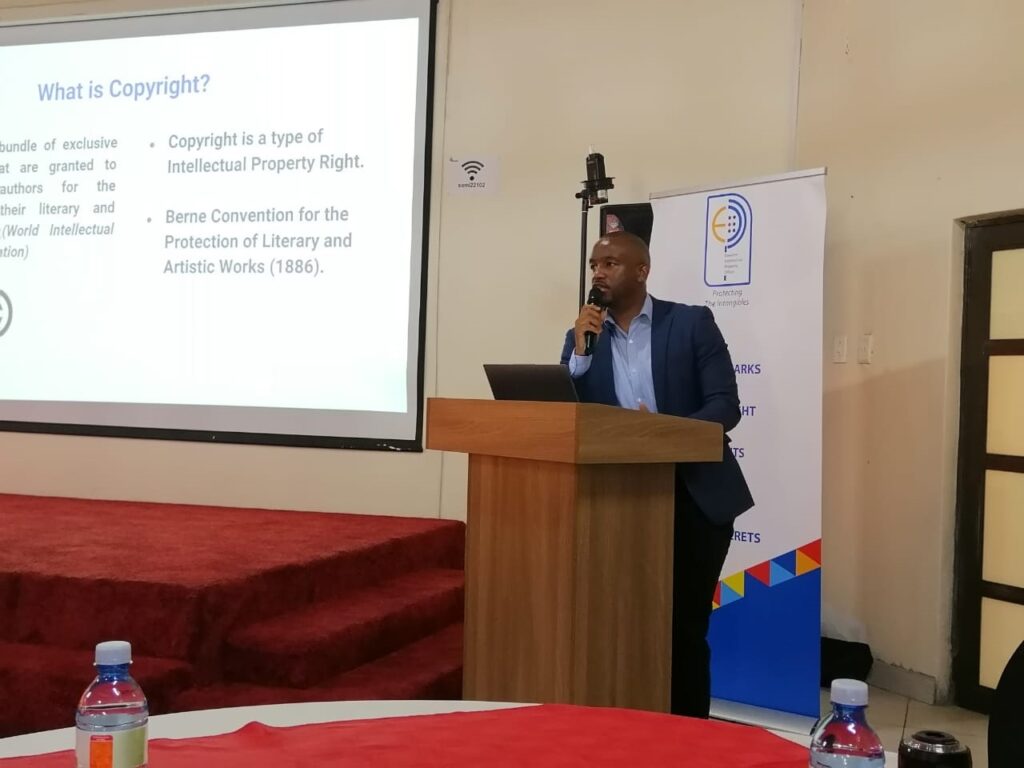
Manzini – Eswatini’s copyright sector is entering a new phase of commercialisation as the Eswatini Copyright and Neighbouring Rights Society (ESWACOS) reports significant progress in licensing, registration and royalty systems during the World Book and Copyright Day 2026 commemoration.
Presenting the progress during the commemoration of World Book and Copyright Day, the Executive Director of the Eswatini Copyright and Neighbouring Rights Society (ESWACOS), Mmeli Hlanze, said the country’s copyright framework is shifting from awareness-building to full implementation, with businesses increasingly becoming active participants in the creative economy through formal licensing of music and other copyrighted works.
ESWACOS reported 122 registered rights holders, over 300 applications and more than 350 documented works, supported by its digital registration platform, Bhalisa, which allows creators across all regions to register their works remotely.
A key milestone was the commencement of licensing in January 2026 following the approval of national music tariffs. Hlanze said hotels, restaurants, retail outlets, broadcasters and event organizers are now formally included in the licensing system as users of copyrighted content in commercial spaces.


“Today, we are moving from talking about copyright compliance to implementing it,” the Executive Director said.
“When a hotel plays music, or a restaurant creates ambience through sound, that content generates economic value that must be recognized and rewarded.”


The organization also confirmed progress on cross-border royalty agreements aimed at ensuring that local creators earn income when their works are used on international and digital platforms.
A music monitoring system has also been introduced to track radio usage, strengthening data-driven royalty calculations.Hlanze said these developments mark a shift toward a structured and investable creative economy, where copyright is increasingly viewed as an economic asset rather than a purely legal concept.
The organization further indicated that the first royalty distribution is expected within the 2026/27 financial year, marking the completion of a full cycle of registration, licensing, collection and payment — an outcome officials describe as a turning point for the sector.


Discussion about this post