



Young people have been called upon to take a leading role in biodiversity conservation and climate action as Eswatini grapples with the growing impacts of climate change, land degradation and biodiversity loss.
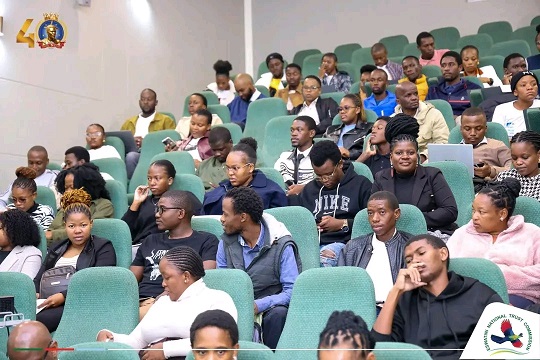
This emerged during a Youth Engagement Workshop on the implementation of the National Biodiversity Strategy and Action Plan (NBSAP) 3.0 and Nationally Determined Contributions (NDC) 3.0, held at the King Sobhuza II Memorial Park and convened by the Eswatini National Trust Commission (ENTC) in collaboration with the Ministry of Tourism and Environmental Affairs’ Climate Change Unit.
Speaking during the official opening of the workshop, Acting Principal Secretary in the Ministry of Tourism and Environmental Affairs, Dudu Nhlengethwa-Masina, said Eswatini was facing escalating environmental challenges that were no longer distant threats but daily realities affecting communities across the country.
She said climate change, biodiversity loss and land degradation were undermining livelihoods, food security and water sovereignty, making it critical for the country to strengthen youth participation in environmental governance.


Nhlengethwa-Masina noted that young people constituted the majority of the country’s population and were the natural inheritors of Eswatini’s biological wealth. However, she said their participation in formal environmental governance structures had remained limited because of what she described as a “participation gap”.
“It is therefore encouraging to note that the current revision and implementation of the NBSAP 3.0 provides a timely window to reposition our youth from passive observers to lead actors in biodiversity conservation,” she said.
She explained that the NDC 3.0 framework offered an important opportunity for young people to understand the connection between ecosystem restoration, sustainable land management and climate resilience.


According to the acting principal secretary, the workshop aimed to break traditional barriers by empowering youth to lead integrated actions that support both climate and biodiversity goals.
She described the workshop as both timely and significant, saying it provided an important platform for dialogue on the biodiversity-climate nexus while also strengthening youth preparedness for the implementation of NBSAP 3.0.
“The collaborative nature of this engagement is vital, as the goal is to move toward a model of inclusive governance where youth-led action becomes a cornerstone of our national environmental targets,” she said.
Nhlengethwa-Masina encouraged participants to actively contribute to discussions and build their capacity to engage in planning, advocacy and implementation processes related to environmental governance.
She further stated that the innovation and energy of young people were essential in ensuring the long-term sustainability of the country’s environmental policies.
“The outcomes of this engagement should guide us toward practical youth-led initiatives and community actions that support ecosystem restoration and climate resilience,” she added.
The acting principal secretary reaffirmed government’s commitment to supporting youth involvement in biodiversity conservation and climate action, saying this aligned with Eswatini’s international commitments under the Kunming-Montreal Global Biodiversity Framework and the Paris Agreement.
Meanwhile, ENTC Chief Executive Officer Thulani Methula said the commission remained committed to creating platforms that empowered young people to actively shape the future of biodiversity conservation and climate action in Eswatini.
Methula said the commission’s mandate extended beyond safeguarding protected areas, biodiversity and cultural heritage to ensuring communities, especially young people, were equipped to take ownership of the country’s natural heritage.
He said the environmental challenges facing the country could not be addressed by government alone and required partnerships, innovation and the active involvement of young leaders.
Methula explained that the workshop served as a bridge between national frameworks such as NBSAP 3.0 and NDC 3.0 and the lived realities of young people across the country.
He also reaffirmed the commission’s commitment to supporting youth-led initiatives through mentorship, technical expertise and collaborative opportunities.
“Youth participation is central to the sustainability of the organisation because it ensures continuity and long-term impact,” he said.
Methula further noted that the workshop marked the beginning of a sustained partnership aimed at ensuring that young people contribute directly to the review of NBSAP 3.0 and the strengthening of NDC 3.0 implementation.
He encouraged participants to actively engage in discussions, share ideas and commit themselves to meaningful action in advancing Eswatini’s environmental and climate goals.


Discussion about this post